

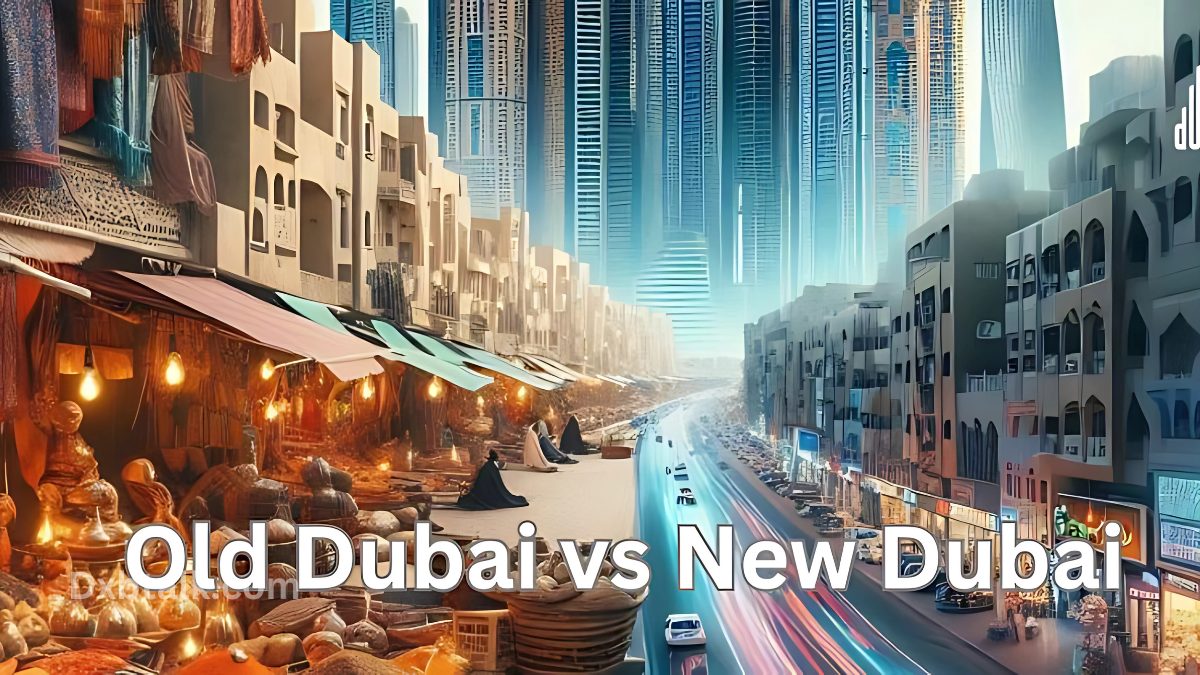
Traditional vs. Modern: Dubai’s Architectural Contrast
Dubai is a city of contrasts, where the charm of traditional Arabian design meets the grandeur of modern innovation. This juxtaposition is evident throughout the city, from historic neighborhoods to groundbreaking skyscrapers.
Al Fahidi Historical District: A Step Back in Time
Located in Bur Dubai, Al Fahidi Historical District transports visitors to a time when Dubai was a small trading hub. Its narrow alleyways, wind towers, and courtyard houses offer a glimpse into traditional Emirati architecture.
The Palm Jumeirah: A Modern Engineering Feat
In stark contrast, the Palm Jumeirah represents Dubai’s modern architectural prowess. This man-made island, shaped like a palm tree, is home to luxury villas, world-class resorts, and entertainment destinations.
Cultural Preservation Amid Growth
Dubai seamlessly integrates its cultural heritage into modern projects. Developments like Souk Madinat Jumeirah combine traditional souk aesthetics with modern shopping and dining experiences.
Conclusion
The architectural contrast in Dubai enriches its character, making it a city that respects its roots while embracing the future.
Hashtags: #DubaiTraditionalArchitecture, #AlFahidiDistrict, #PalmJumeirah, #CulturalPreservation
Reading the Traditional City
To understand what traditional architecture is doing in Dubai, look at the details rather than the skyline. The wind tower, or barjeel, was an early form of natural cooling, catching breezes high above the house and funnelling them down into the rooms below — a practical answer to the Gulf heat long before air-conditioning. Houses were built from materials close at hand, including coral stone, gypsum and palm wood, arranged around a shaded courtyard that gave the family privacy and a cool, inward-looking heart to the home.
In Al Fahidi, notice how narrow the lanes are. That was deliberate too: close-set buildings shaded each other and the paths between them, so daily life could continue in relative cool. Thick walls, small exterior openings and decorative gypsum and teak details were not decoration for its own sake; each had a job in a climate that shaped everything. Once you know this, the old district stops looking quaint and starts looking clever.
What the Modern City Does Differently
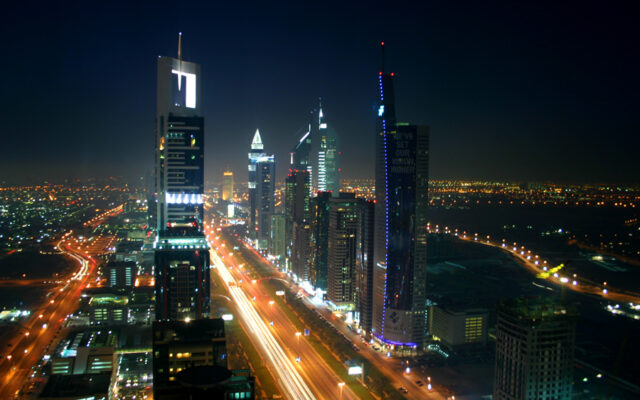
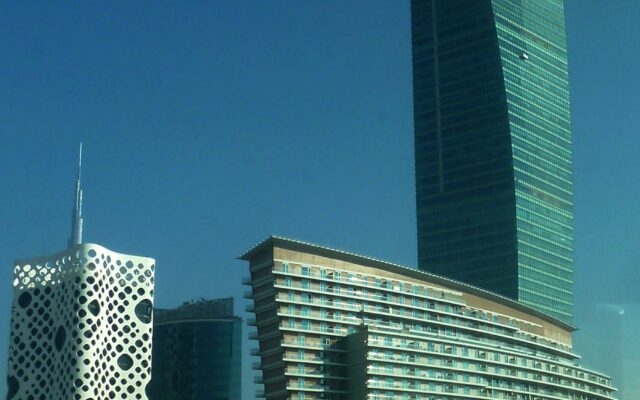
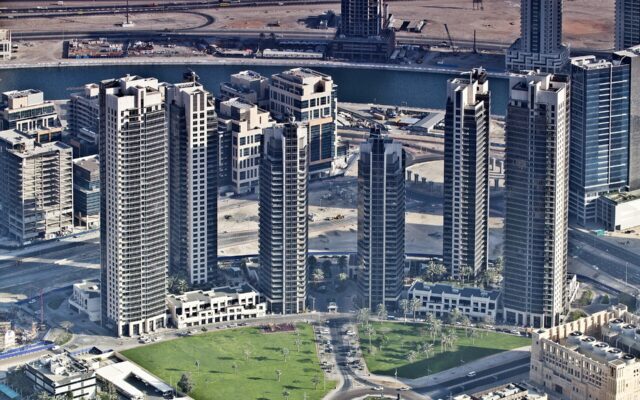
Modern Dubai builds with glass, steel and engineering that the old merchants could never have imagined. Towers twist, lean and taper; islands are built out into the sea; whole districts rise where there was open water or desert within living memory. Air-conditioning, high-speed lifts and deep foundations make it possible to live and work comfortably at heights and in shapes that would once have been impossible here.
Yet the modern city has quietly relearned some old lessons. Many newer buildings use screening and patterned facades that echo the traditional mashrabiya, the carved lattice that filtered light and air while preserving privacy. The contrast is not a simple argument between past and future — the two are in conversation.
📸 Follow @dxbtalk1 on Instagram for daily Dubai in photos →
Where to See Both in One Day
Dubai rewards visitors who deliberately pair the two halves. A rewarding route starts in the old city: wander Al Fahidi’s lanes in the morning, cross Dubai Creek on a traditional wooden abra — the fare is famously small, though you should carry a coin and check the current price — and explore the souks on the Deira side, where the trading city still works much as it always has. The contrast when you later stand beneath the towers of Downtown or Sheikh Zayed Road is far sharper for having started at the Creek.
- Old: Al Fahidi Historical District, the Creek, the gold and spice souks, and the low courtyard houses of Bur Dubai.
- Blended: souk-inspired modern developments and restored districts where traditional forms house cafés, galleries and small museums.
- New: the Downtown skyline, the Marina towers and the Palm, best appreciated at dusk when the engineering turns into light.
Why the Contrast Matters
It would have been easy, during decades of rapid growth, for the old city to be swept away entirely. That it survives — restored, protected and visited — says something about how Dubai wants to be understood: not as a city that appeared from nowhere, but as a trading port that grew, layer by layer, into a metropolis. For residents, the contrast is part of daily life, a morning in a heritage lane and an evening under the towers. For visitors, seeking out both halves is the difference between seeing Dubai’s buildings and actually understanding its story.



Join the conversation