

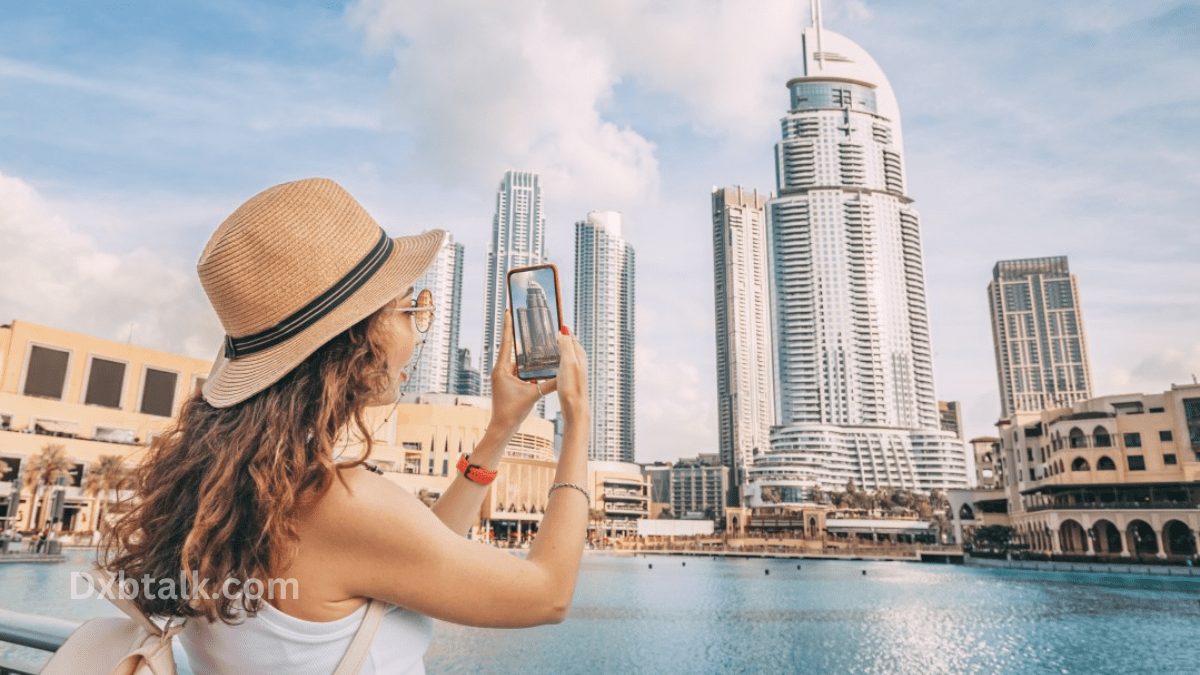
Dubai’s skyline is a modern marvel, symbolising human ingenuity and ambition. Over the last few decades the city has travelled from small trading port to global metropolis, and it has told that story in towers — record-breaking, shape-making buildings that function as landmarks, advertisements and civic symbols all at once. The skyline is not just about height but about innovation and aesthetics, and four buildings in particular carry the narrative: the tallest, the most theatrical, the most sculptural and the most businesslike.
Burj Khalifa: The Pinnacle
The Burj Khalifa, soaring 828 metres into the sky, is the world’s tallest building and the anchor of everything around it. Designed by Skidmore, Owings & Merrill, its floor plan spirals upward from a three-lobed footprint inspired by a desert flower — a shape that is not decoration but structure, confusing the wind and shedding the forces that would otherwise twist a tower of this height. Inside, the building is a vertical city: residences, corporate suites and the Armani Hotel, wrapped around the observation decks of At The Top, the highest of them on the 148th floor, where the whole emirate arranges itself below like a model. What the Burj did for Dubai is hard to overstate: it gave the city a single image the entire world recognises, and it set the terms — height as headline — that every later Dubai tower has had to answer.
Burj Al Arab: The Sail
If the Burj Khalifa is the city’s exclamation mark, the Burj Al Arab is its signature. Designed to resemble a ship’s sail and standing on its own artificial island off the Jumeirah coast, the hotel became a global symbol of luxury almost the moment it opened — an engineering feat and a cultural icon in one gesture. Its interiors lean into opulence: gold leaf, rich marble, suites arranged over duplex floors. Its underwater-themed restaurant, Al Mahara, and a helipad that has hosted everything from a tennis match between champions to car launches turned the building into a stage as much as a hotel. Where the Burj Khalifa speaks of scale, the Burj Al Arab speaks of theatre — and together they explain Dubai’s two architectural dialects: the record and the image.
📸 Follow @dxbtalk1 on Instagram for daily Dubai in photos →
Cayan Tower and the Emirates Towers
Down in Dubai Marina, the Cayan Tower performs a quieter trick: it twists. Each floor rotates slightly over the one below until the building has turned a full 90 degrees between base and crown — 73 storeys of residential apartments wrapped in a spiral that optimises views and wind resistance while looking like a frozen gesture. It is the skyline’s piece of pure sculpture, proof that Dubai’s ambition was never only about metres. The Jumeirah Emirates Towers, on Sheikh Zayed Road, represent the other tradition: twin triangular towers, one offices and one hotel, joined by a retail boulevard, sleek and functional and deliberately corporate. They symbolise Dubai’s rise as a business hub as faithfully as the Burj Al Arab symbolises its luxury — the skyline’s boardroom, drawn in aluminium and glass.
The Corridor They Built
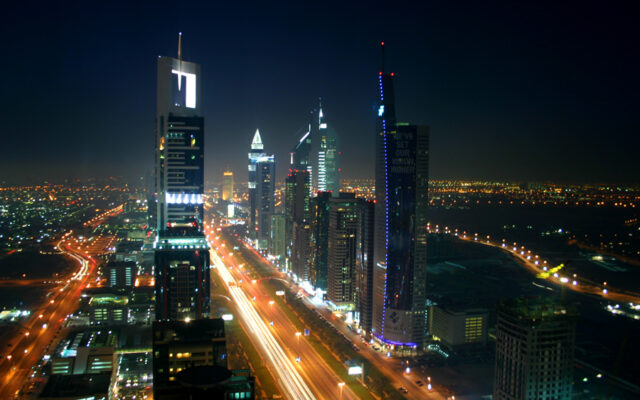
The icons did not rise alone. Along Sheikh Zayed Road, the towers line up in a procession — hotels, office slabs, residential needles — that turns a highway drive into a parade of the city’s ambitions, each building trying to be recognisable at a hundred kilometres an hour. The World Trade Centre, Dubai’s original skyscraper from 1979, still stands at the corridor’s head: modest now at 39 storeys, but the seed from which everything else grew, and a useful reminder that this skyline is barely two generations old. That is the context that makes the icons matter. They are not isolated stunts; they are the punctuation marks in a sentence the whole road is writing.
What Comes Next
The future of the skyline is less certain than the brochures once promised, and more interesting for it. The Dubai Creek Tower was announced with the ambition of rising higher than the Burj Khalifa, its design inspired by a lily flower and minaret forms; construction began, then the timeline stretched, and the project now stands as a reminder that in Dubai even the future gets built in phases. Meanwhile the city’s design energy has partly shifted — toward districts, cultural buildings and climate intelligence rather than pure altitude. The iconic skyscrapers remain what they always were: more than architectural achievements, they are the visible chapters of a desert port’s improbable autobiography — and the next chapter, whenever it tops out, will be written in their shadow.



Join the conversation