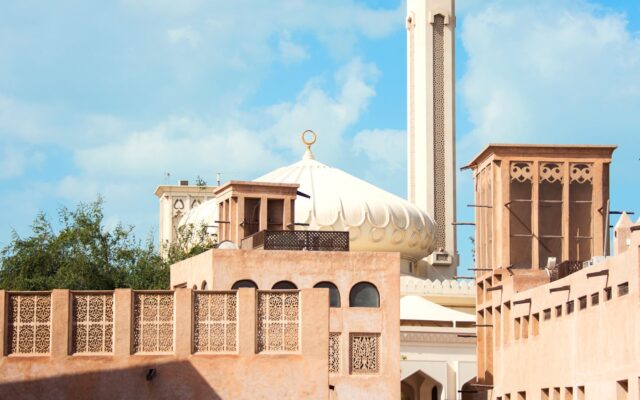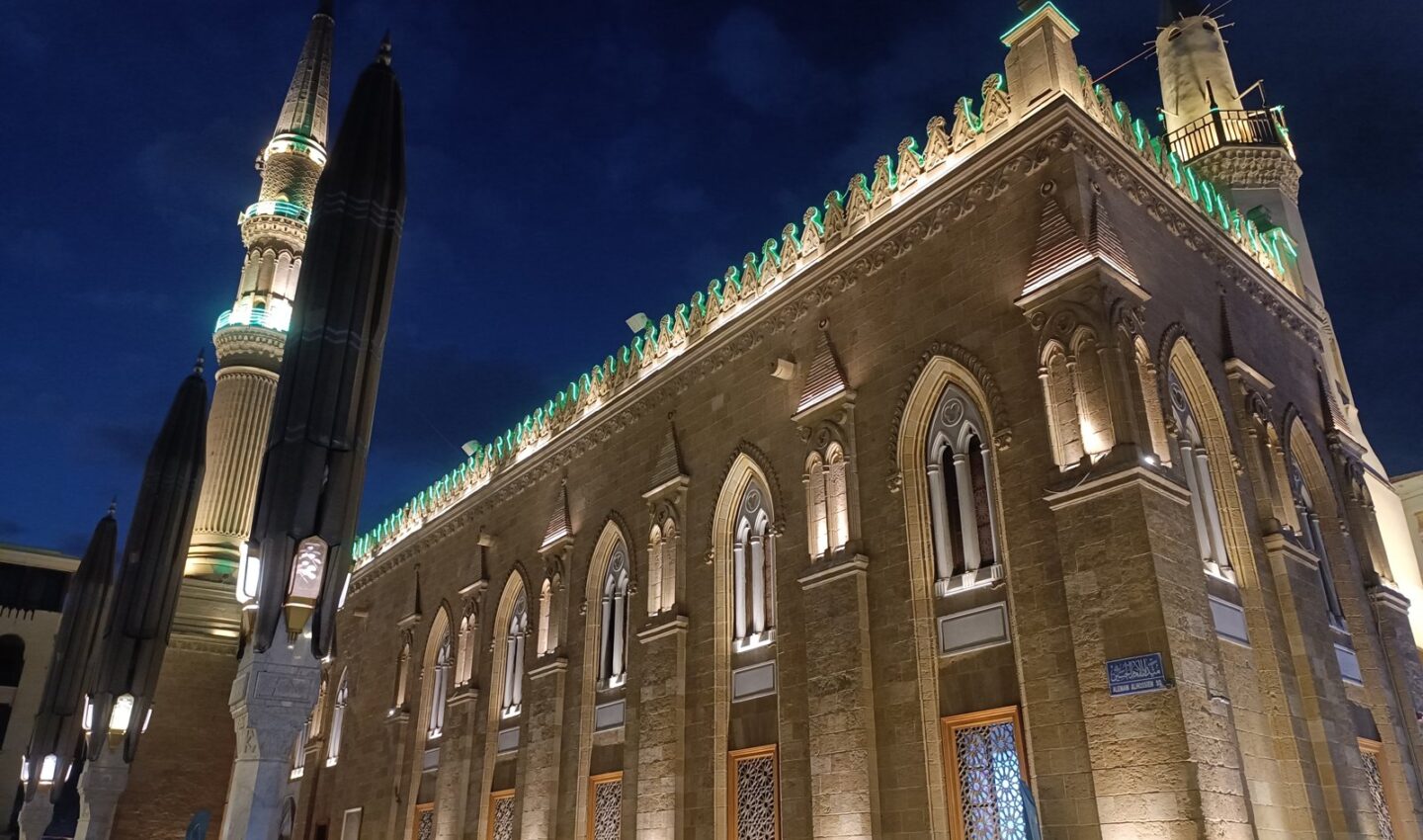
If Ramadan has a capital within Dubai, it is old Dubai after dark. When the sun sets over the Creek and the fast is broken, Bur Dubai and Deira do not wind down — they light up. Lanterns glow in shopfronts, minarets shine above the low rooftops, the souks fill with a festive evening crowd, and from mosque to mosque the night moves in a rhythm of prayer, food and unhurried wandering that feels older than the skyscrapers across the water and, to many residents, more beloved.
The Creek at Iftar
The evening begins at the water. As Maghrib approaches, the day’s last abras cross the Creek carrying people home to their iftars, and the call to prayer rolls across from minarets on both banks. In the old districts, breaking the fast still often happens the traditional way — at home with family, at the mosque’s rows, or in the small cafeterias that have served the same neighbourhoods for decades. Then, fed and rested, old Dubai goes out again. The night, everyone here understands, is the real day of Ramadan.
There is a sensory richness to it that newcomers never forget: the smell of oud and grilling food in the lanes, strings of lights and Ramadan lanterns in the textile and spice souks, the flash of gold in windows that stay open late, and under it all the low, contented murmur of a district at leisure. The month’s dates, as always, follow the official moon-sighting announcement — but whenever Ramadan falls, old Dubai keeps these hours as it has for generations.
Mosques at the Centre of the Night
The mosques are the night’s anchors. The great landmarks of the old town and the dozens of small neighbourhood mosques threaded through its lanes fill for Isha and then for Taraweeh, their courtyards receiving wave after wave of worshippers from the surrounding streets. Between prayers, life flows around them — greetings in the lanes, tea at the corner stall, an errand to the souk fitted neatly into the evening’s loose schedule.
- Isha and Taraweeh: old-town mosques fill with residents, traders and visitors from across the Creek.
- The souks by night: gold, spice, perfume and textile lanes at their most atmospheric and most social.
- Lanterns and lights: Ramadan decorations glow across shopfronts, lanes and minarets.
- Late traditions: in some years and places, the Ramadan cannon’s boom at iftar time echoes as a beloved heritage sound of the season, framed generally.
📸 Follow @dxbtalk1 on Instagram for daily Dubai in photos →
Shopping, Wandering, Belonging
Old Dubai’s Ramadan nights are famously unplanned, and that is their glory. A family sets out for Taraweeh and comes home, hours later, with a bag of spices, a length of fabric, a box of sweets and three unplanned reunions with old friends. A group of workers shares iftar at the mosque, prays, then walks the Baniyas Road waterfront simply because the night is beautiful and nobody is in a hurry. Shopkeepers — many fasting themselves — keep the generous hours gladly; this is their season too, of trade wrapped in festivity.
For residents of the newer city, a Ramadan night in the old districts has become a cherished excursion — a reminder that beneath the towers, Dubai still keeps a quarter where the holy month is celebrated at walking pace, by lantern light, in streets that remember a hundred Ramadans. It is the Dubai of a century ago and the Dubai of tonight, wearing exactly the same welcoming smile.
Late Prayers, Later Nights
As the month deepens towards its last ten nights, old Dubai’s evenings extend further still, with late-night prayers drawing worshippers into the small hours and suhoor taken in the cafeterias and bakeries that stay open for exactly this crowd. The district grows quieter in voice even as it grows fuller in numbers — a hush of devotion over the lanes — until Fajr closes the night and the old town finally sleeps, briefly, before another fasting day.
Come and walk it once: across the Creek by abra as the lights come on, through the souks to the sound of evening greetings, into a courtyard mosque as Taraweeh begins. Ramadan nights in old Dubai are not an attraction that anyone organises. They are simply what happens when the city’s oldest neighbourhood keeps its favourite month — and lets everyone wander through the middle of it.