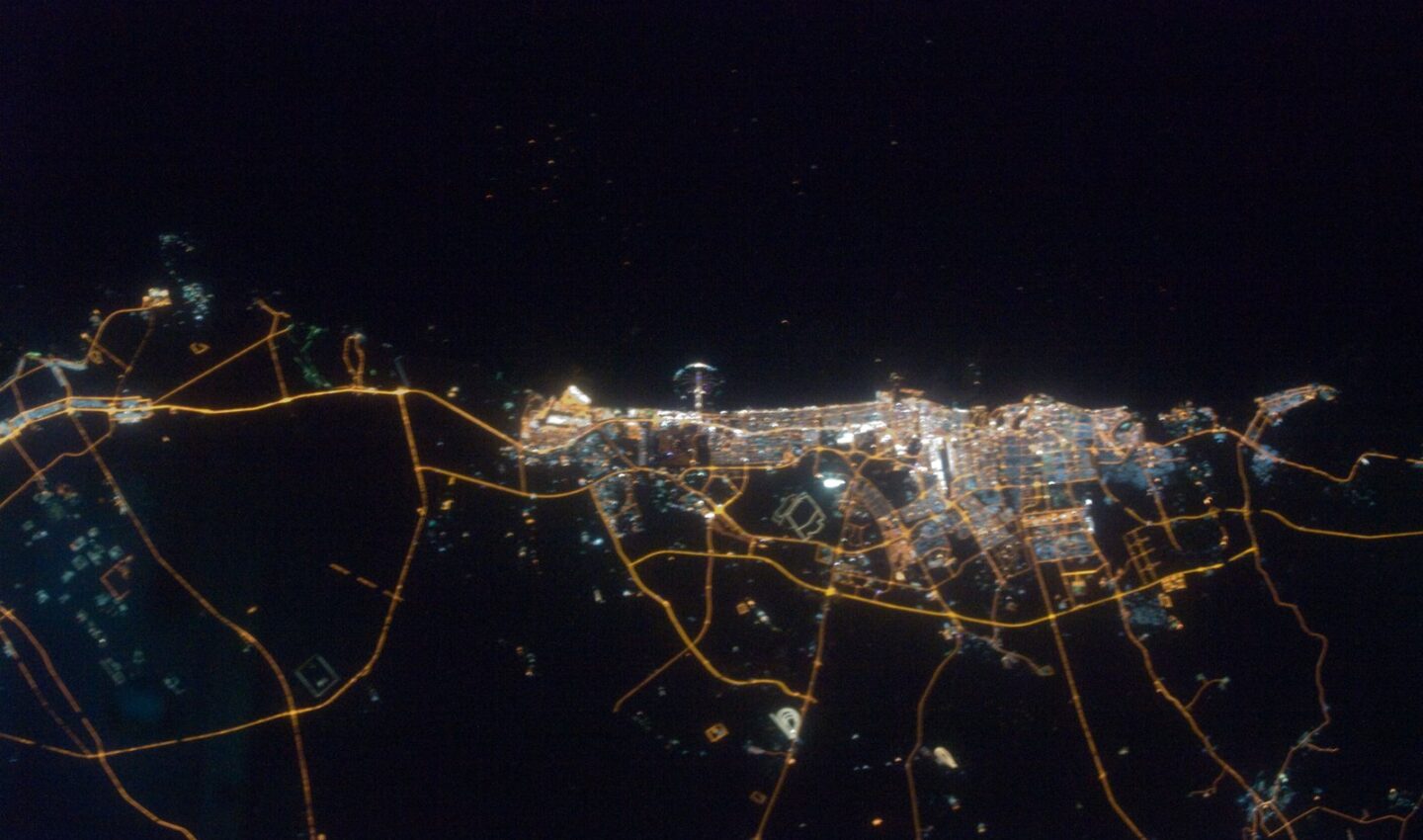
Dubai after dark belongs to light. Towers glitter, bridges trace ribbons over the Creek, and the Marina sparkles like a fallen constellation. Yet scattered through that electric skyline are softer, warmer lights that residents love best: the floodlit domes and glowing minarets of the city’s mosques. Night after night, from Jumeirah to Deira, they punctuate the darkness with calm.
Take an evening drive with mosque-spotting in mind and the city reads differently. The landmarks of the night are not only the tallest or the brightest, but the most serene.
Jumeirah Mosque: The Night Postcard
The classic night view is Jumeirah Mosque. As dusk deepens, floodlights wash its white Fatimid-style stone in warm gold, the twin minarets and central dome standing out against the darkening sky like a lantern on Jumeirah Beach Road. Built in the 1970s and pictured on the 500-dirham note, it has been photographed at this hour ten thousand times — and still, passing it on a warm night, people slow down.
The mosque is busiest in the most beautiful way after dark during Ramadan, when evening prayers fill it and the surrounding streets take on a festive hush. Ramadan and Eid dates depend on moon sighting and official announcement each year, but whenever they fall, Jumeirah’s night glow is at the centre of the city’s celebrations.
Creek Nights: Minarets Over Dark Water
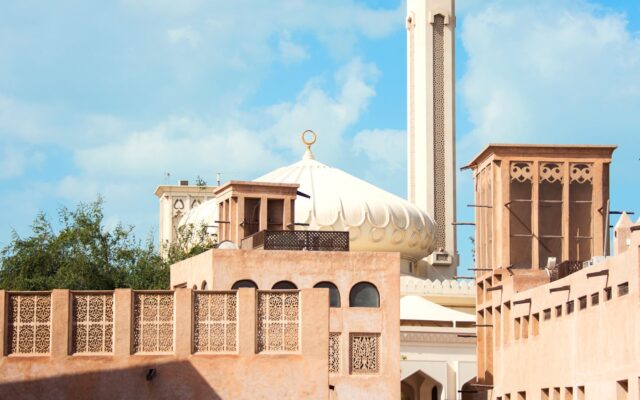
Old Dubai keeps a different kind of night beauty. Along the Creek, the Grand Mosque’s tall minaret in Bur Dubai is lit above the historic rooftops, while Deira’s minarets prick the darkness across the water. Abras cross between them with their lamps lit, and the lit minarets reflect and shiver on the black Creek. It is a scene with centuries in it — dhows, souks and prayer — rendered in light.
Walk Baniyas Road or the Bur Dubai waterfront after Isha and you will share the pavements with families strolling in the cool air, worshippers heading home, and cafés doing gentle late business. The mosques anchor it all, their light neither neon nor glare, but a steady, hospitable glow.
📸 Follow @dxbtalk1 on Instagram for daily Dubai in photos →
Blue Domes and Modern Cubes After Dark
In Al Safa, the Al Farooq Omar Bin Al Khattab Mosque — Dubai’s Blue Mosque, modelled on Istanbul’s — takes on a fairy-tale quality at night, its cascading domes and blue tiles picked out against the dark, its four minarets slim exclamations above the villa streets. The surrounding neighbourhood sleeps early, so the lit mosque feels like a night lamp left on for the whole district.
At the other aesthetic pole, the DIFC Grand Mosque glows through its geometric screen at Gate Avenue, patterning the terraces with light. Office towers dim floor by floor around it, but the mosque keeps its lantern hours, serving the night’s worshippers — security staff, cleaners, late workers — for whom Isha in the financial district is a lifeline. Dubai’s night mosques, in other words, are not decoration. They are workplaces of the spirit, open when the city most needs quiet.
The Hour of Isha
There is a particular moment, at the night prayer, when the lit mosques fill and the city’s noise seems to drop a register. Prayer times change daily, so worshippers check the official UAE calendar or a prayer times app for the day — but the feeling is constant: doors glowing, shoes lined up in the light, rows forming in the cool halls while the heat of the day finally lifts outside.
What fills those rows is Dubai itself: Emiratis and expatriates, managers and messengers, the young and the white-bearded, shoulder to shoulder under the same domes. After prayer, courtyards hum with greetings in many languages before everyone disperses into the lit streets. Night, in mosque neighbourhoods, is the most communal hour of all.
- Best night views: Jumeirah Beach Road, the Creek waterfronts and Gate Avenue
- Best time: blue hour into Isha, when façades glow and halls fill
- Ramadan: the year’s most atmospheric mosque nights — dates confirmed by official announcement
- Courtesy: enjoy the light quietly; photograph buildings, not worshippers
A Skyline With a Soul
Visitors photograph Dubai’s skyline for its ambition. Residents, if you ask them, will tell you the skyline’s soul lives lower down, in the lit domes and minarets that have watched over their streets for decades. The towers say what Dubai built. The glowing mosques say what Dubai believes.
So one evening, skip the viewpoint queue. Drive Jumeirah Beach Road, cross the Creek, pass through Al Safa and DIFC, and count the lights of faith. In the city of a thousand illuminations, they are the ones that feel like home.