There is a sound that belongs to Dubai alone. At prayer time, the call to prayer rises from minarets on both banks of the Creek — Bur Dubai answering Deira across the water — while wooden abras, laden with passengers, chug steadily through the middle of it all. The mosques along Dubai Creek turn a working waterway into something close to a cathedral, open to the sky.
Long before the bridges and the tunnel, the Creek was the whole city, and its mosques grew up along the banks where the people were: beside the souks, the dhow wharves and the abra landings. Their minarets still stitch the two banks together, five times a day, in sound.
Minarets on Both Banks
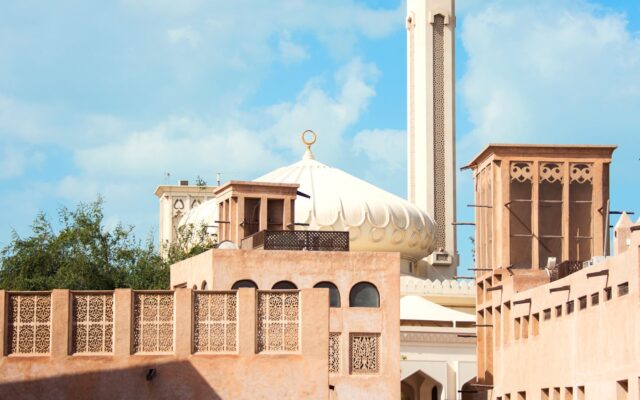
On the Bur Dubai side, the Grand Mosque’s tall minaret presides over the historic quarter near the museum and the Textile Souk, with smaller neighbourhood mosques tucked through Al Fahidi and along the waterfront. Across the water, Deira answers with its own forest of minarets above Baniyas Road, Sabkha and Naif — the prayer houses of the souks, close enough that their calls overlap and blend over the Creek.
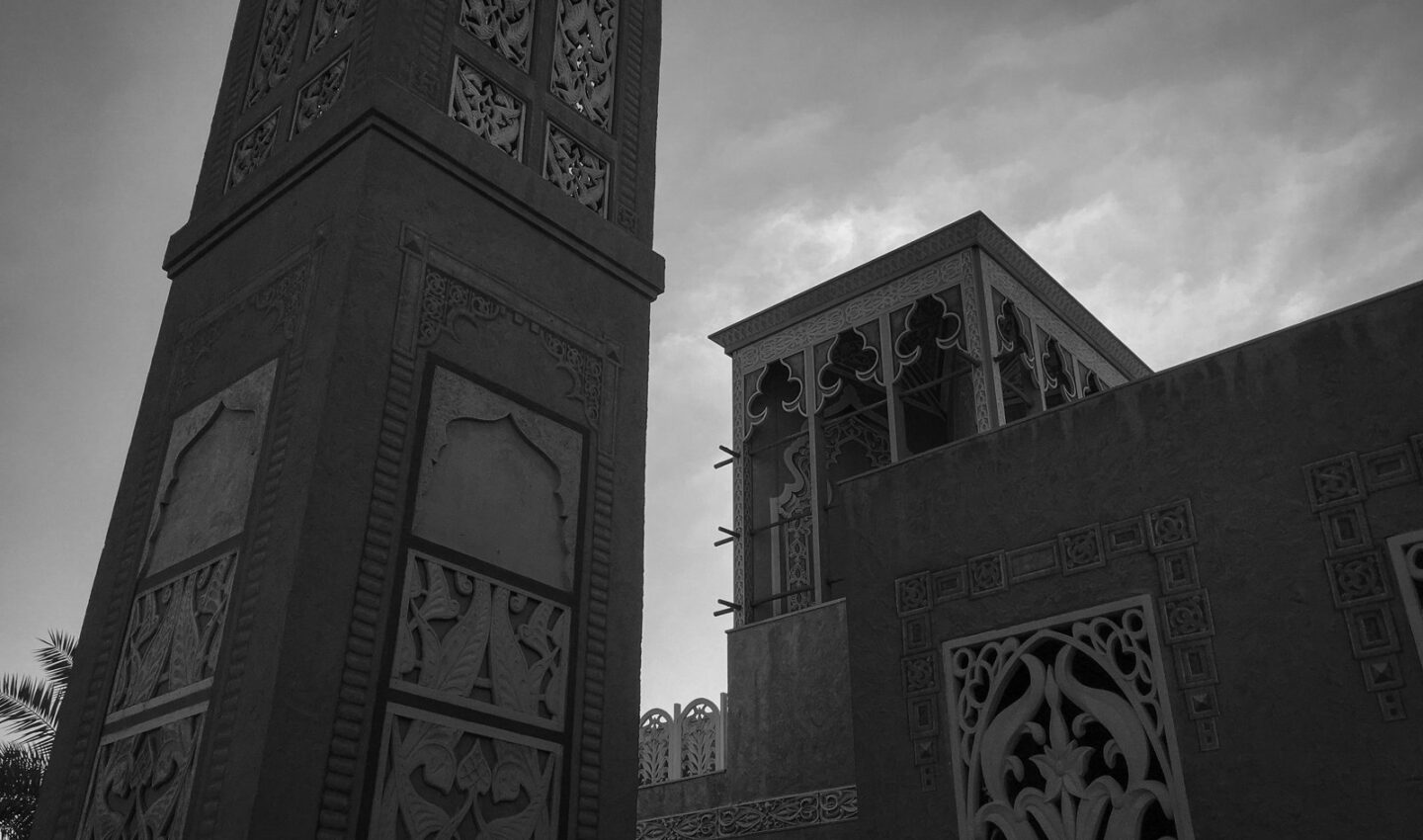
From a boat, the effect is magical. The skyline here is not towers but layers: dhows and abras at water level, souk rooftops and wind towers above them, and minarets rising over everything, slim and patient. It is the Dubai of a century ago, still standing, still working, still praying.
The Abra Crossing at Prayer Time
Ride an abra at Maghrib and you may experience Dubai’s most beautiful commute. The sun drops, the water turns to copper, and as the call to prayer sounds, the little boats keep crossing — a dirham a ride, as they have for generations. Some passengers are heading home. Some are heading to mosques on the far bank, timing their crossing to step straight into the rows. The abra captains know the prayer times by heart, the way they know the currents.
Prayer times change daily, shifting with the sun, so the whole Creek community — captains, traders, worshippers — checks the official UAE calendar or a prayer times app for the day. Yet the deeper rhythm feels timeless: work, call, prayer, work again, with the water flowing through it all.
📸 Follow @dxbtalk1 on Instagram for daily Dubai in photos →
Creekside Congregations
The mosques along the Creek serve one of the most multinational congregations on earth. The trading banks draw Emiratis, Iranians, Indians, Pakistanis, Bangladeshis, Somalis, Filipinos and dozens more nationalities into the same streets — and, at prayer time, into the same rows. A dhow captain from Lamu might pray beside a gold trader from Kerala and a textile merchant from Shiraz, then all three return to the same wharves and souks.
On Fridays, the Creek slows in respect. Jummah fills the mosques on both banks, the abra stations quieten for a while, and families emerge afterwards to stroll the Baniyas Road corniche in the afternoon light. It is the old city’s weekly portrait of itself: commerce paused, community gathered.
How to Experience the Creek’s Mosques
These are working mosques for worshippers, and non-Muslim entry should not be assumed, as with most mosques in Dubai. But the Creek offers every visitor a front-row seat from outside. Walk the Bur Dubai waterfront from Al Fahidi to the Textile Souk, cross by abra, and walk Deira’s Baniyas Road back the other way. Time your walk for late afternoon so you end it at Maghrib, when the minarets light up and the calls layer across the water.
- Best viewpoint: mid-Creek, from an abra at sunset
- Key landmark: the Grand Mosque minaret on the Bur Dubai bank
- Soundtrack: overlapping calls to prayer from both banks
- Tip: keep waterways and mosque entrances clear, and photograph buildings, not worshippers
Where the City Still Hears Itself
Dubai has grown far beyond the Creek — out to the Marina, up into the clouds — but the Creek is where the city still hears its own original voice. The mosques along its banks are the keepers of that voice, calling the faithful as they did when the whole of Dubai could be walked in an hour.
So take the abra at dusk at least once. Sit low in the wooden boat, feel the engine’s thrum, watch the minarets kindle their lights on both shores, and listen. When the adhan meets the abras, old Dubai is speaking — and everyone on the water, whatever their language or homeland, understands.