

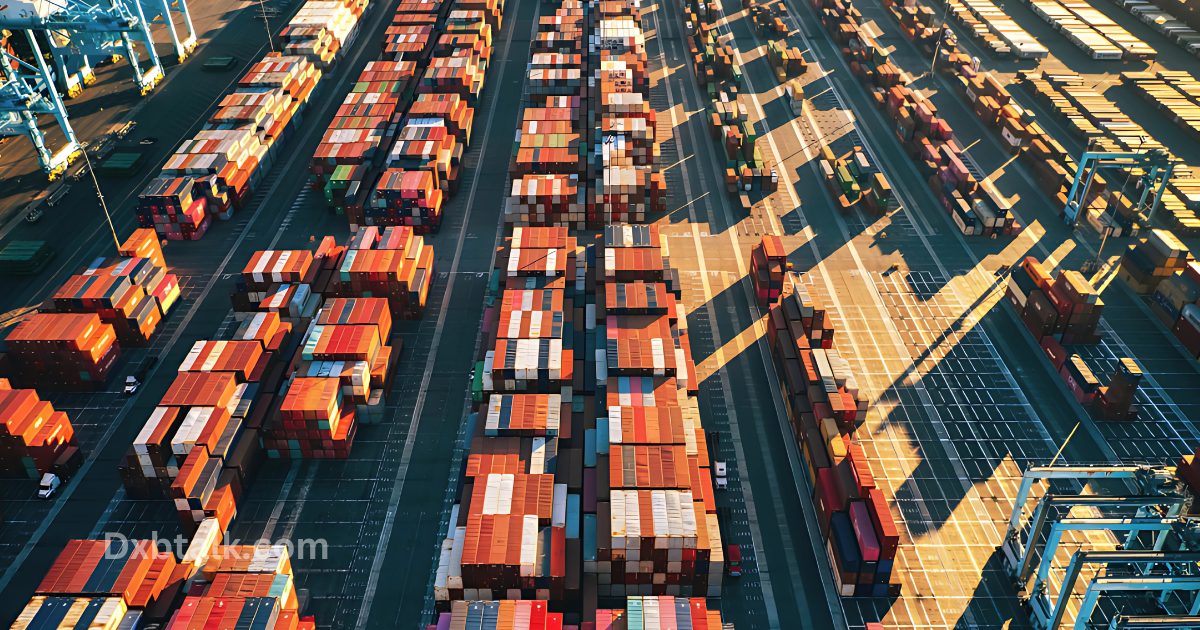
Jebel Ali’s Port and Free Zone are among the most advantageous zones for businesses looking to expand into the Middle East. Known for its world-class infrastructure, Jebel Ali Free Zone (JAFZA) allows companies full foreign ownership, tax exemptions, and easy import/export processes, making it a magnet for multinational companies. With Jebel Ali Port’s state-of-the-art facilities, it is among the busiest ports globally, providing seamless logistics and trade connectivity. From warehousing to global distribution, discover how Jebel Ali’s business-friendly policies and prime location benefit companies and fuel Dubai’s role in global trade.
Hashtags:
#JebelAli #JebelAliPort #JAFZA #DubaiFreeZone #BusinessHub #GlobalTrade #MiddleEastBusiness #DubaiLogistics #InternationalTrade #TaxBenefits #InvestInDubai #DubaiEconomy #UAETrade #FreeZoneBenefits #LogisticsDubai #JebelAliFreeZone #DubaiInfrastructure #BusinessOpportunities #DubaiInvestment #TradeIncentives #DubaiIndustry #MiddleEastHub #DubaiGrowth #TradeBenefits #JebelAliBusiness #GlobalExpansion #TradeDubai #DubaiWarehouse #BusinessInDubai #DubaiGlobalReach #DubaiExports
Inside the Port: What “World-Class Infrastructure” Actually Means
Phrases like world-class infrastructure are easy to write and harder to picture. At Jebel Ali Port it means deep-water berths that can take the largest container ships in service, giant gantry cranes that load and unload those ships around the clock, and vast paved yards where containers are stacked, sorted and tracked by computer systems. There are dedicated facilities for refrigerated cargo, for cars and heavy vehicles, and for loose bulk goods that do not travel in containers at all.
For a business, the benefit is reliability. Large vessels call here on regular scheduled services to Asia, Europe and beyond, so an importer is not waiting on an occasional ship, and an exporter can plan production around known sailing patterns. Schedules do change with weather and global congestion, so confirm current sailings with your shipping line — but the sheer frequency of calls is what makes planning possible.
Inside the Free Zone: More Than Warehouses
JAFZA wraps around the port as a complete working city for business. Alongside warehouses and factory units you will find offices, showrooms, staff accommodation, food outlets, banks and government service points. That completeness matters for a company relocating staff or hosting overseas clients: daily life can be handled within the district rather than across town.
The zone is organised so that similar trades often sit near each other — food companies near cold storage, automotive traders near vehicle-handling areas, and so on. New businesses typically gain from that clustering in small ways that add up: shared knowledge of customs procedures, suppliers who already deliver to your street, and a labour pool familiar with your industry.
📸 Follow @dxbtalk1 on Instagram for daily Dubai in photos →
How a Typical Shipment Moves Through
Following one container shows how the port and free zone benefits join up:
- Arrival: the vessel berths and the container is lifted into the terminal yard, with its details recorded in the port’s systems.
- Clearance: the importer or their agent submits customs documentation electronically in most cases, and any required inspection is arranged at the terminal.
- Transfer: the container moves a short distance to the company’s JAFZA warehouse, where goods are unloaded, checked and stored.
- Onward journey: stock is then delivered to UAE customers by truck, or consolidated and re-exported by sea or air to regional buyers.
Each handover is a place where delays can happen in a poorly organised port. Jebel Ali’s advantage is that the handovers are short, digitised and handled by experienced operators who repeat them thousands of times.
Location Benefits You Can Test Before You Invest
The district sits on Sheikh Zayed Road with Dubai Metro stations serving the wider Jebel Ali area, Abu Dhabi reachable by highway in the other direction, and Dubai’s airports within driving distance for combined sea-air freight. Rather than trusting brochures, test these claims against your own operation: time a truck journey to your main customers, check how your staff would commute, and ask your freight forwarder to compare routing via Jebel Ali with the alternatives you use today.
Businesses that run those simple tests usually reach a clear answer. For companies moving real goods in real volume across the region, the combination of port capacity and free zone services is difficult to match — which is precisely why so many have already chosen to be here.





