

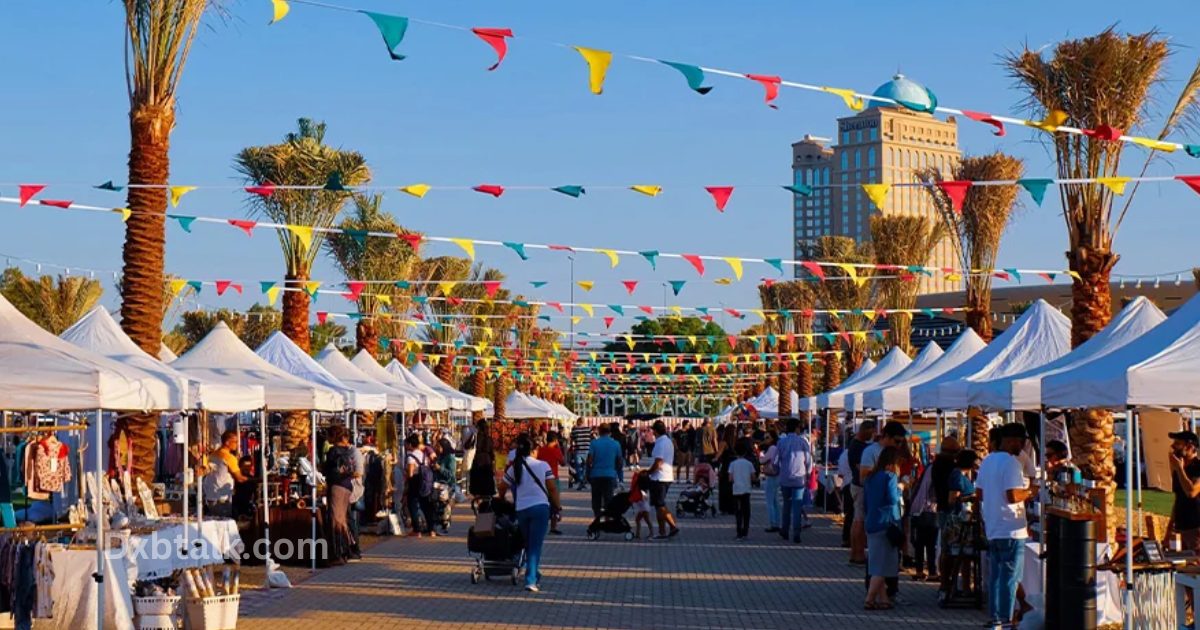
Satwa’s markets do not announce themselves with an entrance or a directory. They simply begin — a pavement of fabric bolts outside one shop, spice sacks in the next doorway, a tailor’s sewing machines audible from the street — and continue for block after block until you realise the whole neighbourhood is the market. This is one of Dubai’s oldest working shopping districts, serving the residents who live above it long before it charmed visitors. To shop it well, understand it as what it is: not a collection of stalls, but one interlocking ecosystem of trades.
The Fabric Trade: Satwa’s Beating Heart
Textiles are the district’s anchor industry, and the fabric shops run in clusters thick enough to compare five kinds of silk without crossing a road. The range follows the neighbourhood’s customers: everyday cottons and shirting at working prices, then crepes, chiffons, lace and embroidered pieces climbing toward occasion wear. The ritual is tactile and unhurried — bolts are unrolled for you, fabric is held against the light, quantities are discussed in metres with the seriousness of a property negotiation. Prices sit far below the mall equivalents for comparable cloth, because here you are buying the material, not the brand sewn into it. Come knowing roughly what you want to make; the shopkeepers’ advice improves sharply when there is a garment in mind.
The Tailor Connection: Why the Market Works
Fabric alone would make Satwa a shopping street. The tailors make it an ecosystem. Scattered through the same blocks — many in the small streets just behind the main road — are the tailoring shops that turn the morning’s fabric purchase into next week’s finished garment: shalwar kameez, dresses, suits, alterations of every complexity. This is the circuit generations of residents have run: choose cloth with the finished piece in mind, walk it to a tailor whose work you trust, discuss the cut over a measuring tape, and return for a fitting. For visitors it is the district’s great souvenir opportunity — a garment made for you, from cloth you chose, at a total price that still undercuts ready-made. Allow real time for it: good tailoring here is fast by most standards, but it is measured in days, not hours.
📸 Follow @dxbtalk1 on Instagram for daily Dubai in photos →
Spices, Groceries and the Daily Shop
The market’s second system feeds the neighbourhood daily. Spice sellers trade from open sacks and bins — saffron at the precious end, then the working geography of cumin, cardamom, dried limes, curry blends and za’atar — and the good ones will talk you through a blend with the pride of a vintner. Around them, the grocery stores and fresh produce shops run the district’s daily rhythm: fruit and vegetables arriving for a population that cooks from scratch, sold by shopkeepers who know their customers’ households by sight. Shopping here as a visitor is anthropology with a bag: you see what the neighbourhood actually eats, at prices set for weekly budgets rather than tourists, and a conversation about an unfamiliar vegetable is a small cultural exchange that costs nothing.
Crafts, Trimmings and the Finishing Trades
The third layer is the one browsers miss: the finishing trades. Trimmings shops sell the buttons, braids, laces and embellishments that turn plain fabric into occasion wear — brides’ families and dressmakers shop these counters with lists. Craft and gift shops carry the handmade and the decorative: ceramics, ornaments, home pieces, the souvenir with an actual human hand in it. Gold and jewellery shops serve the district’s saving and celebrating habits, and the perfumers sell oud and attars by weight and by flacon. Together they complete the ecosystem’s logic: Satwa can take a length of cloth, a celebration, or an empty kitchen as input and return it dressed, decorated and fed.
How to Shop the Ecosystem
Work with the district’s rhythm rather than against it. Mornings and evenings are its best hours — midday in summer belongs to the air-conditioned. Start with the big decision (fabric, usually) while your judgement is fresh, commission the tailor next, and let the spices, groceries and trimmings fill the walk back. Carry cash for the smallest shops even though cards travel widely now, dress for standing and strolling, and use the cafeterias between stops the way residents do — the market is social infrastructure, and sitting down inside it is part of shopping it. Bargaining is welcome in the market spirit: friendly, realistic, and finished when a price is agreed. Do all this and Satwa stops being a paradise in the brochure sense and becomes something better — a working market that lets you shop the way Dubai shopped for decades, because for this neighbourhood, it never stopped.






Join the conversation