

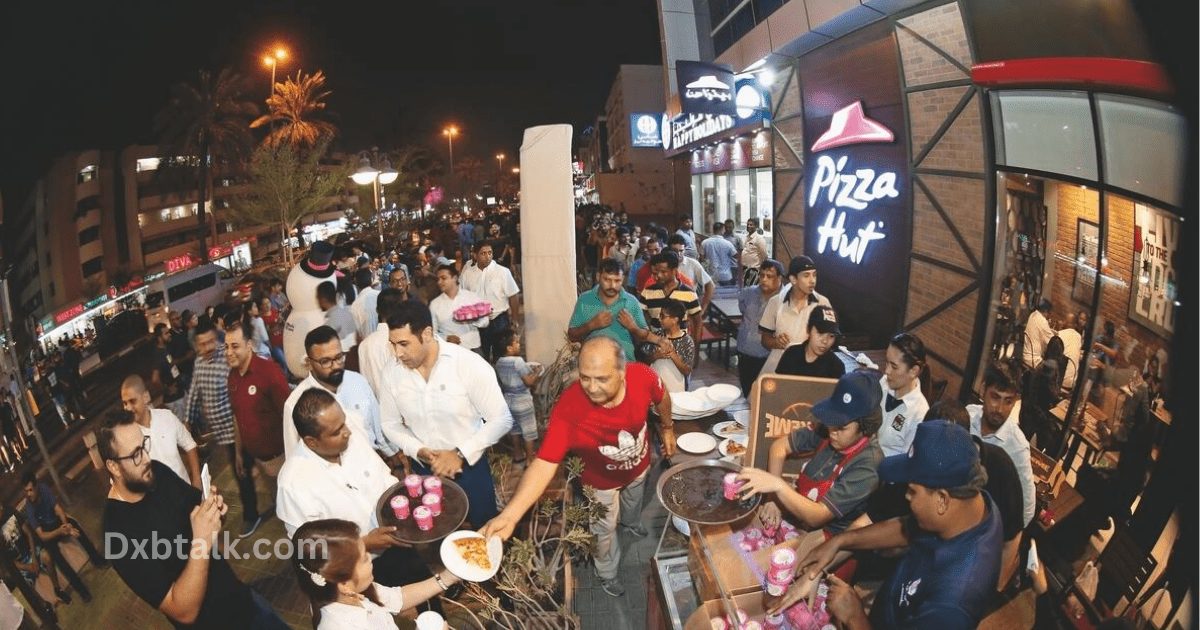
Satwa does not do spectacle the way the marina districts do. Its festivals happen at street level — strings of lights going up over the cafeterias, sweet shops doing the best trade of their year, whole communities turning out in their finest. This old, dense, gloriously mixed neighbourhood celebrates everything its residents brought with them, which in Satwa means the calendar is rarely quiet for long.
Eid in Satwa
Eid is the neighbourhood’s home fixture. The festivities run on cultural performances, food stalls and family-friendly activity, but the real show is the street itself: greetings exchanged between strangers, children in new clothes, restaurants full from iftar to late. For visitors, Eid in Satwa offers the celebration as residents live it — communal, generous and centred on food — rather than as a staged performance.
Diwali: The Festival of Lights, Taken Personally
Satwa’s large South Asian community makes Diwali one of the neighbourhood’s brightest weeks. Decorative lights appear across shopfronts and balconies, sweet shops stack their windows with mithai, and cultural performances showcase the richness of Indian culture for anyone walking past. The festival’s scale here is a reminder that Dubai’s diversity is not a statistic; on Diwali night in Satwa it is visible from the end of the street.
📸 Follow @dxbtalk1 on Instagram for daily Dubai in photos →
National Day: December 2nd
On National Day the whole neighbourhood changes colour. UAE flags multiply on cars, buildings and shoulders, and the celebrations — community events, displays of national pride, fireworks elsewhere in the city drawing evening crowds — carry a particular warmth in a district built by people who came from everywhere and chose this country. Satwa’s version of December 2nd is less about ceremony and more about belonging, loudly expressed.
Ramadan Nights
During the holy month, Satwa’s rhythm inverts and its evenings become the point. Iftar gatherings anchor the night: restaurants lay on special menus, tables fill with families and groups of friends, and community events foster the togetherness the month is about. For non-Muslim visitors, joining an iftar here — respectfully, and by invitation of the table — is one of the most direct ways to understand the city’s social fabric.
Cultural Exhibitions Through the Year
Between the big dates, smaller cultural exhibitions keep the calendar warm: local artists, traditional crafts and culinary showcases that draw on the neighbourhood’s many heritages. These are the events to catch if you want Satwa at conversational volume — makers present, questions welcome, and the crafts explained by the people whose families carried the skills here.
Joining In as a Visitor
You do not need an invitation to attend Satwa’s street celebrations, but a little method helps. Come in the evening, when the lights are on, the food stalls are at full stretch and the neighbourhood is out in force. Eat first and ask questions later — festival food is the fastest introduction to whichever culture is celebrating, and vendors are generally delighted to explain what you are holding. Dress with the occasion in mind: celebrations tied to religious festivals deserve the modest end of your wardrobe. Photograph the lights, the stalls and the performances freely, but ask before photographing families and children up close. And carry small notes — Satwa’s festival economy runs on the stalls, the sweet shops and the small traders who stock up all year for these weeks.
A word on rhythm: Satwa’s festivals reward lingering rather than touring. The temptation is to walk the length of the celebration, photographing everything and tasting nothing. Resist it. Pick a stretch of street, let the evening happen around you, eat twice — once early, once late — and talk to the people running the stalls; half of Satwa’s festival experience is conversation, and the neighbourhood is famously willing. You will cover less ground than the hurried visitors and remember considerably more of it.
Why Bother With a Neighbourhood Festival?
Because this is where Dubai’s multicultural claim becomes literal. A Satwa festival is not a performance of diversity for an audience; it is the community celebrating itself in public, with the food stalls open to all. Mark the dates, arrive hungry, and join in — few experiences in the city repay a visitor so directly.




