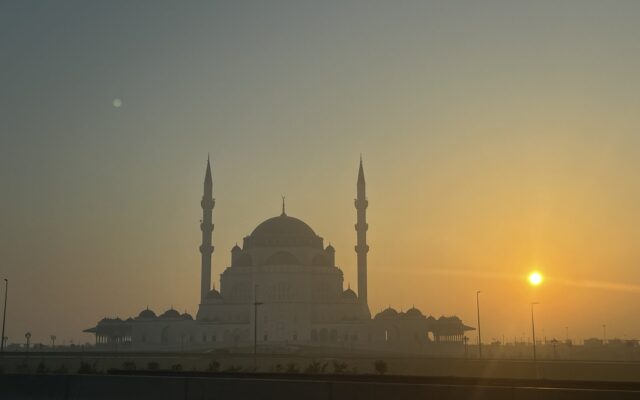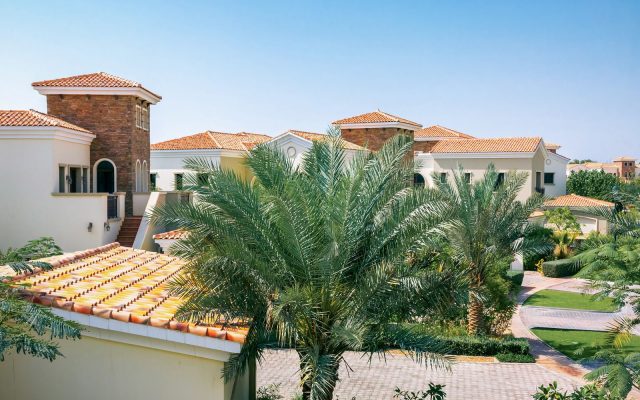
Mirdif is the suburb Dubai families graduate to: villa streets and low-rise blocks, parks full of bicycles, a beloved community mall at Uptown Mirdif, and schools that anchor whole social worlds. It has no interest in impressing tourists, which is exactly why its residents love it. And like every settled family suburb in the city, Mirdif has a mosque at its heart — not one, but a spread of neighbourhood mosques serving the parks, the school streets and the villa blocks, where the district’s children are growing up in the rows beside their parents. This is a guide to praying in Mirdif, the family way.
The mosque beside the school run
In Mirdif, the geography of a family day is tight and kind: home, school, park, shops, mosque — all within a short drive, much of it walkable in the cooler months. The neighbourhood mosques slot into that circuit naturally. Fathers and mothers plan the afternoon around Asr; grandparents use Maghrib as the day’s gentle full stop; and children absorb the pattern the way they absorb everything in Mirdif — by doing what the whole street is doing, on foot, with friends.
That closeness creates congregations with deep local knowledge. Mirdif’s mosques know their families: who has a new baby, who has an exam, who needs a lift to Friday prayer. New residents — and Mirdif absorbs many each year, drawn by its schools — consistently say the local mosque was where the suburb stopped being addresses and started being people. Prayer times change daily, of course, so the official UAE calendar or a prayer times app for the day is checked with the same regularity as the school WhatsApp group.
Fridays in a villa suburb
Friday is Mirdif’s showcase. The midday prayer gathers the suburb at full strength: families in their best, elders in their honoured places, teenagers enduring cheerful scrutiny from aunties who have known them since they were small. The sermon is in Arabic, as across the UAE, and the congregation behind it is Dubai’s family mixture at its most settled — Emirati, Arab, South Asian and many other households, some in Mirdif for decades.
Afterwards, the suburb does what suburbs do best: it lingers. Greetings on the pavements, children comparing sweets, invitations issued for lunch, and a slow dispersal to family afternoons in the parks. Arriving early is the standing local advice — Mirdif’s mosques fill on Fridays with the pleasant efficiency of a place where everyone has decided, independently, to be on time.
📸 Follow @dxbtalk1 on Instagram for daily Dubai in photos →
Uptown, the parks and the working day
Not all Mirdif prayer happens in mosques. The staff of the district’s shops, clinics and cafés — around Uptown Mirdif and the smaller centres — use prayer rooms where provided and the nearest mosque on breaks, and the district’s many home-based workers and parents keep the daytime prayers in the same neighbourhood pattern. The parks add a seasonal grace note: in winter, the gap between Asr and Maghrib is Mirdif’s golden hour, when families pray, then walk the green circuits as the light fails and the call for the sunset prayer gives the evening its cue to begin.
Ramadan, announced each year after the moon is sighted, turns the suburb properly festive. Iftars at home and at the mosque interweave; Taraweeh brings whole families out after dark, children wide awake far past bedtime and nobody minding in the slightest; and the charity collections move through a community that knows exactly who, on its own streets, could use a quiet hand.
- New families: choose your Friday mosque in your first month — it will introduce you to Mirdif faster than any other step.
- Parents: the walk-to-prayer habit, built young here, tends to last a lifetime.
- Visitors: Mirdif’s mosques are for their worshippers; for a guided mosque visit, Dubai offers Jumeirah Mosque’s tours.
The suburb, gathered
Every family suburb needs a place where it can see itself whole. For Mirdif, that place is not the mall or the park, lovely as both are. It is the mosque at Friday noon — the whole district, scrubbed and smiling, in one room. Pray in Mirdif for a season and you will understand the suburb’s quiet boast: this is not where Dubai visits. This is where Dubai lives.