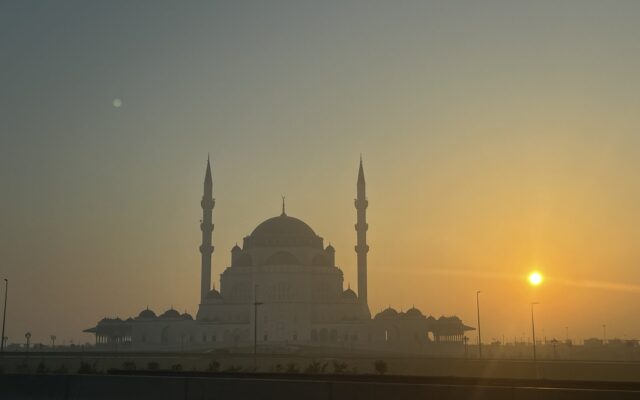
Warsan smells, on a good morning, of jasmine and damp earth. This is Dubai’s garden district: the famous plant souk with its avenues of nurseries, the villa communities spreading quietly nearby, and — just across the way — the themed towers of International City adding their bustle. It is a greener, calmer Dubai than the postcards show, and its prayer life matches the planting: rooted, unhurried and thoroughly local. For the villa families, garden workers and traders who live and work here, Warsan’s mosques are the still centre of a district that grows things.
Villa communities and their mosques
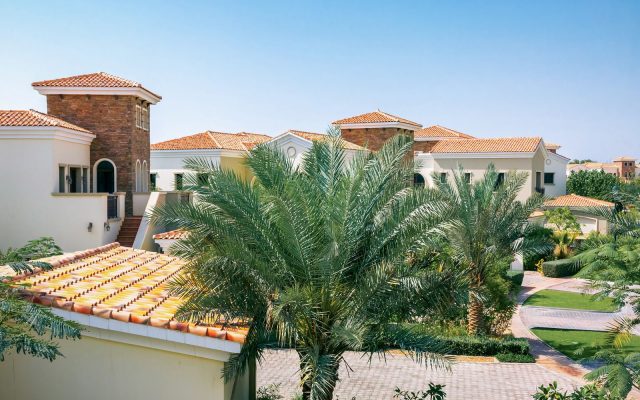
Warsan’s residential side — villa streets developed in phases, popular with families who want space, gardens and quiet — follows the classic Dubai pattern: neighbourhood mosques serving the streets closely, so daily prayer is a walk in the cooler hours and a short hop in the heat. These are family congregations through and through. The same households meet at Maghrib with the regularity of relatives; children are known by name and watched over collectively; and Friday turns the local mosque into the week’s reunion, with the sermon in Arabic and the greetings afterwards in the many languages of the district’s households.
The routine needs the usual small discipline: prayer times change daily, so check the official UAE calendar or a prayer times app for the day, and on Fridays arrive with time in hand. Beyond that, villa-district prayer asks nothing of you but presence — and repays it with the fastest route into community life that a new Warsan family can find.
The plant souk at prayer time
The plant souk gives Warsan a second congregation: the traders, nursery workers, landscapers and drivers whose working day is spent among palms, pots and irrigation lines. Their prayer rhythm is the souk rhythm — pauses taken between customers, colleagues covering a stall of bougainvillea while another slips away, and a shared understanding that the business of growing things can wait ten minutes. Garden work starts early in this climate, so Fajr and the working day are close companions here; by the time the sun is serious, the first prayer is long done and the misting lines are on.
There is a particular pleasure, traders will tell you, in praying within sight of greenery. The mosques serving the Warsan side draw worshippers from the souk, the villas and the International City edge in one mixture — a reminder that the district’s boundaries matter much less than its shade. Delivery drivers time their rounds around the midday prayer, nursery staff take their breaks in turn under the trees, and regulars develop the souk’s own small courtesies: a stall watched, a crate moved, a cup of tea waiting for the man just returning from the mosque. It is commerce conducted at a human pace, in a district that has never seen any reason to hurry its kindness.
📸 Follow @dxbtalk1 on Instagram for daily Dubai in photos →
Evenings and Ramadan among the gardens
Maghrib in Warsan is soft: sprinklers ticking in the nurseries, families walking home, the call drifting over plant rows and villa roofs alike. Isha brings the neighbourhood out once more before the district’s early, garden-town bedtime.
Ramadan — dates set by moon sighting and official announcement each year — has a flavour here that residents treasure. Iftar tables carry an unusual amount of home-grown produce; the night prayers are followed by unhurried conversations in genuinely cool night air, scented by the souk; and the mosques’ charity finds its way, as it does everywhere in Dubai, quietly and without ceremony. It is Ramadan at walking pace, in a district built at walking pace.
- Villa families: your nearest mosque is your community centre — Fridays there will organise your social life for you.
- Souk traders and workers: prayer pauses are built into the souk’s day; the mosques serving Warsan and the International City side are never far.
- New arrivals: most mosques are for worshippers, and non-Muslim entry varies by mosque; the guided visit experience is at Jumeirah Mosque.
Rooted
Warsan will never shout for attention, and its mosques do not either. They do something better: they root a district of growers — of plants, of families, of children — in a rhythm older than the nurseries and likely to outlast us all. Come at sunset, when the souk is hosing down and the villas are lighting up, and listen to the adhan float over the green rows. In Warsan, even the call to prayer sounds like it is helping things grow.