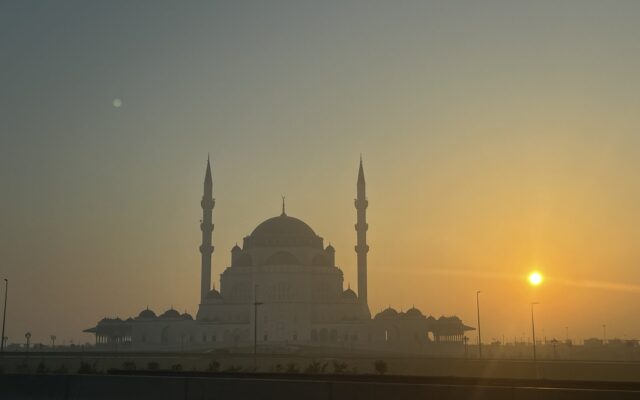
Newcomers sometimes worry about finding a mosque in Deira. Residents smile at the question, because in Deira the real skill is not finding a mosque — it is choosing between them. This is the oldest commercial quarter of Dubai, a dense weave of souks, wholesale lanes, budget hotels and Creek-side quays, and prayer has been built into its streets for generations. Wherever you are standing in Deira, a mosque or prayer space is almost certainly a short walk away. This guide explains how traders, workers and visitors actually use them through the day.
How Deira’s prayer map works
Think of Deira in layers. Around Baniyas and the Creek you will find mosques serving the abra stations, the dhow wharves and the oldest trading streets. In Naif and Sabkha, small mosques sit steps from the perfume, textile and electronics souks. Further in, around Abu Hail and Hor Al Anz, larger community mosques serve the residential blocks. Many bigger buildings — hotels, malls, markets and offices — also have prayer rooms for men and women, usually signposted as a musallah, which can be the most practical option when you are mid-errand.
The golden rule is simple: listen. The adhan carries beautifully through Deira’s lanes, and where you can hear it clearly, you are close. Failing that, any shopkeeper will point you onwards with genuine pleasure — asking for the nearest mosque is the one direction request in the souks that never leads to a sales pitch.
Timing prayer between souk walks and abra rides
Deira rewards those who plan loosely around prayer. Prayer times change daily with the sun, so check the official UAE calendar or a prayer times app for the day before setting out, and build your souk walk to pause rather than clash. Many visitors and traders alike enjoy the natural rhythm: browse the gold and spice souks in the morning, take Dhuhr in a nearby mosque as the heat peaks, rest through the fiercest afternoon hours like a local, then return for Asr and the golden, busy run-up to Maghrib, when the Creek turns to copper and an abra ride costs little more than the breeze.
- Carry small change and patience: souk lanes get busy immediately before prayer as everyone moves at once.
- Dress for the possibility: modest clothing saves a detour if you plan to pray during your outing.
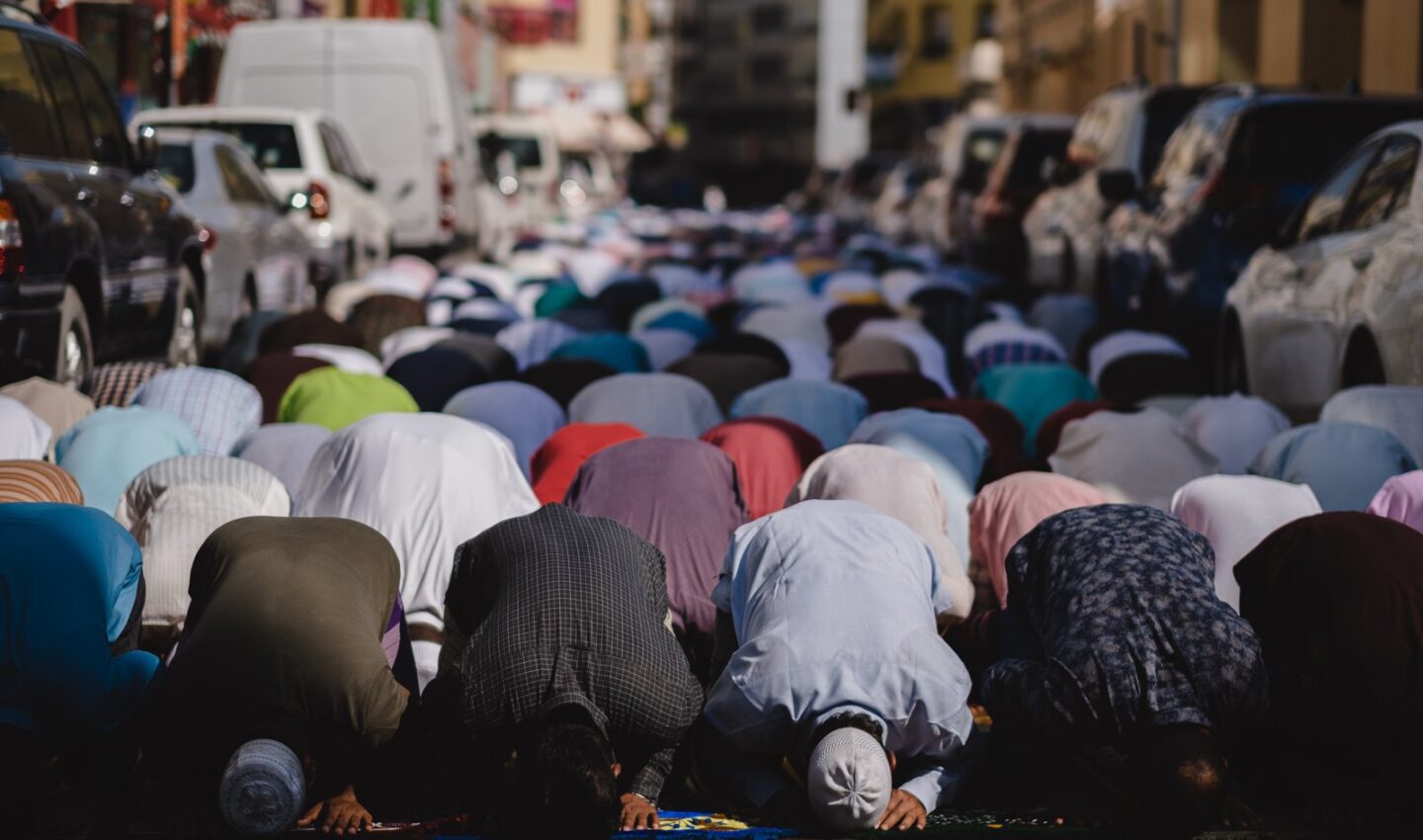
- Friday is different: shops close around the midday prayer and mosques fill early — go in good time or plan lunch first.
- Summer strategy: choose the closest option; Deira’s density is your friend in the heat.
📸 Follow @dxbtalk1 on Instagram for daily Dubai in photos →
Prayer breaks for Deira’s workers
For the tens of thousands who work here — porters, traders, tailors, technicians, delivery riders — prayer is woven into the shift rather than squeezed around it. Colleagues cover counters for each other, workshops pause in rotation, and the small mosques near the souks are perfectly shaped for this: close, cool, and used to worshippers arriving in a steady flow rather than all at once. During Ramadan, whose dates depend on moon sighting and official announcement each year, the pattern softens further — quieter afternoons, shared iftars in and around mosques at sunset, and the district’s night prayers drawing crowds long after the shops would normally close.
Manners that matter
Most Deira mosques are working places of worship, not visitor attractions, and non-Muslim entry varies by mosque — if you are not there to pray, admire from outside and leave the doorway clear at prayer times. The well-known place for a guided mosque visit is Jumeirah Mosque, across the Creek and up the coast. Worshippers, meanwhile, need no invitation beyond the call itself: remove your shoes, keep phones silent, and let the front rows fill naturally.
The Deira way
Praying in Deira teaches you the district’s deepest lesson: nothing here has ever been only about business. The same lanes that move gold, saffron and mobile phones across the world also move thousands of people, five times a day, a few dozen steps in the other direction — towards quiet, carpet and company. Build that pause into your Deira day, whether you are trading, working or simply wandering, and the old quarter will make far more sense. The souks show you what Deira sells. Its mosques show you what Deira values.