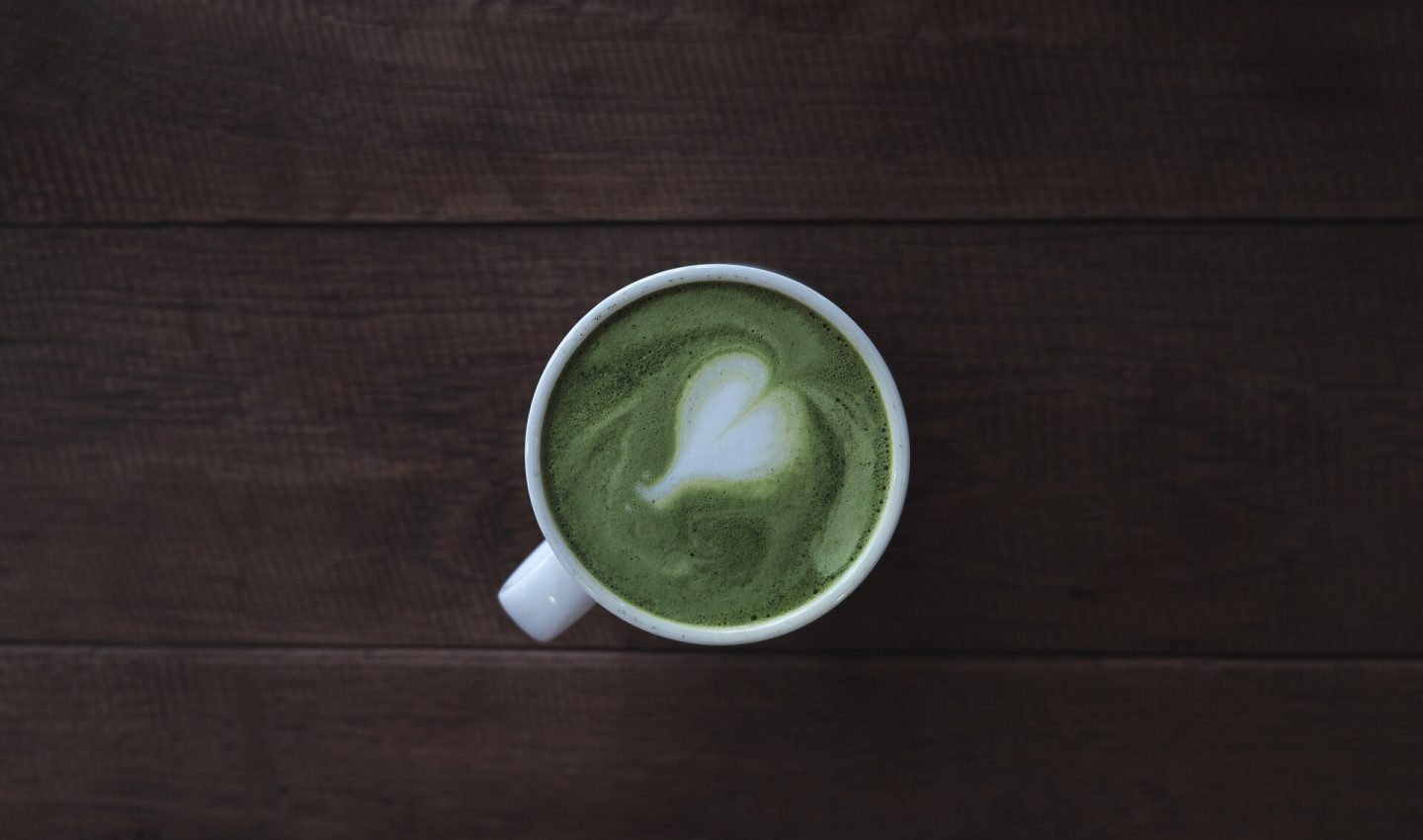
Scroll any Dubai café’s tagged photos and the green drink is everywhere. Matcha — the vivid, frothy, stone-ground Japanese tea — has gone from niche order to default menu item across the city in a couple of years, sitting next to the flat whites as if it had always been there. But matcha in Dubai ranges from the genuinely excellent to the sweetened green milkshake, and the difference is worth understanding before you pay café prices for it. This guide explains what matcha actually is, how to judge a good one, where the city drinks it, and what it should cost.
What Matcha Actually Is
Matcha is not green tea in the usual sense. It is whole tea leaves — shade-grown for the last weeks before harvest, which boosts chlorophyll and the amino acid L-theanine — dried and stone-milled into a fine powder. When you drink matcha, you consume the leaf itself, whisked into hot water rather than steeped and removed. That is why the flavour is so much more intense: umami, vegetal, slightly sweet, with a gentle caffeine lift (roughly half to two-thirds of a coffee’s, released more slowly thanks to the L-theanine) and that unmistakable bright green colour.
The grades matter. Ceremonial-grade matcha, made from the youngest leaves, is what gets whisked with water alone in Japan — smooth, naturally sweet, almost no bitterness. Culinary or latte-grade matcha is stronger and more astringent, designed to hold its own against milk and sugar. Neither is “fake”; they are tools for different drinks. What you want to avoid is the third category: pre-mixed powders bulked out with sugar and milk solids, where matcha is a flavouring rather than the main event.
How to Spot a Good Matcha in a Dubai Café
- Colour: vivid, almost electric green. Dull or yellow-green means old, oxidised or low-grade powder.
- Whisked to order: the barista should whisk the powder with a bamboo chasen in front of you, not pour from a pre-made jug.
- The menu tells the truth: places that name an origin (Uji is the classic) or a grade take it seriously.
- Unsweetened by default: a good café asks, or serves it straight and lets you adjust. Syrup-first matcha is dessert, not tea.
- Price sanity: real matcha is expensive to import. A matcha latte at AED 24–35 is plausible; one at AED 12 is telling you something about the powder.
📸 Follow @dxbtalk1 on Instagram for daily Dubai in photos →
Where Dubai Drinks It
Matcha has spread through three kinds of venues. First, the specialty coffee bars — the same cafés competing on single-origin espresso now run a matcha line, usually a straight whisked usucha or a clean iced version for the Dubai heat. Second, Japanese cafés and dessert spots, where matcha arrives in its full wardrobe: soft serve, parfaits, tiramisu, shaved ice. Third, the bubble-tea and Asian drink chains, where matcha meets cheese foam, brown sugar and every topping imaginable — fun, and a different category entirely.
Free Dubai Tools
Dubai, in Your Hands
Neighbourhood-wise, you will find the serious versions where you find serious coffee: the JLT and Al Quoz scenes, DIFC’s cafés, and the Japanese dining pockets around DIFC and Downtown. Our café guides below point you at the districts; once there, apply the checklist above and you will not go far wrong.
What It Costs
Budget AED 22–38 for a matcha latte in a specialty café, AED 20–30 for a straight whisked matcha where it is offered, and more for the elaborate dessert versions. Iced matcha tonics and sparkling versions sit in the same band. At home, a 30–40g tin of good ceremonial-grade matcha from a Japanese grocer or specialty store runs roughly AED 90–160 and makes 15–20 bowls — the maths that converts many café drinkers into home whiskers.
Making It at Home
You need three things: decent matcha, a bamboo whisk (chasen), and water at about 80°C — boiling water scalds the powder and turns it bitter. Sift a teaspoon or two into a bowl, add a splash of water, whisk in a fast M motion until frothy, then top with more water or steamed milk. Dubai’s Japanese and Korean supermarkets, and the gourmet food halls, stock real tins; check the harvest or expiry date, because matcha stales faster than coffee once opened. Store it sealed, cool and dark, and use it within a couple of months.
Why Everyone Is Ordering It
Part of it is the look — nothing photographs like that green. Part is the ritual: in a city of takeaway speed, a drink that must be whisked to order feels deliberate. And part is the effect — regular drinkers describe matcha’s lift as calmer and longer than coffee’s jolt, which suits a working day. Whether it becomes your daily drink or stays an occasional treat, Dubai now does matcha well enough that the good version is easy to find — as long as you know the colour to look for.
Frequently Asked Questions
Does matcha have caffeine?
Yes — a typical serving has roughly 30–70mg of caffeine, less than a coffee but far from zero, and the amino acid L-theanine smooths the effect, which is why people describe it as calm energy rather than a jolt.
What should a matcha latte cost in Dubai?
Expect AED 22–38 in a specialty café. Much cheaper usually means a sweetened premix; the powder itself is a costly import, and the price reflects that.
What is the difference between ceremonial and culinary matcha?
Ceremonial grade uses the youngest leaves and is smooth enough to drink whisked with water alone. Culinary or latte grade is bolder and more astringent, made to stand up to milk, sugar and baking.
Where can I buy matcha powder in Dubai?
Japanese and Korean supermarkets, gourmet food stores and specialty coffee retailers stock tins of real matcha. Check the date, buy small tins, and store the powder sealed away from heat and light.
DXB FACT — DID YOU KNOW?
Snow in the middle of the desert
- Ski Dubaithe Middle East's first indoor ski resort
- Real snow22,500 m² of it
- Inside temperature−1°C to −4°C, all year
- Slopes5 — including an indoor black run
Source: The National
A new Dubai fact every dayRead more »
Reader poll
Poll of the Day
A fun reader poll, just for curiosity — not an official survey. A new question arrives every day.