Dubai has two drinks economies. One is the specialty café, where a flat white costs AED 22 and the beans have a biography. The other is the cafeteria karak: a small paper cup of strong, sweet, spiced tea that costs about a dirham, is ordered from car windows, construction sites and office desks all day long, and outsells everything else in the city combined. If you want to understand how Dubai actually runs, start with karak. This is its story — what is in it, where it came from, and where to drink the real thing.
What Karak Is
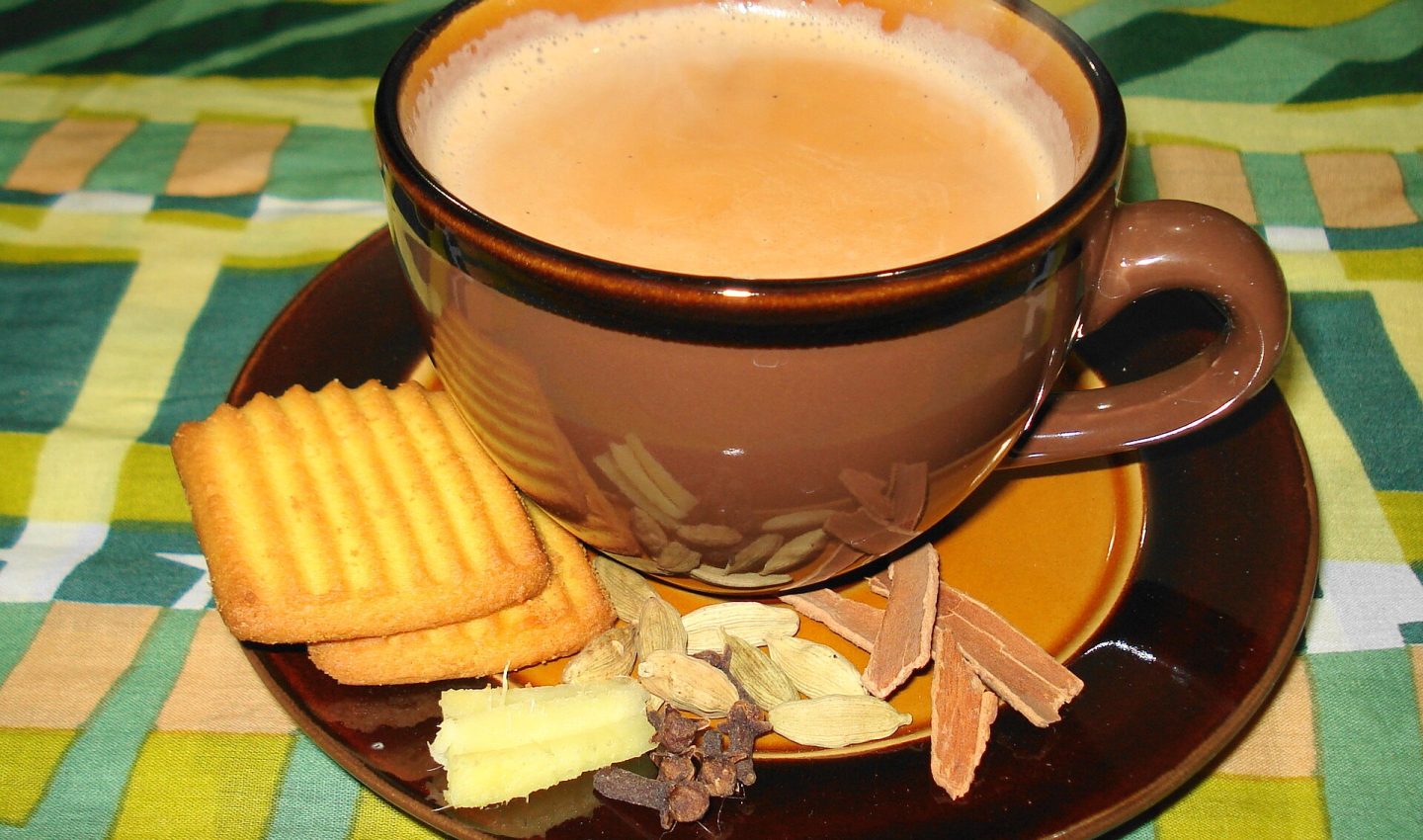
Karak chai is strong black tea boiled — not steeped — with milk (traditionally evaporated milk, which gives it that caramel depth), sugar, and spices: cardamom above all, often with saffron, ginger or a house blend nobody will fully disclose. It is boiled hard and long, sometimes repeatedly, until it turns the colour of light toffee and develops its signature body. The name comes from the Urdu and Hindi word for strong — kadak — worn down by a thousand daily orders into “karak.”
It arrived with the South Asian workers and traders who built modern Dubai, adapted from the masala chai of home to cafeteria economics: cheap, fast, strong enough to restart a shift, sweet enough to be a small celebration. The cafeterias of Satwa, Karama, Deira and Hor Al Anz perfected it, and the city never looked back.
The One-Dirham Ritual
The classic transaction has not changed in decades. You pull up outside a cafeteria — or walk up to the counter — and order “one karak.” What arrives is a small paper cup, too hot to hold comfortably, filled to the brim. Office boys carry it back by the trayful, six or eight cups balanced through the heat. Drivers drink it at dawn before the first fare. The price at a neighbourhood cafeteria still starts around AED 1–2, which in 2026 Dubai may be the last true one-dirham pleasure left.
And it comes with food culture attached: karak and a paratha, karak and an omelette sandwich, karak and a plate of biscuits for dunking. The cafeteria breakfast — karak at the centre of it — is one of the great cheap mornings of this city.
Free Dubai Tools
Dubai, in Your Hands
📸 Follow @dxbtalk1 on Instagram for daily Dubai in photos →
Where to Drink It
- The old cafeterias: Satwa, Karama and Deira are the heartland. Look for the places with a queue of regulars and a man whose only job is the tea urn — that is your mark of quality.
- Filli Café: the chain that took cafeteria chai upmarket — its zafran (saffron) chai is the famous order — with branches across the city and the same ritual at a few dirhams more.
- The premium end: spots like Karak House on the Boulevard serve a refined version in a sit-down setting. It costs more and tastes polished; whether it is “real” karak is a debate Dubai enjoys having.
- Petrol stations and bakeries: half the city’s karak is consumed at counters you would never photograph. That is rather the point.
How to Order Like a Regular
Keep it simple: “one karak” needs no further specification at a good cafeteria. If you have preferences, the vocabulary is small and useful — kam shakkar (less sugar), without spice if cardamom is not your thing, or a zafran karak where saffron is offered. In the car-ordering tradition, a short honk or a raised hand brings the tray out to you; have small notes ready. And never rush it: karak is drunk at the temperature of lava by the experienced, in small sips, ideally with something fried within reach.
Karak vs the Café: Why Both Survive
Visitors sometimes ask why the one-dirham cup thrives in a city that also queues for AED 35 pour-overs. The answer is that they are not the same product. Specialty coffee is about flavour nuance and place; karak is about strength, sweetness, habit and belonging — it is the taste of the working city, of breaks and beginnings, of the drive home at 2am. Dubai’s cafeterias open before dawn and the karak never really stops. Every few years a café trend arrives to challenge it; the urn outlasts them all.
Frequently Asked Questions
How much does karak tea cost in Dubai?
At a neighbourhood cafeteria, around AED 1–2 for the classic paper cup. Chains like Filli charge a few dirhams more, and sit-down premium versions can reach AED 15–20.
What is karak tea made of?
Strong black tea boiled with milk (often evaporated milk), sugar and spices — cardamom is the signature, with saffron, ginger and house blends as variations. It is boiled hard, which gives it its body and toffee colour.
Where is the best karak in Dubai?
The cafeterias of Satwa, Karama and Deira are the traditional heartland — follow the regulars. For a reliable chain version, Filli’s zafran chai is the city’s most famous cup.
Does karak contain caffeine?
Yes — it is brewed strong from black tea, so a cup carries a real caffeine kick, roughly comparable to a modest coffee, which is precisely why the city runs on it.
Order one the next time you pass a cafeteria with a queue. For the price of a parking minute, you will hold the drink that has fuelled Dubai for fifty years — and you will probably order a second.
DXB FACT — DID YOU KNOW?
Snow in the middle of the desert
- Ski Dubaithe Middle East's first indoor ski resort
- Real snow22,500 m² of it
- Inside temperature−1°C to −4°C, all year
- Slopes5 — including an indoor black run
Source: The National
A new Dubai fact every dayRead more »
Reader poll
Poll of the Day
A fun reader poll, just for curiosity — not an official survey. A new question arrives every day.