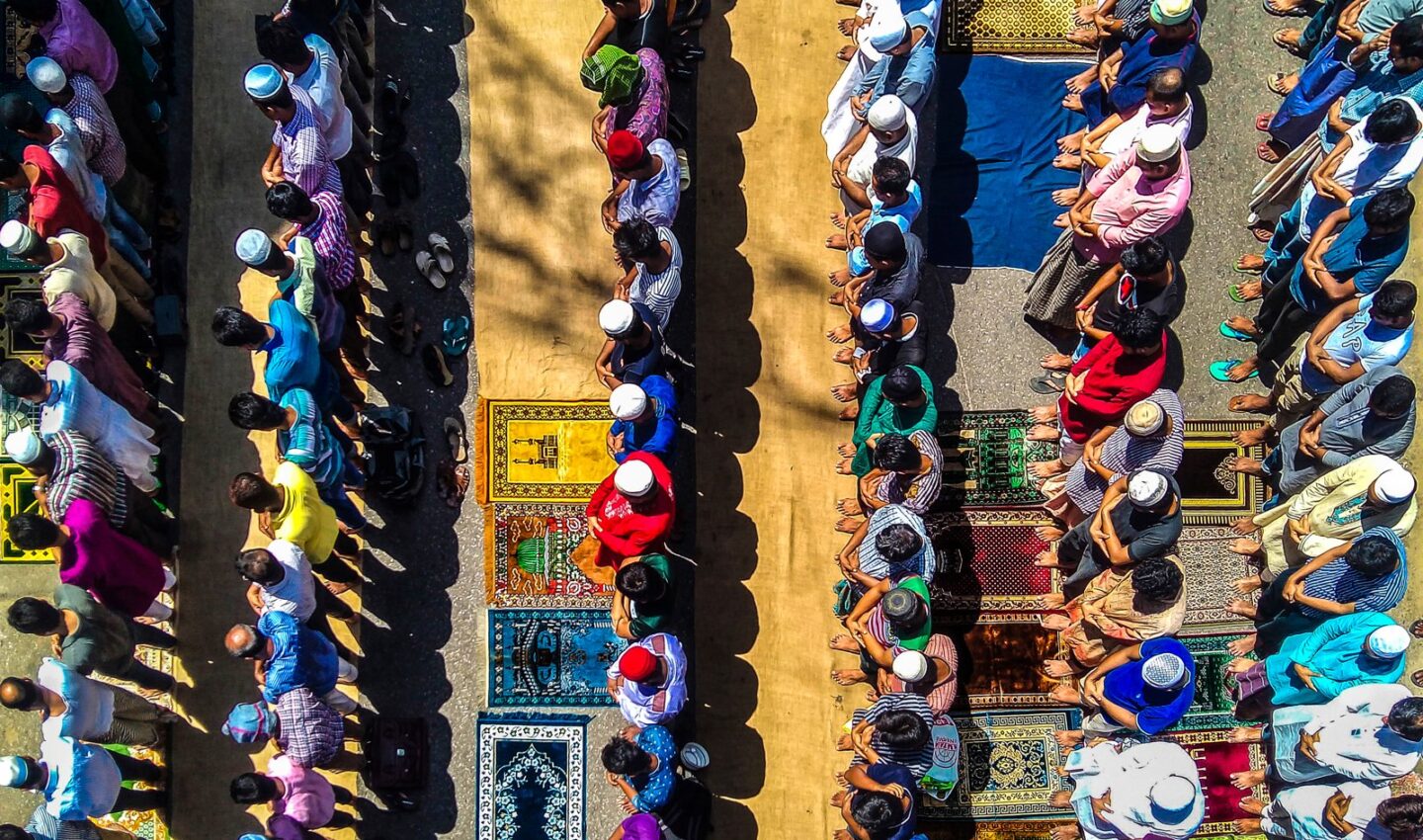
To see Dubai whole, you have to see it at Maghrib in Muhaisnah. This is the city’s north-eastern labour heartland — known to many by the older name Sonapur, city of gold — where a huge share of the men who build, clean, drive and maintain Dubai live in the accommodation blocks. As the workday ends and the light turns, the streets fill with a river of people flowing one way: towards the mosques. Showered, changed, prayer caps on, sandals slapping the warm pavement — thousands of workers walking to sunset prayer together. It is one of the most moving sights in the Emirates, and it happens every single evening.
The Working Day Ends, the Evening Begins
The rhythm starts in the late afternoon. Buses return from sites and facilities across the city, and the blocks come alive: washing lines, phone calls home, queues for dinner, football in the open spaces. Then the adhan for Maghrib sounds over the district, and the whole pattern pivots. Men stream out of the buildings in groups — roommates, workmates, friends from the same village back home — and the streets take on the orderly, unhurried feel of a small town at prayer time, which, for this hour, is exactly what Muhaisnah becomes.
The mosques serving the area fill generously at Maghrib and still more on Fridays and through Ramadan. Congregations here are famously multinational even by Dubai’s standards: Pakistanis, Indians, Bangladeshis, Nepalese, Afghans, Filipinos, Africans and Arabs in rows that mirror the workforce itself. Prayer is in the same form as in the grandest mosque on Jumeirah Beach Road — the carpet is humbler, the devotion identical, the welcome just as complete.
The Mosque as Rest, Dignity and Friendship
For men living far from their families — many for years at a stretch, sending their earnings home to Pakistan, India, Bangladesh and beyond — the mosque is far more than a prayer hall. It is the centre of the week’s social gravity: the place where news travels, where a friend who has been ill is checked on, where a new arrival from the home village is absorbed into a circle within days. After prayer, the courtyard and the streets outside hold the real business of the evening: conversation, laughter, shared snacks from the small shops, plans for Friday.
There is dignity in the routine that visitors often remark on. However hard the day — and the days here can be very hard — the evening belongs to the men themselves: washed, dressed in clean clothes, greeted by name, standing in rows where their work clothes do not follow them. Elders among the workers are treated with visible respect, given the comfortable places, walked back slowly by younger men. Grief and joy are both carried communally; when a worker’s family back home celebrates or mourns, his mosque circle knows, and responds.
📸 Follow @dxbtalk1 on Instagram for daily Dubai in photos →
Ramadan in the Heartland
Ramadan deepens everything. Mosque and community iftars feed large gatherings nightly in and around the district, with volunteers and donors from across the city treating service here as a privilege. Taraweeh prayers draw crowds that turn whole evenings into festivals of quiet devotion. Men fasting through a working day in the heat break their fast among friends, and the loneliness that can shadow expatriate labour is, for a month, thoroughly outnumbered. Dates and timings follow the official announcements, as everywhere in the UAE.
What the Rest of Dubai Should See
- This is the city’s foundation. The towers Dubai photographs were raised by the men walking to Maghrib here.
- Friday mornings show Muhaisnah at its most peaceful — cricket, family video calls, best clothes for Jummah.
- Visitors are met kindly when they come respectfully; the district’s hospitality to guests at iftar is a point of pride.
- Brotherhood is practical: shared food, shared lifts, shared remittances advice, shared everything that can be shared.
A River Flowing Towards Peace
Stand on a Muhaisnah pavement at sunset and watch the river of men flow past towards the mosque doors — tired, cheerful, together. Dubai’s story is usually told from the top of its towers. Part of it, perhaps the best part, is told here at street level: in brotherhood practised nightly by the thousands who built the city, and who end every hard day the same way — walking, side by side, to prayer.