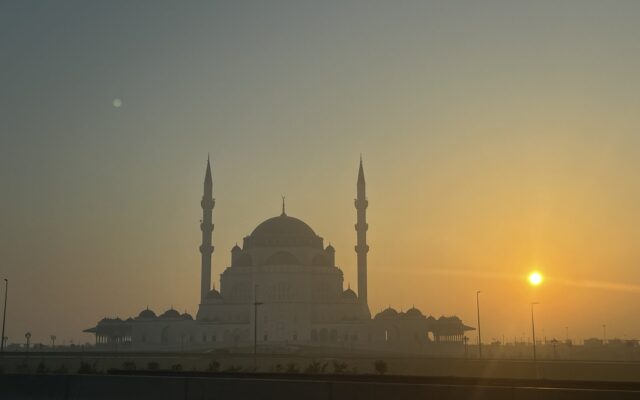
Karama runs on appetite and affection: sizzling cafeterias, fabric and gift shops doing roaring trade, families doing their weekend rounds of the markets. At the heart of this lively, lived-in community stand its mosques — the calm centres around which Karama’s South Asian and Arab families, and neighbours of every background, organise their days. If you want to understand Karama, start where Karama starts: at prayer.
The district’s mosques are never far — steps from the markets, the eateries and the old post office streets — and neither, it sometimes seems, are its worshippers.
Steps From the Markets
Karama’s layout is a gift to the faithful. Homes, shops and mosques interleave so tightly that prayer fits into the day like breathing. A shopkeeper can close for Dhuhr and be back before his tea cools. A mother can pray at Asr between the school run and the market. Elderly residents, for whom distance matters most, find a mosque within a short, familiar walk — a fact that shapes the district’s high proportion of white-bearded regulars, the beloved front-row elders every Karama mosque knows.
The mosques themselves are known locally as community fixtures rather than landmarks — well-kept, well-used and well-loved, their courtyards functioning as the district’s informal noticeboards, where news travels faster than any messaging app: a wedding, a job opening, a neighbour who needs a hand.
A Lively, Mixed Community at Prayer
Karama’s congregation is one of Dubai’s most affectionately mixed. South Asian families — Indian, Pakistani, Bangladeshi and Sri Lankan — form its famous core, praying beside Arab families, Filipino residents, African workers and Emirati neighbours. After prayer the courtyard sounds like the district itself: Malayalam, Urdu, Tamil, Hindi, Arabic, Tagalog and English braiding together over handshakes.
Children are everywhere in Karama’s mosque life, and the district is proud of it — boys in Friday finery mimicking their fathers’ every move, girls racing through the courtyard afterwards, grandparents distributing sweets with undisguised delight. Prayer times change daily, so families check the official UAE calendar or a prayer times app for the day, but the real timetable is simpler: in Karama, life is arranged around the mosque, and the mosque is arranged around families.
📸 Follow @dxbtalk1 on Instagram for daily Dubai in photos →
Friday: Karama’s Weekly Festival
Friday Jummah is the district’s great weekly gathering. Mosques fill early; arrive late and you will pray in the courtyard — which many regulars secretly prefer, under the sky with the whole community. Afterwards Karama performs its favourite ritual: the family lunch migration, hundreds of households flowing into the cafeterias and restaurants for biryani, dosa, grilled fish and long conversation. The markets do their best business of the week in the same happy hours.
Ramadan turns the volume of generosity up further, with mosque iftars and neighbourhood sharing that match Karama’s big-hearted reputation. Ramadan and Eid dates depend on moon sighting and official announcement; Karama’s welcome, famously, does not.
For Shoppers and Visitors
Muslim visitors to Karama’s markets will find prayer refreshingly easy — ask any shopkeeper and you will be directed, possibly escorted, to the nearest mosque, with mall and market prayer rooms as backup. Non-Muslim visitors should treat the mosques as community places of worship: entry should not be assumed, as with most mosques in Dubai, but the surrounding streets offer the full Karama experience — colour, food and kindness — with mosque courtyards respected and worshippers left to their peace.
- Setting: markets, eateries and the old post office streets
- Congregation: South Asian and Arab families at the core, everyone welcome in the rows
- Weekly peak: Friday Jummah followed by the great family lunch
- District gift: a mosque within a short walk of almost everywhere
The Heart Is Easy to Find
Some districts hide their soul. Karama wears its soul at the centre of the map, with a minaret’s call rolling over the market roofs five times a day and a community that answers as one. The shops give Karama its colour; the eateries give it its flavour; the mosques give it its heart.
Come on a Friday. Pray, or simply wander respectfully, then join the lunch crowds with the whole district. You will leave understanding what residents mean when they say Karama is not just a place to live. Watched over by its mosques, filled by its families, it is a place to belong.