

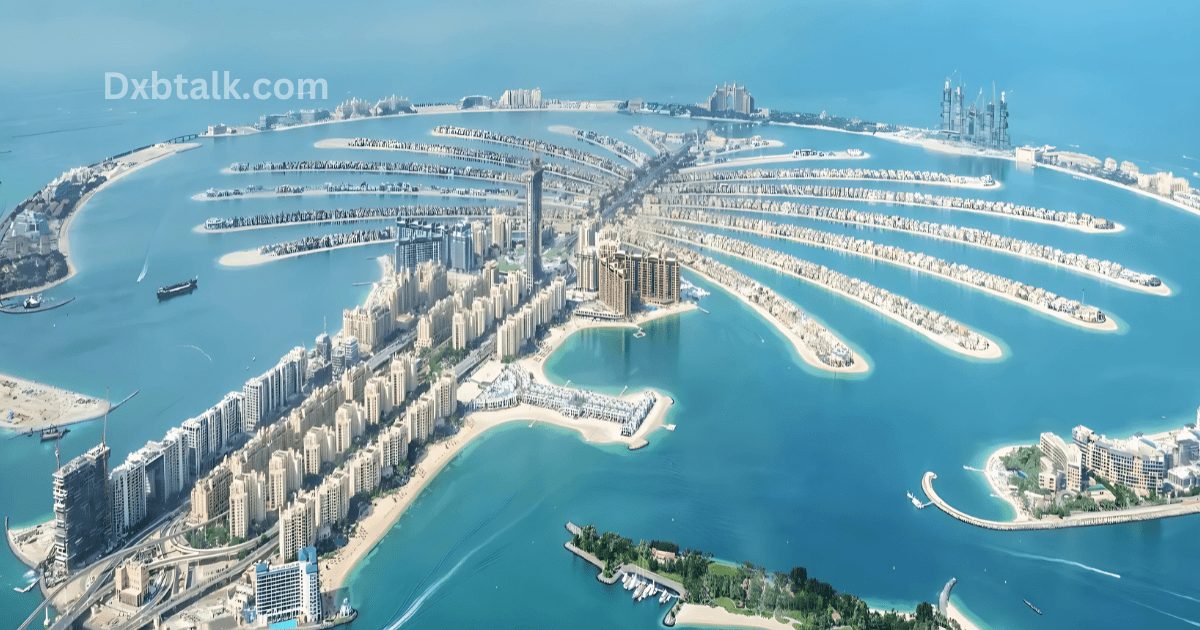
Jumeirah is Dubai’s coastal drawing room, and its architecture tells the district’s double story: a heritage of shaded courtyards and white stone on one side, and on the other, some of the most recognisable modern structures on Earth. Walk this shoreline slowly and the buildings explain how tradition and ambition learned to share one beach.
Burj Al Arab: The Sail
The Burj Al Arab is the famous symbol — a luxury hotel standing on its own island, its mast-and-sail silhouette engineered to evoke a dhow under full canvas. The gesture matters: Dubai’s most futuristic hotel is shaped like its oldest technology, a trading sail. You can admire it from the public beach, where it performs beautifully at sunset, or step inside for a meal or afternoon tea, where the interiors double down on the drama. Either way, it is the district’s exclamation mark, visible up and down the coast.
Madinat Jumeirah: The City Within
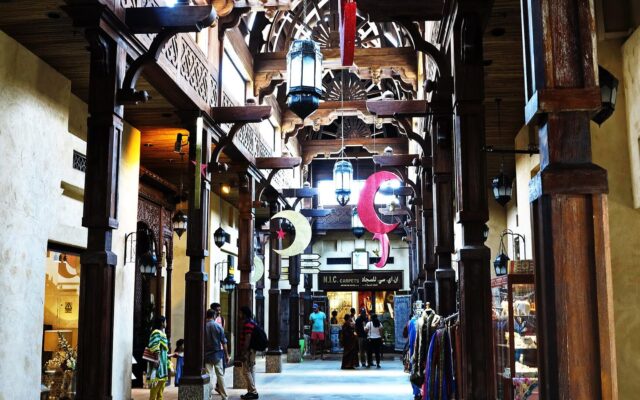
A few minutes south, Madinat Jumeirah takes the opposite approach to luxury: instead of one icon, an entire traditional city, lovingly composed. Wind towers and sand-toned façades line winding waterways; abras ferry guests between hotels, restaurants and a souk built in the old style, selling handicrafts where a market has always belonged — by the water. The complex encompasses multiple hotels and dozens of restaurants, all designed to reflect the region’s heritage rather than erase it. Stroll it at dusk, when the lanterns light and the Burj Al Arab appears framed at the end of the canals, and the theatricality feels earned.
📸 Follow @dxbtalk1 on Instagram for daily Dubai in photos →
Jumeirah Mosque: The Open Door
The Jumeirah Mosque is the district’s most meaningful building. Built in white stone in a classical style, with twin minarets and intricate detailing, it is one of the few mosques in Dubai open to non-Muslim visitors. Guided tours offer genuine insight into Islamic culture and architecture — the geometry, the calligraphy, the logic of the prayer hall — making it an educational experience as much as an aesthetic one. Visitors consistently rank the tour among the most worthwhile hours in the city; modest dress is required, and the welcome is warm.
The Contemporary Counterpoint
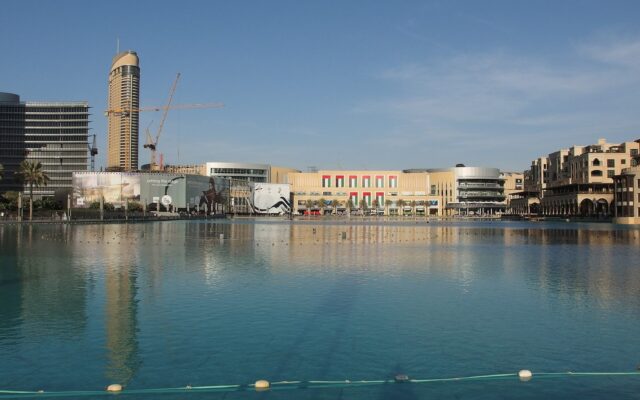
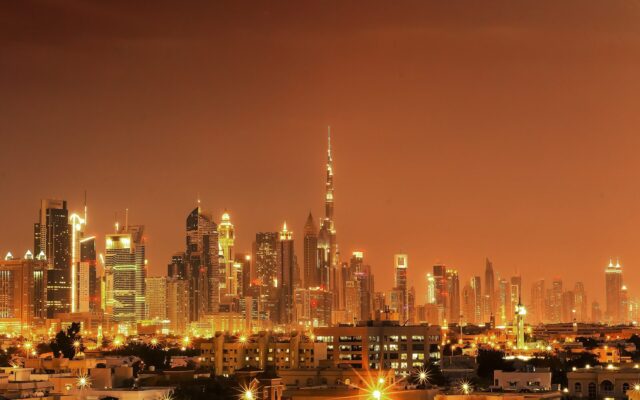
At the district’s northern edge, the Dubai Canal cuts a modern waterway inland, lined with contemporary buildings, promenades and bridges, with skyline views back toward downtown. The canal area suits a relaxing walk or a boat ride, and it stages the district’s argument in a single panorama: wind-tower silhouettes behind you, glass towers ahead. Jumeirah’s architectural wonders work because neither era apologises for the other. The sail honours the dhow; the mosque anchors the meaning; the canal points forward. Tradition and modernity, sharing one shoreline, each making the other more interesting.
Walking the Architecture
The wonders assemble into an easy half-day on foot. Start at the mosque in the morning, when the tour schedule runs and the stone is at its brightest, and take the guided visit seriously — it recalibrates how you read every traditional building afterwards. Drift down to the public beach for the Burj Al Arab in full daylight, then give the Madinat the golden hour, when its waterways and wind towers are lit like a stage set and the restaurants along the canals open for the evening. Finish, if energy remains, with the canal’s promenades after dark, the modern towers reflected in black water. Four stops, three centuries of building ideas, one coastline — Jumeirah makes the argument that a district’s architecture, read properly, is the district itself.
The Villas: Architecture at Garden Scale
Do not overlook the district’s quietest architecture: the villas behind the garden walls of the residential streets. Jumeirah’s homes run from older, low-slung houses with shaded courtyards to contemporary statements in glass and stone, and together they explain the district’s premium — space, privacy and greenery at sea level, a combination Dubai’s vertical districts cannot copy. Even from the pavement, the variety instructs: this is what the city builds when it builds for families rather than skylines, and the calm of those streets is itself a design achievement.



Join the conversation