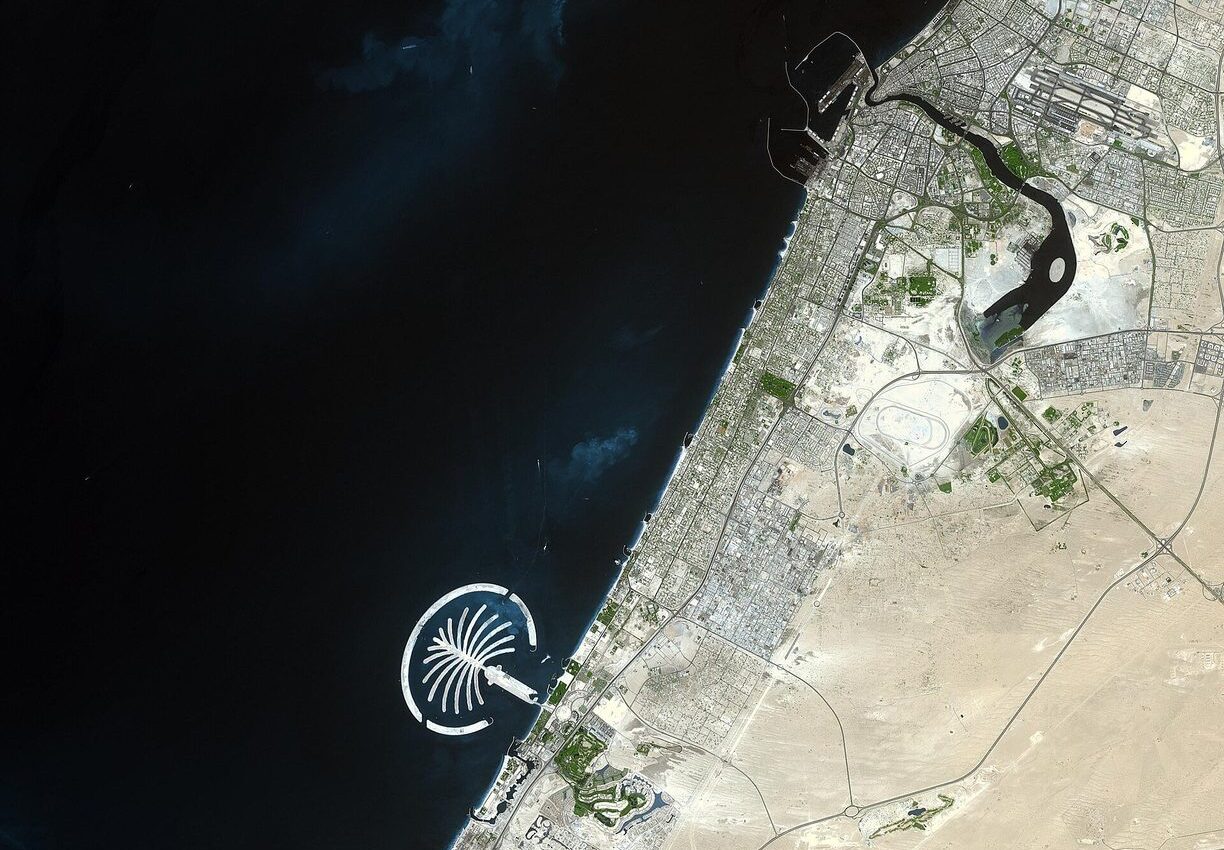
Before there were highways, airports and skyscrapers, there was the Creek. This natural waterway, winding into the city from the Gulf, shaped where Dubai grew, how it traded and who came here — and its influence is still legible in the oldest neighbourhoods today. Every era of Dubai since, from the ports to the free zones, is in some sense this waterway’s story retold at a larger scale.
A Natural Harbour
The Creek gave early Dubai something priceless: sheltered water where boats could load, unload and shelter safely. Along a coastline that is often exposed, that calm inlet made the area a natural meeting point for traders travelling between Arabia, Persia, India and East Africa. Settlements grew on both banks because the water connected them rather than dividing them. One side became known for its markets and merchants, the other for homes, mosques and daily life — and the crossing between them, by small wooden boats, became one of the city’s defining journeys. It still is. The abra ride a tourist takes today for the pleasure of it follows the same logic, and nearly the same route, as the working crossings of two centuries ago.
Trade Built the City
For generations, the Creek was Dubai’s economic engine. Dhows carried pearls, spices, textiles and everyday goods between here and the ports of three continents, and the trade around the harbour — the taxes, the warehousing, the merchant houses — funded the city’s early growth. The merchant families and trading networks established in this era laid the groundwork for everything that followed. When Dubai later reinvented itself as a global business hub, it was not adopting a new character; it was scaling an old one. Modern Dubai’s ports, free zones and logistics industry are the Creek’s story written at a much larger scale — the same instinct for connection, the same welcome for whoever arrives with something to trade.
📸 Follow @dxbtalk1 on Instagram for daily Dubai in photos →
The Creek Today
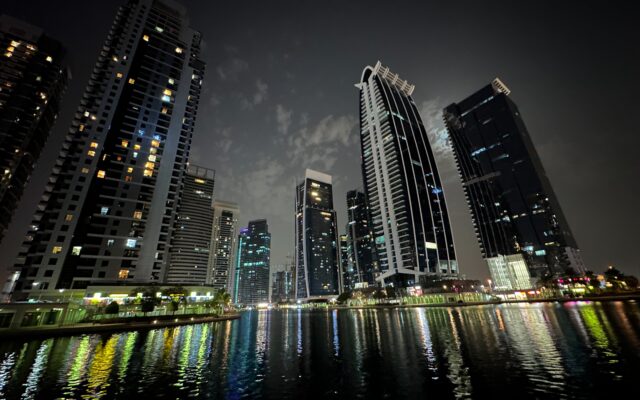
Today the Creek is both heritage and living city, and the second half of that phrase matters as much as the first. Traditional boats still cross it, markets still line its banks, and historic buildings stand alongside newer development — not as a museum quarter, but as a working waterfront that happens to be old. A walk along the water, or a short crossing by boat, remains one of the best ways to understand the city’s origins: stand on the bank at dusk and you can watch the entire history — dhows, abras, minarets, and the modern skyline rising behind them — in a single view.
The Patient Lesson
The Creek reminds visitors that Dubai was not built overnight. It grew patiently and pragmatically, from a small trading inlet into a global city, one cargo and one generation at a time. The water that started it all is still flowing through its heart — and the city, at its best, still behaves like the harbour it began as.
Reading the Creekside Like a Text
The Creek teaches its own history to anyone who walks it slowly. On the Deira side, the souks still organise trade the old way — by commodity, by relationship, by reputation built over decades. On the Bur Dubai side, the wind-tower houses of the old merchant quarter show how the trading families lived: courtyards turned inward against the heat, towers catching the sea breeze, wealth expressed in coral stone and carved doors rather than height. The warehouses, the mosques, the abra stations each mark a layer of the story. You do not need a guide to read it, though a good one helps. You need an unhurried hour and the habit of looking at what the water made necessary.
The Lesson Other Cities Envy
Many trading ports outgrew and abandoned their original harbours. Dubai kept hers at the centre of the city’s identity — working, crossed daily, celebrated rather than preserved in aspic. That continuity is rare, and it explains the city’s confidence better than any skyline statistic: Dubai knows where it came from because it can still take a boat across it.