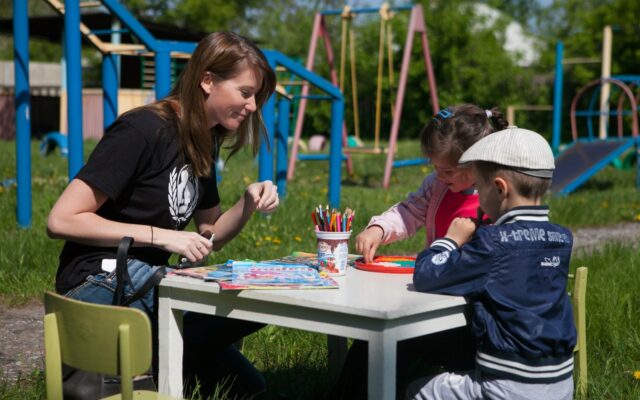
A new school in Dubai often means more than a new school. For many children it is also a new country, a new home and a classroom where everyone else seems to know the rules already. The first month sets the emotional tone, and the encouraging truth is that settling in is a process with predictable stages — wobbly first days, a gradual finding of feet, then the ordinary ups and downs of school life. Children move through those stages at very different speeds. Your job is not to eliminate the wobble but to make home the steady place while it passes.
Before Day One: Shrink the Unknown
Uncertainty is what unsettles children most, so reduce it wherever you can. Attend any induction or orientation the school offers — most Dubai schools run them for mid-year and September joiners. Walk or drive the route together, including where the bus stops or where you will collect them. Practise the small physical things: the new uniform, carrying the bag, opening the lunchbox and water bottle. For younger children, a social story or simple conversation about the day’s shape — arrival, lessons, snack, play, home time — gives them a mental map. If the school can share the teacher’s name and a class photo or welcome message, so much the better.
Routines: The Anchor of the First Weeks
Keep home routines deliberately boring for the first month. Regular sleep and wake times, a predictable morning sequence, the same after-school pattern of snack, downtime, homework and family time. In Dubai, the early school start times mean evenings need protecting — this is not the month to begin three new evening activities. Keep weekends low-key too, tempting as it is to compensate with treats and trips. Children who are processing a big change all week need recovery time, and overtiredness masquerades as homesickness or behaviour problems remarkably well. Familiar food, familiar objects in the new bedroom and video calls with old friends and grandparents all do quiet, useful work.
📸 Follow @dxbtalk1 on Instagram for daily Dubai in photos →
Friendships: Slower Than You Hope, Normal Anyway
Parents often worry most about friendships, and most children take longer to find their people than the first fortnight. Help without hovering: learn classmates’ names, say yes to playdate invitations, and where you can, issue some — a simple playdate after school in the first weeks can change a child’s whole weather. School buddy systems are common in Dubai schools, and teachers are skilled matchmakers; let them do it. With older children, clubs and sports teams are the fastest friendship engines, so encourage one or two school activities even if they initially resist. Reassure your child, truthfully, that feeling on the edge of groups at first is the universal experience of every new starter, including the confident-looking ones.
Communicating With the Teacher
Introduce yourself early, briefly and warmly — an email saying who you are and anything the teacher should know. Then give the school room to work. Most schools schedule a settling-in check or are happy to respond to a short email after two or three weeks; that is the moment for questions about friendships, appetite at lunch and how they seem in class. Share relevant changes at home — a parent travelling, a new sibling, a house move still in progress — because teachers interpret behaviour better with context. Raise worries as observations and questions rather than verdicts, and you will get a partner rather than a defensive reply.
Bumps You Should Expect
Tears at drop-off that stop within minutes, exhaustion and tears at pick-up instead — the classic after-school restraint collapse — complaints that everything is worse than the old school, and physical niggles on school mornings. All are common in the first month. What deserves a conversation with the school is a pattern that is worsening rather than easing after three to four weeks: persistent distress, refusal, sleep problems that do not settle, or a child who is isolated at break times day after day. Schools take settling seriously and would rather act early; KHDA-regulated schools have pastoral and inclusion teams for exactly this.
By the End of the First Month
Most children, most of the time, have found their footing: they know the routines, have one or two names they are excited about, and the old school has begun its gentle fade into stories. Mark the progress — children benefit from hearing that you have noticed how much they have handled. And give yourself the same grace: you have project-managed a school change in a new city, which is no small thing. If settling is still hard, the next step is a planned meeting with the school, not more worry at the kitchen table.