

Dubai’s car culture is famous; its other transport culture is quietly becoming the more interesting story. The city now runs one of the world’s most automated metros, rents e-scooters by the minute, ferries passengers on solar-era water taxis, and has wired charging into its car parks — a full menu of ways to move without owning the emissions. This guide walks the options mode by mode, so you can assemble a genuinely greener way of getting around.
The Backbone: Metro, Tram and Bus
The Dubai Metro is the system’s green marvel — fully automated, electric, energy-efficient and carrying the city’s commuting load along two lines that connect the airport, the old city, the Sheikh Zayed Road corridor and the Marina end of town. The tram completes the Marina loop. Beneath them, the RTA bus network — increasingly stocked with hybrid and electric vehicles — reaches the districts the rails miss, at fares that make it the budget traveller’s green option as well. For most residents, the honest green transport answer starts here: the trip you don’t drive is the cleanest one, and Dubai’s rail spine makes not driving respectable.
The Last Kilometre: Scooters, Bikes and Feet
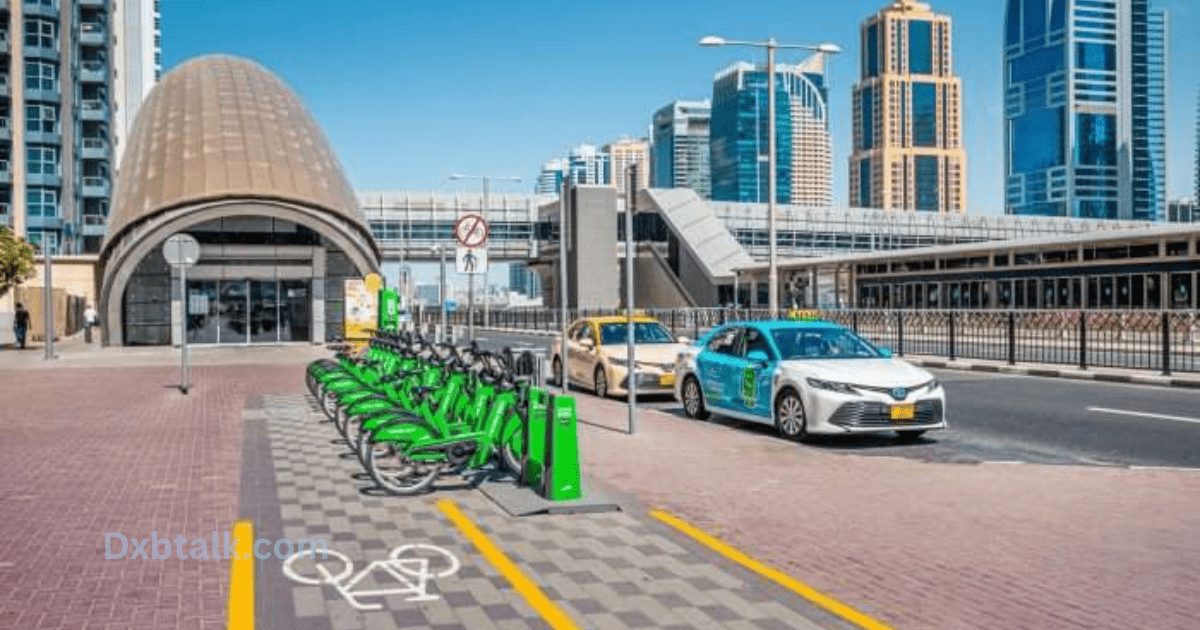
E-scooters have become the district-scale solution — app-based fleets from operators such as Careem and Tier placed around neighbourhoods and metro exits, built for the hop between station and door. Cycling has grown a real network behind it: the desert loops of Al Qudra and the Nad Al Sheba track for sport, and a spreading web of urban tracks and the Careem Bike stations for utility riding. And the oldest mode has been designed back in: districts like City Walk and La Mer are built for walking, and the winter months turn strolling into the city’s favourite transport. Each of these replaces the short car trip — the dirtiest kind — which is where their environmental value concentrates.
📸 Follow @dxbtalk1 on Instagram for daily Dubai in photos →
Water and Sharing: The Old and the New
Dubai’s water transport blends its oldest technology with its newest brief. The traditional abra crossing the Creek remains the city’s most charming dirham, while the modern water taxis and ferries increasingly run on cleaner energy along the Canal and the coast. On land, car-sharing platforms such as Udrive and ekar put a vehicle at the kerb by the minute — shared mobility that lets households skip owning a second car, or a first. The Palm Monorail deserves its mention too: a clean, scenic electric ride down the Palm’s trunk that tourists love and residents use more than they admit.
The Taxi and the EV
Assembling a Greener Week
The modes combine, and the Nol card — the RTA’s unified smart card for metro, tram, bus and more — is the glue. A realistic greener week for a Dubai resident looks like this: the metro for the Sheikh Zayed Road commute, a shared e-scooter or Careem Bike for the station-to-office stretch, buses for the cross-town trips the rails don’t serve, an abra or ferry when the journey allows pleasure, car-sharing reserved for the bulky, multi-stop days, and a hybrid taxi when the heat wins an argument. None of those choices requires a manifesto. The city’s green transport story succeeds precisely because each mode is now simply the sensible option for its journey — the emissions saving arrives as a by-product of convenience, which is how behaviour actually changes at city scale.
Even the car layer is greening. Hybrid and electric taxis form a growing share of the fleet you hail, and Dubai’s taxi strategy keeps pushing the proportion up. Private EVs plug into an expanding public charging network — in malls, car parks and petrol stations — which has taken range anxiety off the table for city driving; the emirate’s EV community now plans journeys by charger maps the way drivers once planned by petrol stations. Assemble the menu and the picture is systemic: rail for distance, scooters and bikes for the last stretch, water for pleasure, sharing for the gaps, and electricity replacing petrol at every level the city controls. Choosing green transport in Dubai no longer requires virtue. It mostly requires noticing.






Join the conversation