

A good kitchen is not measured in gadgets. It is measured in whether the cook reaches, without thinking, for a tool that does its job — and whether that tool is still doing it in ten years. The essentials list is shorter than the catalogues want you to believe, and it is organised not by shopping category but by the work itself: cutting, cooking, baking, measuring, and the small implements that stitch a recipe together. Build this core first, buy the best version you can justify of each piece, and almost everything a home cook attempts becomes easier before it becomes fancier.
At the Cutting Station
Everything starts with the knife, and the honest truth is that one good chef’s knife outperforms a block of twelve mediocre ones. It should feel balanced in your hand, hold an edge, and be long enough to rock through an onion without your knuckles rapping the board. Add a small paring knife for the fiddly work — peeling, hulling, trimming — and a serrated bread knife, and your cutting needs are genuinely covered. Beneath them, the board matters as much as the blade: a large wooden or quality plastic board that does not skate across the counter and does not dull the edge it hosts. Keep a second, separate board for raw meat and poultry, wash both like you mean it, and learn to sharpen or steel the chef’s knife regularly — a sharp knife is not a luxury but a safety device, because blades that slide are blades that cut the wrong thing.
On the Hob: Pots and Pans That Earn Their Place
Cookware is where kitchens drown in duplicates. The working core is four pieces. A heavy frying pan or skillet — ideally one that can move from hob to oven — handles eggs, fish, searing and sautéing. A medium saucepan with a lid covers sauces, grains, eggs and reheating. A large stockpot takes soups, pasta water, stocks and the batch cooking that fills a freezer. And a lidded Dutch oven or heavy casserole, in enamelled cast iron or steel, is the quiet champion: braises, curries, bread, slow sauces, everything that rewards patience. Buy these in materials that suit your hob and your patience — non-stick has its place for eggs and fish but wears; stainless and cast iron are the decades-long investments. Lids that fit, handles that stay cool and bases that sit flat are worth more than a famous name stamped on the side.
📸 Follow @dxbtalk1 on Instagram for daily Dubai in photos →
Oven and Baking Basics
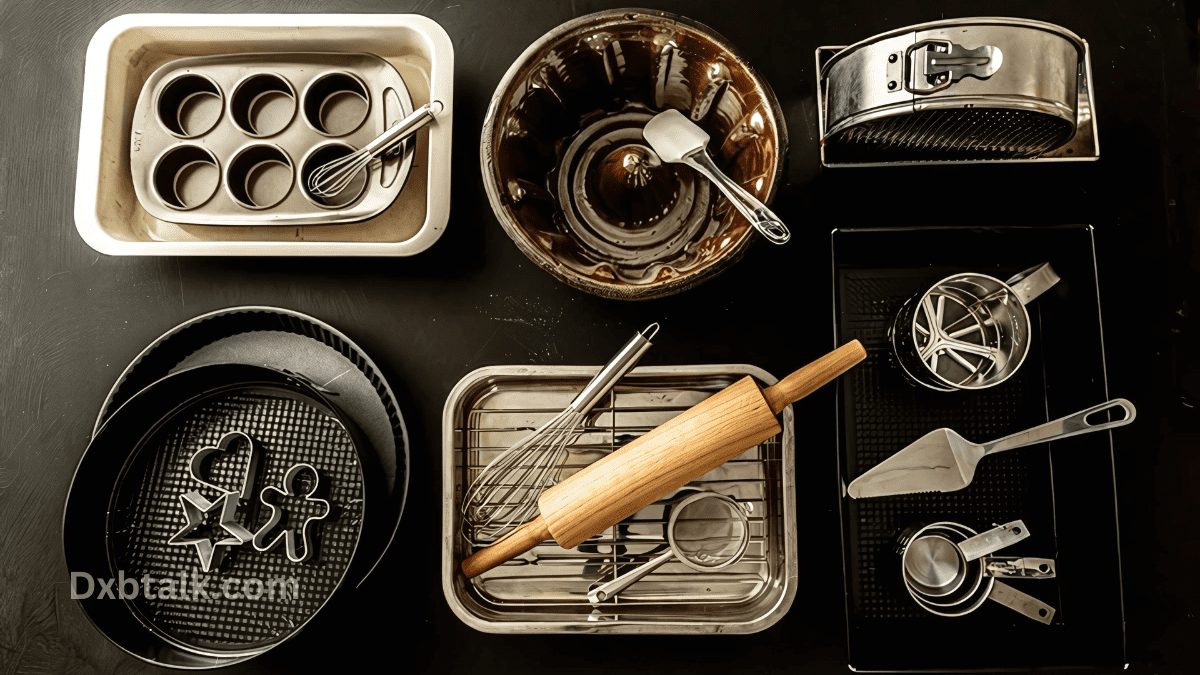
Even cooks who never bake need the oven kit, because roasting is half of weeknight cooking. A sturdy rimmed baking sheet — two, ideally — roasts vegetables, catches drips, and moonlights under the grill. A roasting tin or oven dish in ceramic or enamel handles gratins, traybakes and whole birds. A wire cooling rack does more than cool cakes: set over a tray it roasts evenly, rests meat, and crisps anything that steams itself soggy on a plate. If you do bake, add a rolling pin and a set of mixing bowls that nest, and resist the rest of the catalogue until a recipe you love demands it. Baking rewards accuracy more than equipment, which is precisely why the next station matters.
Measuring and Mixing
Recipes are ratios wearing instructions, and measuring tools are how you keep the ratios honest. A set of measuring cups and spoons — metal, with the sizes stamped rather than printed — plus one clear jug for liquids covers nearly all of it; a basic digital scale, cheap and transformative, covers the rest and is the single upgrade most likely to improve a home cook’s baking overnight. For mixing: bowls in graduated sizes, stainless steel or glass, a balloon whisk for eggs and batters, and a heatproof silicone spatula that scrapes a bowl truly clean and stirs a sauce without scratching the pan. These are unglamorous purchases. They are also the ones you will use daily for a decade, which is the entire argument for choosing them well.
The Small Tools and the First Shopping Trip
The last drawer is small and mighty: tongs — the cook’s second hand, for turning, lifting and serving; a ladle; a vegetable peeler that actually peels; a box grater; a can opener that works the first time; a colander; wooden spoons that do not conduct heat or scratch pans. None costs much; together they determine whether cooking feels fluent or fiddly. If you are equipping a kitchen from nothing, buy in the order the work happens: knife and board first, then the four core pans, then measuring and mixing, then the oven kit, then the drawer of small tools — and buy once, at the best quality the budget stretches to, because the essentials done properly are a lifetime purchase. The gadgets can audition later, one recipe at a time. The core is the kitchen; everything else is commentary.






Join the conversation