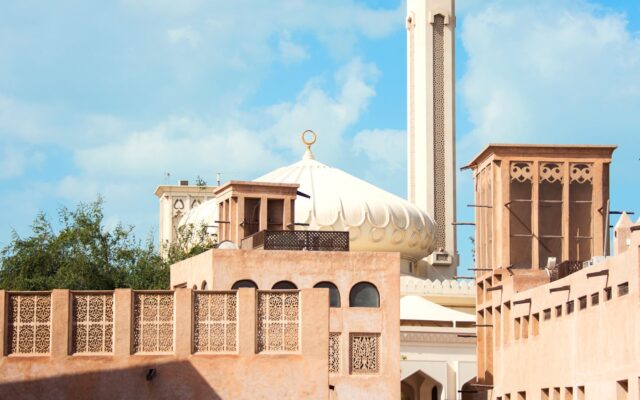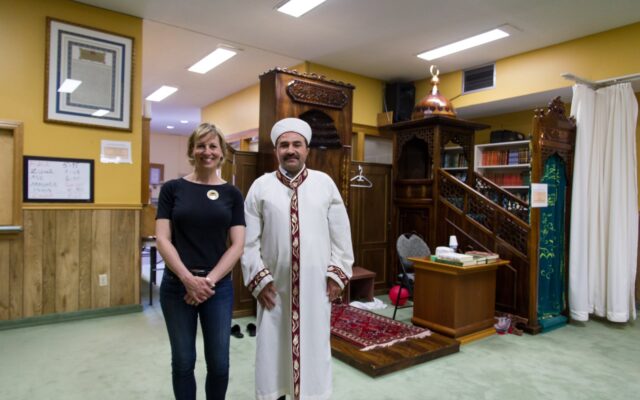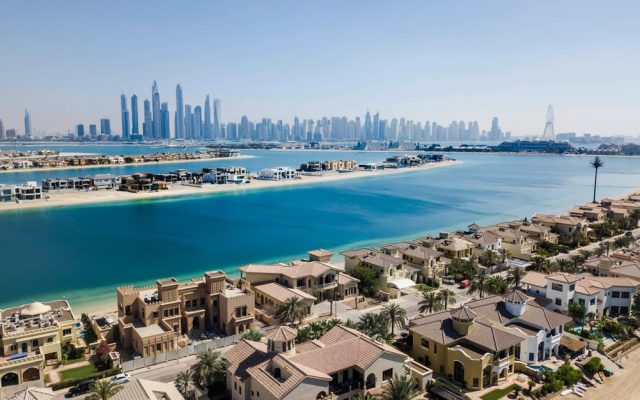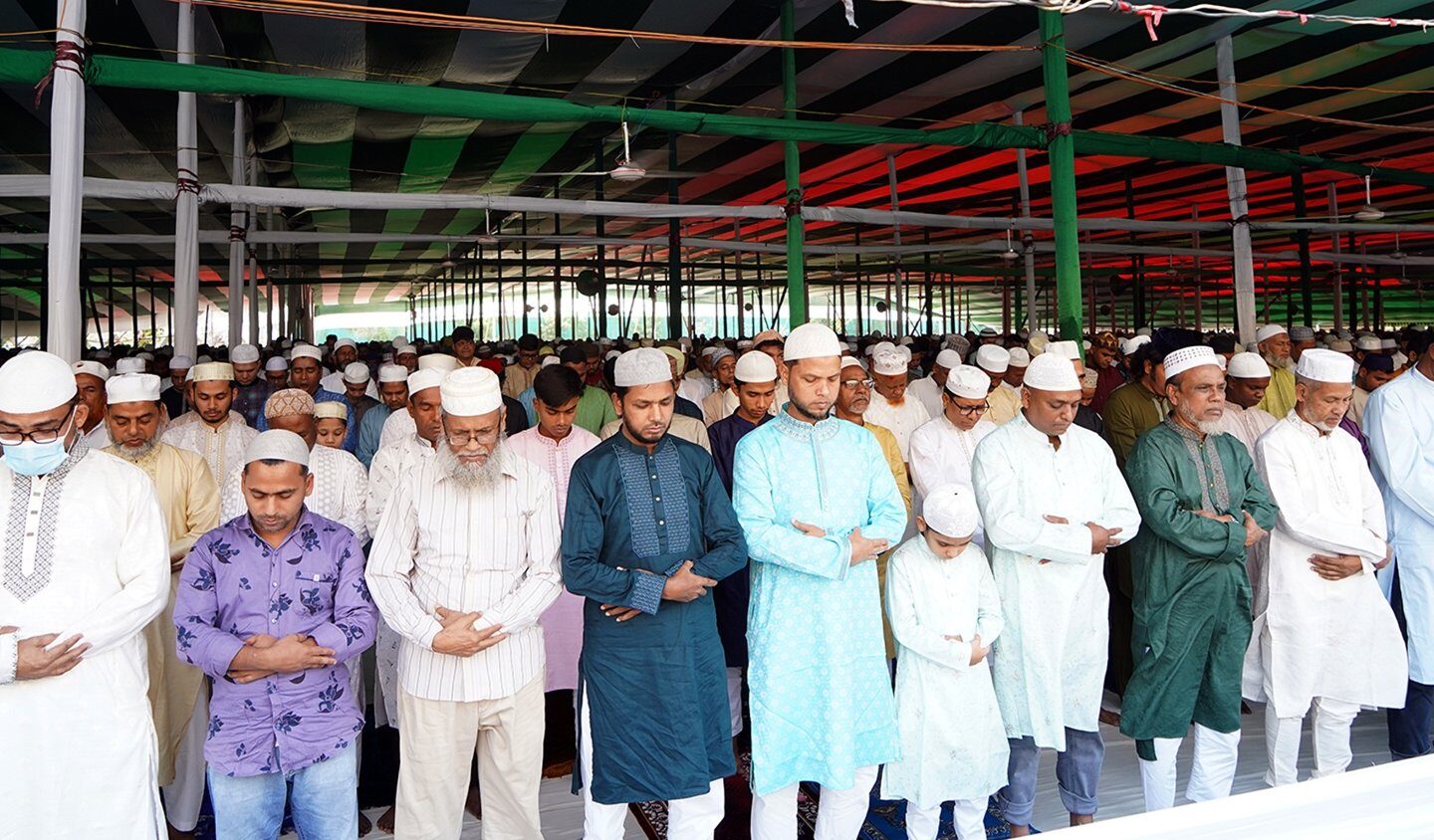
If you want to see Dubai at its happiest, stand outside a mosque just after the Eid prayer ends. The doors open and the city pours out smiling — and then, instead of hurrying away, everybody turns to everybody else and the embracing begins. Three hugs, right side, left side, right side again. Hands on shoulders, hands on hearts. Eid Mubarak said a hundred times in a dozen languages. It is one of the great street scenes of the Dubai year, and it belongs to everyone.
Three Hugs for Everyone
The embrace after Eid prayer follows a beloved pattern. Friends meet and hug three times, alternating cheeks, a rhythm every child in Dubai learns young and every newcomer learns fast. But what makes the scene remarkable is how far the hugging travels beyond friendship. The man who prayed beside you — a stranger an hour ago — gets his three hugs too. So does the elderly gentleman from the row behind, the boy who held the door, the colleague you did not expect to see. On Eid morning, the category of stranger is temporarily suspended.
There is real meaning inside the warmth. Eid, whether Eid al-Fitr at the end of Ramadan or Eid al-Adha later in the year, is a time for settling hearts as much as celebrating. Old disagreements are quietly dropped in those embraces. People seek out the person they have been distant from, and the hug does the work that words might fumble. Forgiveness, in Dubai on Eid morning, is not discussed. It is simply performed, three hugs at a time, in mosque courtyards across the city.
Eid Mubarak in a Dozen Languages
Listen closely in the crowd and you will hear the greeting travel around the world without leaving the courtyard. Eid Mubarak in Arabic and Urdu, greetings in Malayalam, Bengali, Tagalog, Pashto, Somali, Turkish, English and more — sometimes all within a few steps. Children dart between the adults collecting greetings like treasures, dressed in new clothes, pockets already jingling with eidi, the small gifts of money elders press into young hands.
This is Dubai’s diversity at its most joyful. The same city that works in a hundred languages also celebrates in them, and Eid morning is when that fact stops being a statistic and becomes a sound — a courtyard full of people wishing each other well, each in the words their grandmother used.
📸 Follow @dxbtalk1 on Instagram for daily Dubai in photos →
Sweets, Dates and Small Kindnesses
Food appears, as it always does in this city when hearts are full. Boxes of sweets circulate. Dates and chocolates are offered to children and visitors alike. In many neighbourhoods, families bring more than their own household could eat, precisely because sharing is the point. Someone will press a sweet into your hand whether or not you know them. Refusing is possible, technically. Almost nobody does.
- For children: sweets, small gifts and the thrill of being greeted by every adult like a guest of honour.
- For elders: the front of every greeting — younger people seek them out first, hands kissed or held with both hands.
- For newcomers: an instant community; arrive alone and you will not leave that way.
- For old friends: the year’s warmest reunion, unplanned and perfect.
The Morning Continues at Home
From the mosque, the celebration flows into the city’s homes. Families who embraced in the courtyard now visit one another in a joyful round of breakfasts, lunches and open doors that can last all day. Phones light up with calls to family in other countries — in Dubai, Eid morning always has one ear in another time zone. And those who could not be with their own families are, very often, adopted into someone else’s for the day. It is one of the city’s open secrets that an invitation is never far away on Eid.
The exact date of each Eid depends on the sighting of the moon and the official UAE announcement, and prayer timings are confirmed officially closer to the day — but the embraces need no announcement. They are guaranteed.
Why It Stays With You
Visitors who stumble upon an Eid morning outside a Dubai mosque tend to remember it for years. Not because it is a spectacle — it is not organised for watching — but because it is so plainly genuine. A whole community, thousands strong, taking the time to greet one another properly, forgive one another quietly and feed one another’s children sweets, in the sunshine, before breakfast.
And for residents, the scene is a yearly reminder of what the mosque really is in Dubai: not just the place where the prayer happened, but the place where the community becomes visible to itself. The prayer ends. The hugs begin. And for a little while, in courtyard after courtyard across the city, it is hard to imagine a happier place on earth.