

Dubai’s e-commerce market has grown explosively in recent years, driven by digital innovation, a tech-savvy population and a deliberate strategy to make the city a global digital hub. What began as a convenience layered over a mall culture has become a primary retail channel in its own right — one that now sets benchmarks the physical stores chase. Understanding its shape means looking at the platforms, the shoppers, the fast-growing categories, and the technology and friction underneath.
The Players and the Platforms
The market’s structure is a duel with a supporting cast. Noon, the homegrown platform built with regional capital, competes head-on with Amazon’s UAE operation, the global giant’s local form; between them they set the expectations for range, price and delivery speed that everyone else must meet. Around them orbit the specialists: Namshi in fashion, Carrefour’s online arm in groceries and household goods, Ounass at the luxury end, and a long tail of brand stores, Instagram sellers and marketplace traders. Government strategy underpins the whole field — Dubai’s e-commerce initiatives aim explicitly at positioning the city as a logistics and digital-trade hub between East and West, and the free zones and licensing routes for online business have been shaped to lower the drawbridge for new entrants. The result is a market where a shopper can buy almost anything several ways, and a seller can start small and scale without ever signing a mall lease.
How Dubai Shops
Consumer behaviour here has its own signatures. Shopping is mobile-first to a degree few markets match — most purchases happen on phones, inside apps, often in the small hours. Speed is a deciding feature: platforms offering same-day, and in places same-hour, delivery have reset what shoppers consider normal, and the noon-versus-Amazon delivery race is fought in minutes. The multicultural population shops across categories and cuisines simultaneously, which keeps niche and imported ranges viable that would starve in a more uniform market. Payment habits have shifted under the platforms’ feet — cards and digital wallets joined by buy-now-pay-later schemes that have become a normal checkout option — and a growing demand for sustainability shows in eco-friendly ranges and packaging, even as the city’s appetite for convenience tests it. Price sensitivity and luxury appetite coexist block by block; this is a market that queues for both a flash sale and a limited edition.
📸 Follow @dxbtalk1 on Instagram for daily Dubai in photos →
The Regional Ambition
Dubai’s e-commerce story does not stop at its own shoppers. The city’s platforms increasingly sell across the Gulf and wider region, its fulfilment centres and free-zone logistics serve merchants who may never open a local store, and its marketplaces list sellers from three continents. That outward orientation is the strategy made visible: be the region’s digital entrepôt as the city was once its physical one. It explains the investment in payment rails, warehousing and customs technology that a purely local market would never justify — and it means the beginner selling from a Dubai base is standing, from day one, on infrastructure built for export.
Growth Sectors and the Technology Underneath
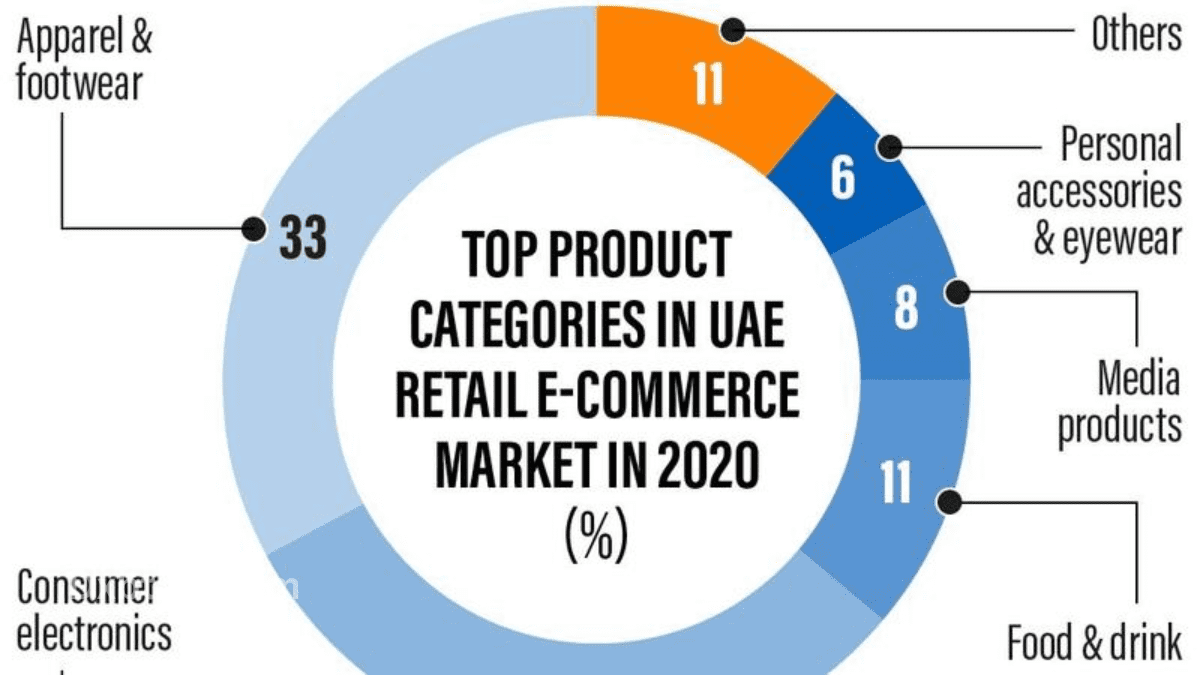
The growth sectors map the city’s life. Fashion and beauty run hot on global and regional brands; groceries and essentials were transformed when online food shopping became habit and never reverted; electronics remain a perennial favourite among residents; and luxury e-commerce thrives through dedicated platforms serving the city’s high end. Underneath, technology keeps redefining the experience: artificial intelligence personalises recommendations and search; augmented reality lets shoppers visualise furniture and try shades before buying; and digital payments grow smoother and more various, raising conversion and confidence together. The challenges are equally structural — intense competition that forces constant innovation and margin discipline, logistics strained at peak seasons when the whole city shops at once, and the sustainability ledger of packaging waste and delivery emissions that the sector has yet to square. Even so, the direction is unmistakable: Dubai’s e-commerce market is a reflection of the city’s tech-driven self-image, and its next benchmarks — faster, more personal, more regional — are already being set.




Join the conversation