

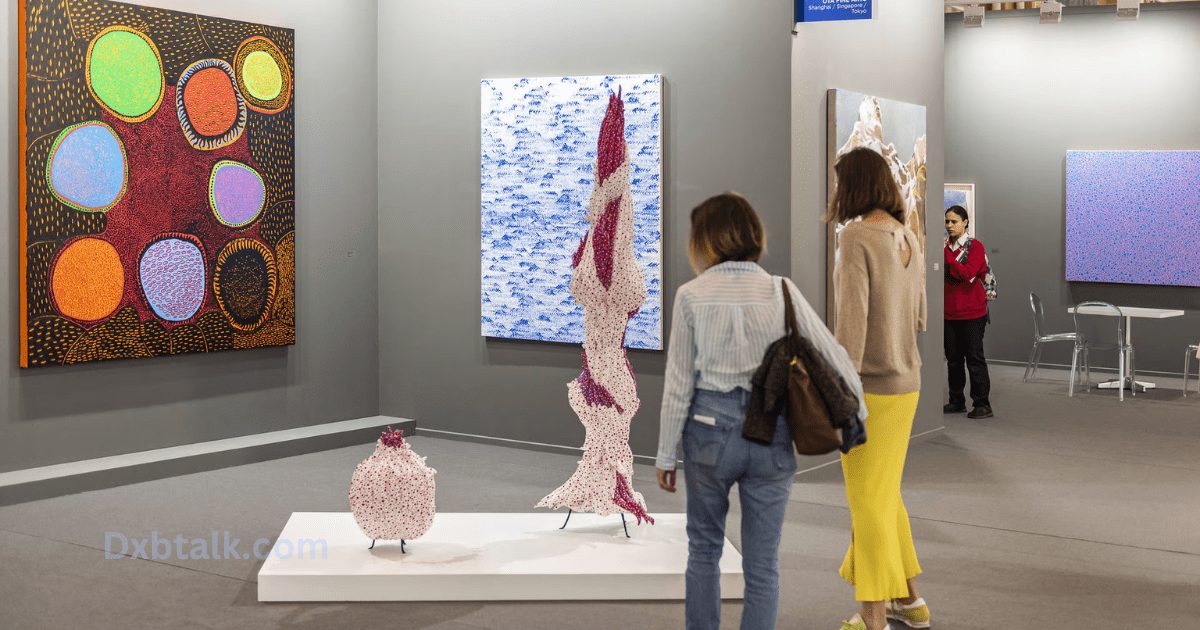
Twenty years ago, “Dubai art” was a punchline about shopping. Today the city runs one of the art world’s essential fairs, a warehouse district converted into the region’s gallery capital, and a museum calendar that fills the year — and the exhibitions, which is where all of it becomes real for a visitor, range from million-dirham contemporary installations to free afternoons in converted industrial units. The scene has a structure worth learning, because where you go determines what kind of art day you have. This is the map: the fairs, the districts, the institutions, and how to walk them.
The Fairs: Art Dubai and World Art Dubai
Two fairs anchor the calendar, at opposite ends of the market’s temperament. Art Dubai, held each spring at Madinat Jumeirah, is the region’s premier fair — galleries from dozens of countries, a serious contemporary and modern programme, and a curatorial emphasis on the art of the Middle East, Africa and Asia that makes it unlike any Western fair: this is where the global art world’s map gets redrawn annually, with collectors, curators and museum directors in the aisles. Its talks, commissions and performances make a ticket worth a full day. World Art Dubai, at the World Trade Centre, is the democratic sibling — hundreds of artists, price points aimed at people decorating actual homes, and an atmosphere closer to a festival than a vault. Between them they define the scene’s poles: art as global conversation, and art as something you might take home in a taxi.
Alserkal Avenue: The District That Changed Everything
If the fairs are the season, Alserkal Avenue in Al Quoz is the permanent revolution. A street of industrial warehouses converted, gallery by gallery, into the Middle East’s contemporary art hub — spaces like Leila Heller Gallery flying in museum-scale work, alongside design stores, a chocolatier, independent cinema and cafés where the curators argue. The Avenue works as an afternoon: exhibitions rotate through the galleries monthly, art nights open everything at once with the whole scene in attendance, and the art is matched by the pleasure of the setting — concrete, light, and art taken seriously without being taken solemnly. For a visitor with one art afternoon in Dubai, this is the address. It is also, not coincidentally, where much of the city’s serious photography, film and performance programming now lives.
📸 Follow @dxbtalk1 on Instagram for daily Dubai in photos →
The Institutions: Jameel, Etihad and the Museum Layer
Above the commercial circuit sit the institutions, and they have matured into destinations in themselves. The Jameel Arts Centre, on the Jaddaf waterfront, is Dubai’s independent contemporary museum: free, calm, beautifully built, with curated exhibitions from the region and beyond, a library, and sculpture gardens on the Creek — the place to see how the scene thinks when it is not selling. The Etihad Museum carries the nation’s own story, and exhibitions across the heritage layer — in Al Fahidi’s galleries and the Shindagha Museum’s houses — connect contemporary work to the Emirates’ visual traditions: calligraphy, pottery, pearl-era craft and the photography of the young country. Dubai Design District, d3, adds the design wing — exhibitions where art, architecture and product meet, and the home of Dubai Design Week each autumn.
Heritage Forms in Contemporary Rooms
The thread that distinguishes Dubai’s exhibitions from a franchise of the global circuit is the heritage in the walls. Calligraphy appears everywhere — as classical mastery, as street-scale mural, as the design language of whole exhibitions — because Arabic script is this region’s thousand-year visual art, and its contemporary artists know it. Emirati and regional artists work the local materials and memories: the sea, the desert, the dhow, the transformation itself. Exhibitions at the heritage institutions and in the commercial galleries alike keep returning to the question of what this place was and what it is becoming, which gives even a blockbuster contemporary show a local gravity it would not have in London or Seoul. Look for it. It is the difference between seeing art in Dubai and seeing Dubai’s art.
Doing an Art Day Well
The practical craft is light. Exhibition openings cluster from late morning; galleries in Alserkal keep daytime hours and close by early evening, so art here is a daylight pleasure, best paired with the district’s coffee before the galleries and lunch between them. Most commercial galleries are free; the institutions charge modestly or not at all; the fairs are ticketed and worth booking. Follow the venues’ calendars rather than arriving on hope, dress for walking between warehouses, and let one exhibition you did not plan for — the small room, the unknown name — have its chance. Dubai’s art scene grew from nothing to essential within a generation, and it retains the energy of the recently built: hungry, mixed, argumentative and gloriously unfinished. The exhibitions are where that energy hangs, in public, waiting to be walked into.



Join the conversation