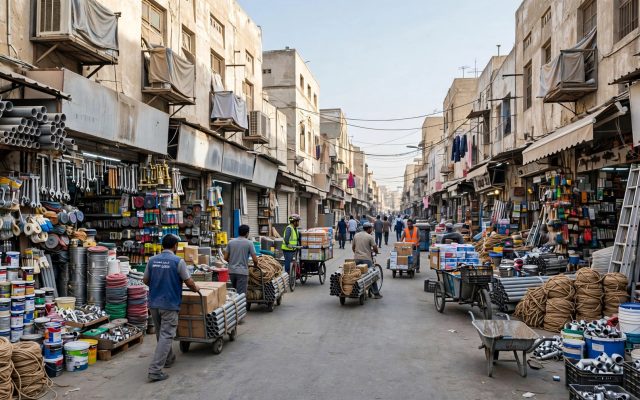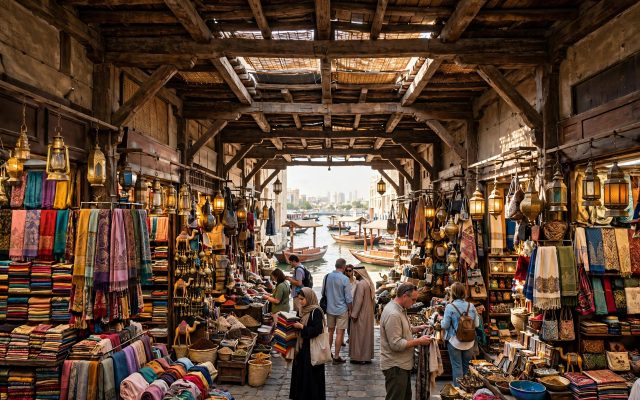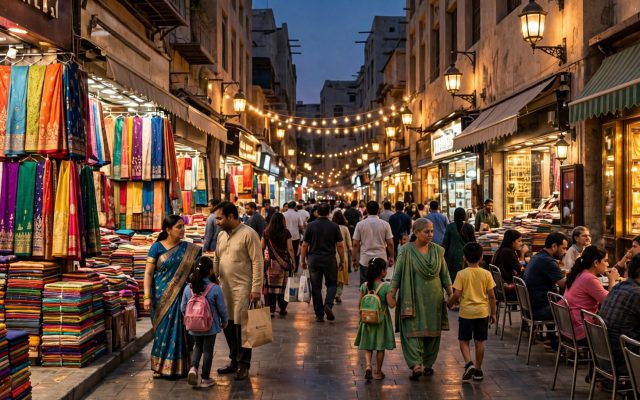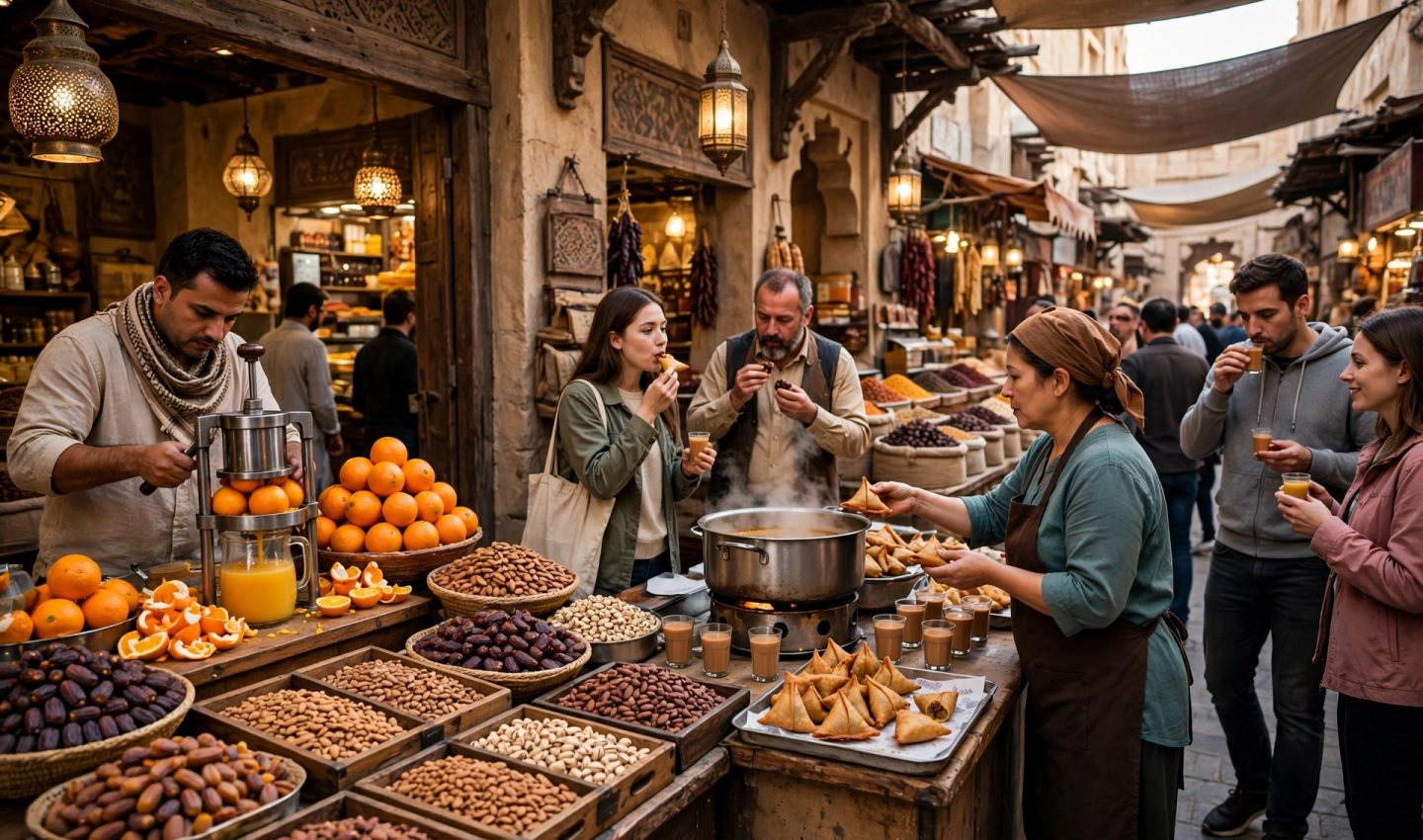
The great mistake visitors make in Dubai’s old souks is shopping on an empty stomach. The bazaars of Deira and Bur Dubai are threaded with food: juice stalls and tea boys, cafeterias that have fed porters and traders for decades, sweet shops, nut roasters, bread ovens and restaurants hidden up staircases between the wholesalers. Treat the souks as a food walk with shopping attached, and the whole district makes more sense — these markets were built for people who worked up an appetite.
Start With Tea, End With Sweets
Every bazaar walk begins with karak — the strong, sweet, spiced tea sold from cafeteria counters and carried on trays through the lanes to shopkeepers who never leave their stools. Order one, stand for a minute, and watch the market work. From there, the pattern is grazing. Fresh juice stalls press oranges, sugarcane and mangoes to order. Bakeries and cafeterias turn out samosas, pakoras and parathas through the day. Nut and dried fruit shops in and around the spice souk will happily let you taste before you buy, and a bag of roasted cashews or stuffed dates makes excellent walking fuel.
Finish in the sweet shops: trays of baklava and kunafa, boxes of Arabic sweets, and the Iranian and Indian mithai counters near the old souks. Traders buy these by the box to take home across the Gulf; a small mixed box is the correct souvenir.
The Cafeterias of the Working Bazaar
The real food culture of the souks is in its cafeterias — small, unpretentious places serving the men and women who work in the markets. Expect South Asian, Iranian, Yemeni and Levantine kitchens: dhal and biryani, kebabs off the grill, lentil soups, fresh bread, and set meals priced for workers rather than tourists. These are among the most honest meals in Dubai. Menus may be short, photographs on the wall do the explaining, and the tea keeps coming. If a place is full of porters and shopkeepers at lunchtime, that is the review that matters.
For a fuller map of where to eat across the city, our Dubai food and dining guide covers everything from cafeteria counters to fine dining.
Free Dubai Tools
Dubai, in Your Hands
📸 Follow @dxbtalk1 on Instagram for daily Dubai in photos →
A Route That Works
Here is a grazing route that joins the dots. Start on the Bur Dubai side with juice near the abra station, cross the Creek for AED 1, and work through Deira: nuts and dates around the spice souk, a cafeteria lunch near Baniyas Square, tea from whichever tray passes, then sweets to carry home. Late afternoon is the sweet spot — the heat eases, the shops reopen after the midday lull, and the grills light up for the evening. In the cooler months, the walk stretches happily into the evening as the souks light up and the dinner trade begins.
Practical Notes
- Bring small notes: juices, tea and snacks are small purchases; cash in low denominations keeps things quick.
- Follow the workers: the cafeteria full of porters and shopkeepers at lunchtime is the one to choose.
- Taste before buying: nut, date and dried fruit shops expect it — a small taste is normal, a feast is not.
- Timing: many cafeterias peak at lunch and again in the evening; some souk eateries close for a midday break.
- Ramadan: during the holy month, daytime eating in the souks is limited and discreet; the food scene comes alive after sunset.
- Prices change: cafeteria prices are low but not fixed forever — check the menu board on the day.
DXB FACT — DID YOU KNOW?
Snow in the middle of the desert
- Ski Dubaithe Middle East's first indoor ski resort
- Real snow22,500 m² of it
- Inside temperature−1°C to −4°C, all year
- Slopes5 — including an indoor black run
Source: The National
A new Dubai fact every dayRead more »
Reader poll
Poll of the Day
A fun reader poll, just for curiosity — not an official survey. A new question arrives every day.