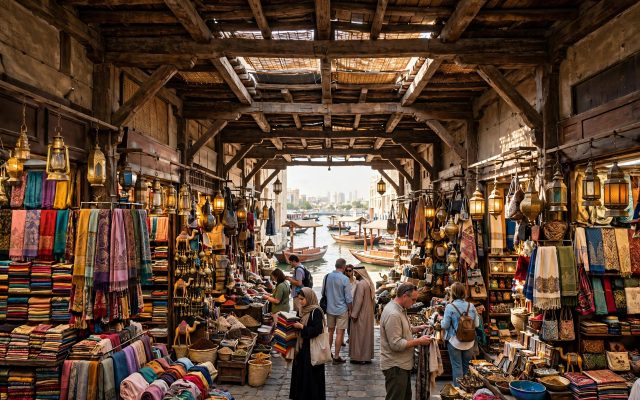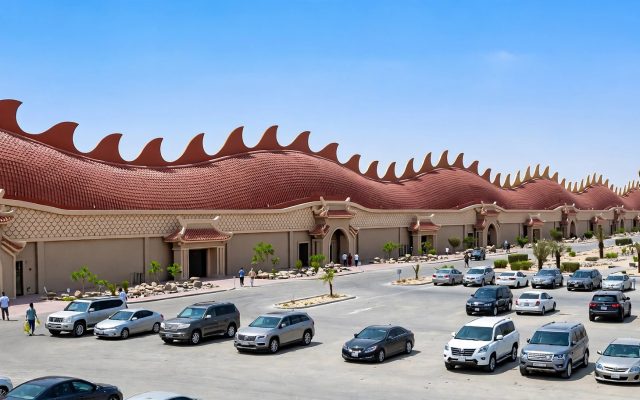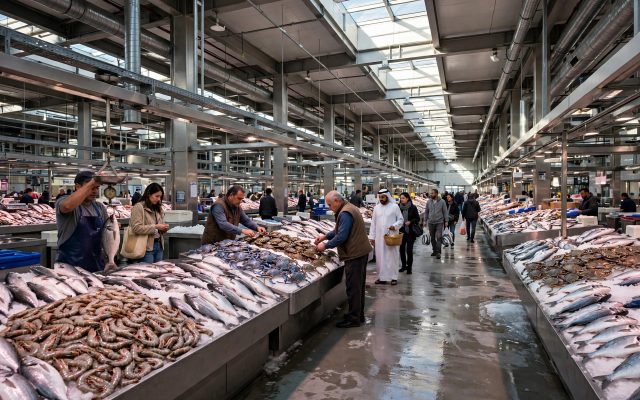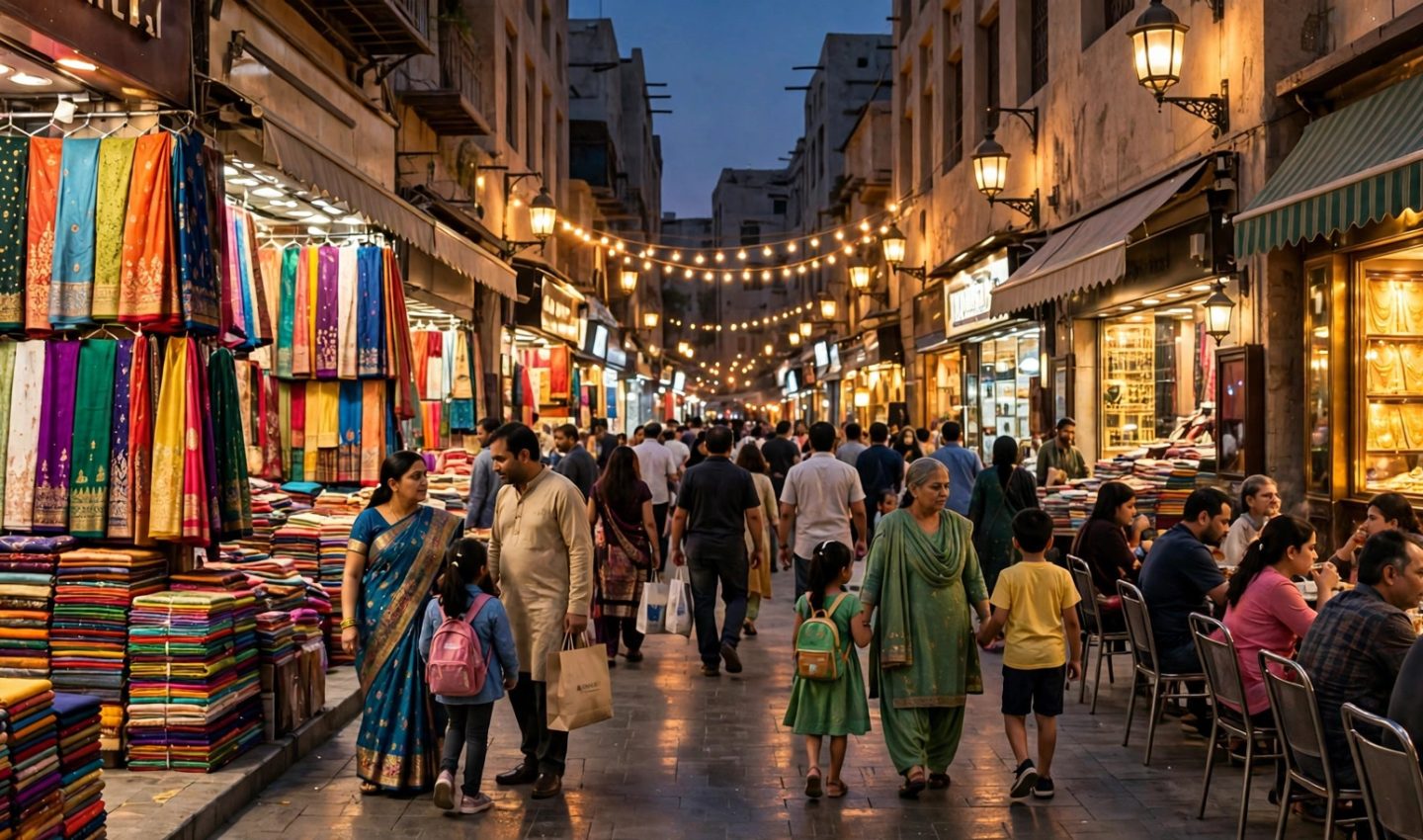
There is a corner of Bur Dubai where the shop signs turn to Hindi, Urdu, Malayalam and Bengali, the smell of filter coffee drifts out of cafeterias, and the windows glitter with wedding gold. This is Meena Bazaar, the dense little grid of streets behind the old souk that has served Dubai’s South Asian community for decades. It is not a bazaar in the covered-souk sense — it is a living neighbourhood bazaar, part shopping district, part home away from home.
What Meena Bazaar Sells
Almost everything here is aimed at celebration and family life. Sari and fabric shops stack bolts of silk, chiffon and embroidered cloth to the ceiling, with tailors nearby who can turn a length of fabric into a finished outfit. Jewellers specialise in the 22-karat gold that South Asian brides traditionally wear, and their windows fill whole streets with bangles, chains and bridal sets. Around them cluster the supporting cast: bangle sellers, bindis and cosmetics, luggage shops, electronics, money exchanges, travel agents and sweet shops selling mithai by the box.
Because so many customers are buying for weddings and festivals back home, the shops are used to bulk requests and tight deadlines. A family outfitting a whole wedding party is an ordinary Tuesday here, and the shopkeepers’ advice — which fabric travels well, which gold design is traditional for which region — is part of the service.
An Evening Bazaar
Meena Bazaar is at its best after dark. The days are for wholesale and errands; in the evening the streets fill with families, the cafeterias set out their snacks, and the whole district takes on a festive hum. This is one of the great cheap eats quarters of old Dubai: cafeterias serving dosas, chaat, fresh juices and strong sweet tea at prices that belong to another era of the city. Come hungry and graze — a samosa here, a juice there, a plate of something spicy standing at a counter.
The area sits just inland from the Creek, a short walk from the abra stations and the old souk, so it pairs naturally with an evening exploring the historic side of the city. Our guide to Dubai’s bazaars maps the neighbouring souks if you want to make a full night of it.
Free Dubai Tools
Dubai, in Your Hands
📸 Follow @dxbtalk1 on Instagram for daily Dubai in photos →
How to Shop Here
Prices in Meena Bazaar are generally keener than the malls to begin with, and gentle bargaining is normal in the independent shops — less so in the jewellers, where gold is priced by weight against the day’s rate, as everywhere in Dubai. Tailoring is the district’s quiet superpower: buy fabric in one shop and have it stitched nearby, but allow realistic time, especially before major festivals when every tailor’s order book is full. Wedding parties should come with measurements and photographs of styles; the shops work fast, but the festival rush is real.
Practical Notes
- Getting there: Al Fahidi and Al Ghubaiba Metro stations (Green Line) are both a short walk away, and the Baniyas Road abra stations connect you to Deira for AED 1.
- Best time: evenings, when the shops are all open, the cafeterias are buzzing and the heat has eased.
- Gold buying: jewellery is priced by weight at the day’s rate plus a making charge — the making charge is where polite negotiation lives.
- Tailoring: allow extra days before Eid, Diwali and wedding season; rush orders may cost more or be refused.
- Eating: bring small notes for the cafeterias and try the chaat and fresh juices — they are the district’s specialities.
- Prices change: gold rates move daily, so check the day’s rate on the board before you buy.
DXB FACT — DID YOU KNOW?
Snow in the middle of the desert
- Ski Dubaithe Middle East's first indoor ski resort
- Real snow22,500 m² of it
- Inside temperature−1°C to −4°C, all year
- Slopes5 — including an indoor black run
Source: The National
A new Dubai fact every dayRead more »
Reader poll
Poll of the Day
A fun reader poll, just for curiosity — not an official survey. A new question arrives every day.