

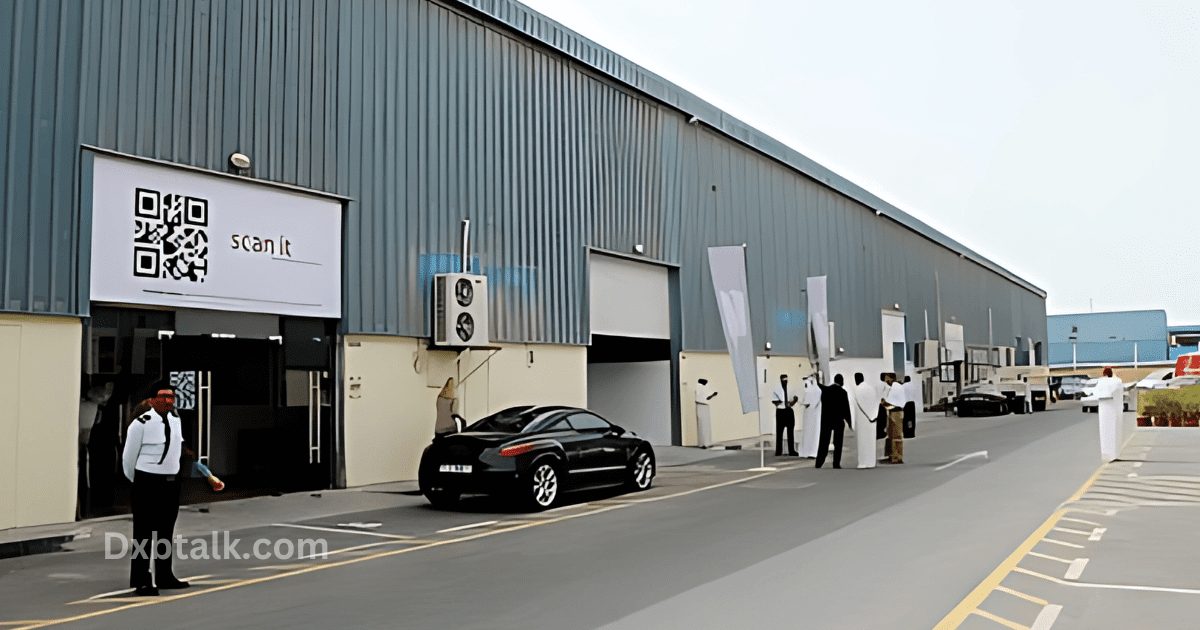
There is a particular pleasure in an Al Quoz warehouse that no purpose-built gallery can reproduce: the moment a roller door lifts on a space that once stored marble or machine parts and now holds a wall of paintings lit like treasure. The district’s architecture is a single building type — the industrial warehouse — endlessly reinterpreted. This is the story of that type: why it works for art, how it has been adapted, and what it teaches about building culture without building anything.
The Industrial Aesthetic
Start with the raw material. Al Quoz’s warehouses offer raw concrete, exposed beams, saw-tooth roofs, high ceilings and vast uninterrupted spans — the standard kit of mid-century light industry. For art, every one of those traits turned out to be a gift. Height takes monumental work. Spans take installations that no white cube in a mall could hold. Concrete and steel provide a neutral, slightly tough backdrop against which delicate work reads as more delicate and bold work as more bold. The juxtaposition — industrial shell, contemporary content — is not a compromise the district tolerates; it is the visual signature visitors come for, and photographers its most faithful chroniclers.
Adaptive Reuse: The Method
The defining technique is adaptive reuse: breathing new function into old structures while preserving their character. In practice it is a light-touch discipline — insert services, lighting tracks and white display walls into the shell; keep the doors, the floors, the roofline; let the building’s history remain legible in its scars. Galleries and studios across Al Quoz have followed it, and its virtues compound: it is faster and cheaper than new construction, it is materially sustainable in a city famous for demolition, and it produces spaces with a patina money cannot buy. Alserkal Avenue is the method at district scale — a whole complex of repurposed warehouses housing galleries, studios and event spaces, and now the cultural landmark by which the method is judged.
📸 Follow @dxbtalk1 on Instagram for daily Dubai in photos →
Community-Driven Design
What distinguishes Al Quoz’s conversions from mere property plays is how many were shaped by their users. Spaces here were fitted out with input from the artists and organisations who would occupy them — sightlines argued over by gallerists, courtyards arranged for openings, workshops plumbed for actual making. The collaborative approach produces buildings that fit their purposes unusually well, and it fosters the sense of ownership that hums through the district: this is a neighbourhood its creative community regards as partly self-built, because it is. The architecture, in other words, is social before it is visual.
Where the Type Goes Next
Anatomy of a Conversion
Watch a conversion happen and the method becomes concrete. First, almost nothing is demolished: the shell is cleaned, repaired and weatherproofed, its structure certified rather than replaced. Then services arrive — power, water, climate control — run visibly along walls and ceilings in the industrial manner, because hiding them would cost more and say less. Light is the one true luxury: rooflights are managed, blackout options installed, and gallery-grade track lighting hung from the existing steel. Finally the insertions: freestanding white walls that never quite touch the shell, a reception desk, a small office, the café. The old building remains the architecture; the new programme is furniture at architectural scale. That reversibility is the quiet genius of the type — a warehouse can be a gallery for a decade and a warehouse again in a month, which is precisely why landlords, gallerists and the buildings themselves all keep agreeing to it.
As Al Quoz evolves, its warehouse architecture faces the twin pressures of success — demand for the aesthetic it pioneered, and rents that aesthetic now commands. The emerging responses stay true to the founding method: new projects integrate green space and environmentally conscious practice into industrial shells, conversions grow more technically ambitious, and the argument for protecting large, adaptable, affordable space gets made with increasing urgency. Whatever individual buildings change hands, the lesson is permanent. Al Quoz proved that a city’s cultural future can be built out of its industrial past — one warehouse at a time.




