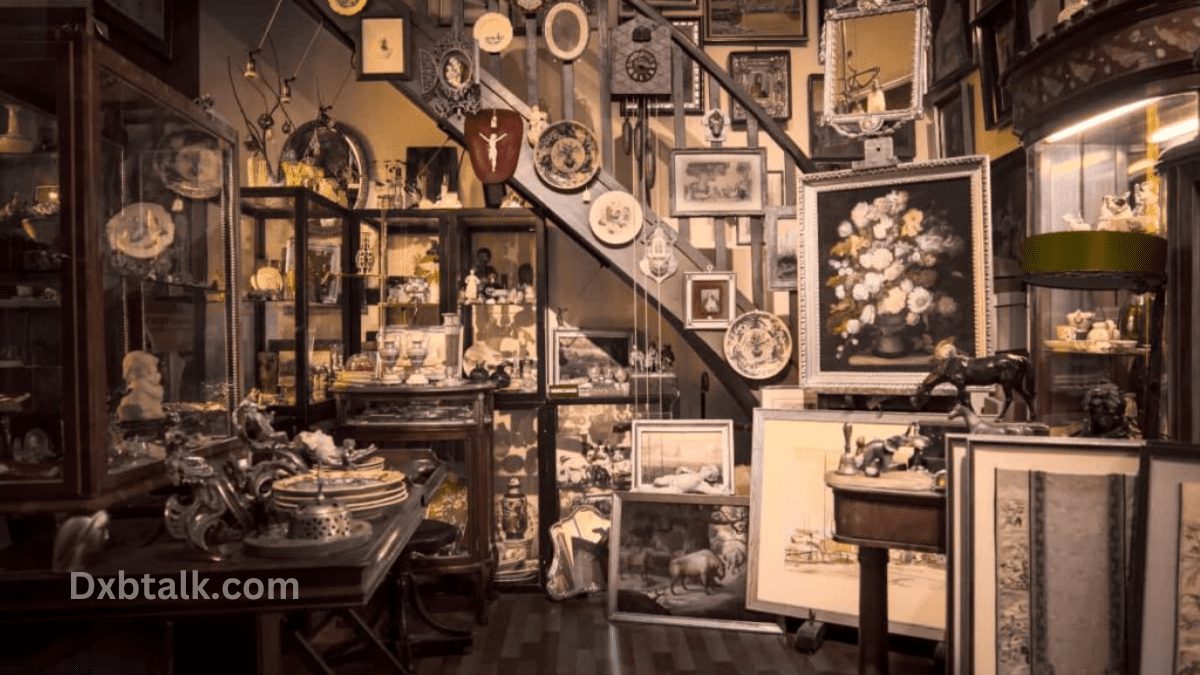
Dubai’s antique stores are a haven for collectors — but collecting is a discipline, not a shopping style, and this guide is written for the discipline. The casual browser needs addresses; the collector needs method: which categories this market rewards, how to judge provenance in a port city, how to negotiate and care for pieces, and how a collection coheres. Dubai’s thriving antique market, fed by centuries of trade through the Creek, can serve a serious collector superbly — if you work it like one.
The Categories This Market Rewards
Collect where the supply is deep. Dubai’s strengths follow its trade history: Gulf and Arabian pieces — carved chests, coffee pots, khanjars, Bedouin jewellery and textiles — where local knowledge gives the buyer an edge; Persian and regional rugs, in every grade from tribal weaving to fine city carpets; brass and copperware, lanterns and incense burners; Indian and colonial-era furniture arriving through the port’s oldest routes; and vintage Americana and European decorative pieces shed by generations of expatriate households. Al Fahidi’s heritage-district shops specialise in the handcrafted and the local — lanterns, vintage jewellery, Emirati cultural items in an atmosphere that is itself half the pleasure — while the great Al Quoz warehouse known as the Dubai Antique Museum runs to antique furniture, rugs and decorative stock from across the globe at explorable scale. The artisan shops of the old Bastakiya quarter add ceramics, vintage artwork and traditional tools, and the Old Souk’s alleys mix antique brassware and decorative pieces among the spice and textile traders, where bargaining can still uncover a gem priced as a commodity.
Provenance and the Collector’s Eye
In a port city, every object has a story and half the stories are salesmanship — so the collector verifies rather than believes. Research ahead: know your category’s marks, materials, construction and period details before money is discussed. Inspect the items physically — signs of authenticity live in wear patterns, hand-tool marks, patina in recesses, repairs consistent with age — and inquire about provenance directly; a dealer with a real history for a piece answers differently from one improvising. Craftsmanship, cultural diversity and historical significance are this market’s three axes of value, and the pieces that score on all three — a documented piece of Gulf heritage, superbly made, tied to the city’s own story — are the ones that anchor collections. Negotiate, because bargaining is integral in souks and smaller stores, but negotiate like a collector: on knowledge, condition and comparables, never on theatre.
📸 Follow @dxbtalk1 on Instagram for daily Dubai in photos →
Fakes, Reproductions and Honest Copies
No collector’s guide is complete without the counterfeit question. Dubai’s market contains, alongside the genuine, a healthy population of reproductions — new chests aged with intent, rugs woven to look old, brass cast yesterday from old moulds. The mature position is discrimination rather than outrage: an honest reproduction, sold as one, is a legitimate decorative object; the offence is only in the misrepresentation. Your defences are the collector’s usual ones — weight, wear in the right places, construction you can inspect, prices that respect arithmetic (a genuine antique at a souvenir price is a story, not a bargain) — and dealers whose reputation you can check against the community’s memory. Buy the seller before the piece, and the fakes become mostly a spectator sport.
Building and Keeping a Collection
The last discipline is coherence. Antiques are more than decorative elements — they are conversation starters that add depth to a living space — and a collection displayed with intent, grouped by material, region or era, reads as curation rather than accumulation. Pair vintage furniture with modern pieces for an eclectic tension, or let one great rug define a room’s whole aesthetic. Care closes the loop: wood wants stable humidity (a war the air-conditioning usually wins for you), metals want handling with clean hands and no heroic polishing, textiles want rotation out of direct sun. Keep records — photographs, receipts, the dealer’s story written down the day you hear it — because provenance documented is value preserved. Shopping for antiques in Dubai, done this way, is not about buying objects at all: it is about discovering history, culture and art, piece by piece, until the pieces start telling the story together.