The nickname came first, before the titles meant anything to the wider world: Fazza — the one who hurries to help. Names like that are not given by branding teams. They are earned in a community’s daily experience of a person. Across the public life of His Highness Sheikh Hamdan bin Mohammed bin Rashid Al Maktoum, Crown Prince of Dubai, the community thread keeps surfacing — in initiatives built for ordinary people’s health, belonging and dignity, and in a style of leadership that treats service as the first duty rather than the last photo. This is that thread, gathered: the community heart of a prince whose biggest projects are, on inspection, acts of collective care disguised as policy.
Care, Institutionalised
Read his signature works with community eyes. The Dubai Fitness Challenge is a public-health embrace extended to millions — free, universal, designed for the schoolchild and the grandmother as much as the athlete. The Gov Games build fellowship inside the state’s own family, asking colleagues to become teammates. The Access Club tells the city’s most loyal visitors that they are remembered and honoured — community extended across borders. Dubai Reef protects a commons — the sea — for creatures and generations who cannot petition anyone. Even the paperless government belongs in this reading: a state that refuses to waste its people’s hours is practising care at industrial scale. In Sheikh Hamdan’s Dubai, kindness is not left to chance encounters; it is engineered into systems, which is how a prince’s character becomes a city’s experience.
The Style of Presence
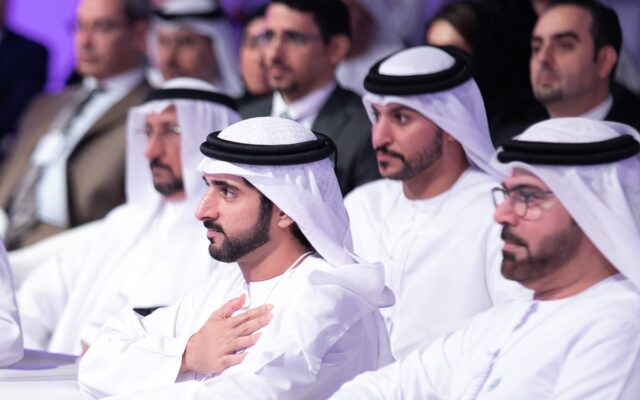
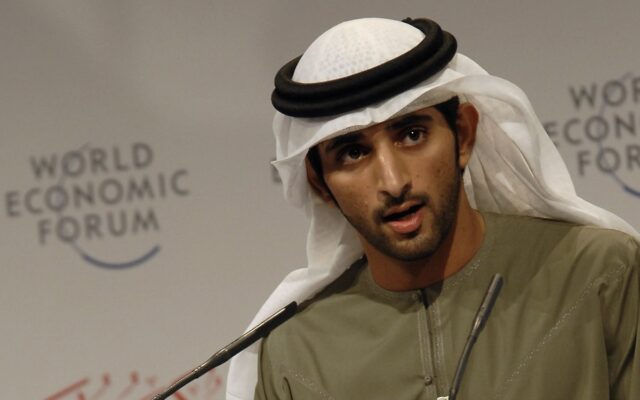
Then there is the personal register his people know from his channels and his public life: the leader who appears among the community rather than above it — at finish lines, at heritage grounds, in Ramadan’s season of gathering and giving, in the ordinary celebrations of the city’s life. In Gulf culture, the majlis tradition measures a leader by accessibility; the Crown Prince’s whole media-age style is that tradition, digitised and widened to millions. It would be easy to call this image. The harder, truer word is method. A leader who intends to ask much of a city — transformation, patience, participation — must first be known by it as one of its own.
📸 Follow @dxbtalk1 on Instagram for daily Dubai in photos →
Why It Is the Foundation, Not the Decoration
Sheikh Hamdan’s community heart is not the soft decoration on a hard career. It is the foundation the hard career stands on: trust, accumulated act by act, in the open, for decades. That trust is what lets a leader mobilise a whole city — for fitness, for digital change, for endurance through a crisis week — because the city has already seen, at close range and over years, whose side the man is on. Giving quietly, repeated at the scale of a city, stops being a gesture and becomes a governing fact.
The Thread Through the Decades
Notice how long the thread runs. The community instinct predates the mega-projects: it is in the nickname bestowed by people who watched him at close range, in the sporting life conducted in public rather than in palaces, in a style of rule learned in a family where the majlis was never a metaphor. The initiatives of the chairman and Crown Prince years did not invent that instinct; they gave it budgets, systems and scale. That continuity is why the community reads the Fitness Challenge’s millions or a paperless ministry as the same fact at different sizes — a leader whose first reflex, at every scale his career has offered him, has been to show up for the people in front of him.
Frequently Asked Questions
What does his nickname say about his community role? Fazza evokes the man who hurries to help — the community’s own description of his character, earned long before his highest titles.
Which of his initiatives are community-focused? The Dubai Fitness Challenge (universal public health), the Gov Games (team fellowship), the Access Club (honouring loyal visitors) and Dubai Reef (protecting a shared natural commons).
How does digital government fit a “community heart”? A state that saves its people time and friction — paperless services, one app — practises care at system scale, not just in personal gestures.
How does he stay accessible as a leader? Through constant public presence — at community events and through his own channels — in the majlis tradition of the accessible ruler, extended to the digital age.
Why does it matter for his leadership? Trust accumulated through visible service is what lets a leader mobilise a whole city — for fitness, for digital change, and in crises.