Watch the back rows of any Dubai mosque during prayer and you will see the city’s sweetest congregation at work. A toddler sits solemnly on his father’s prayer mat, legs folded in earnest imitation. A small boy, perhaps four, follows the movements of the row a half-second behind everyone else, bowing when they bow, rising when they rise, glowing with concentration. A baby sleeps through all of it in the crook of an arm. Children are not visitors in Dubai’s mosques. They are regulars — the youngest worshippers, and among the most loved.
Copying Father, One Movement at a Time
For many Dubai children, the mosque is where prayer stops being something adults do and becomes something they do. The learning is almost entirely by imitation, and it is completely charming. Little boys line up beside their fathers and grandfathers and mirror them — the standing, the bowing, the prostration, foreheads pressed to the carpet with total seriousness. They may not know the words yet. They know the shape of belonging, which children understand faster than anyone.
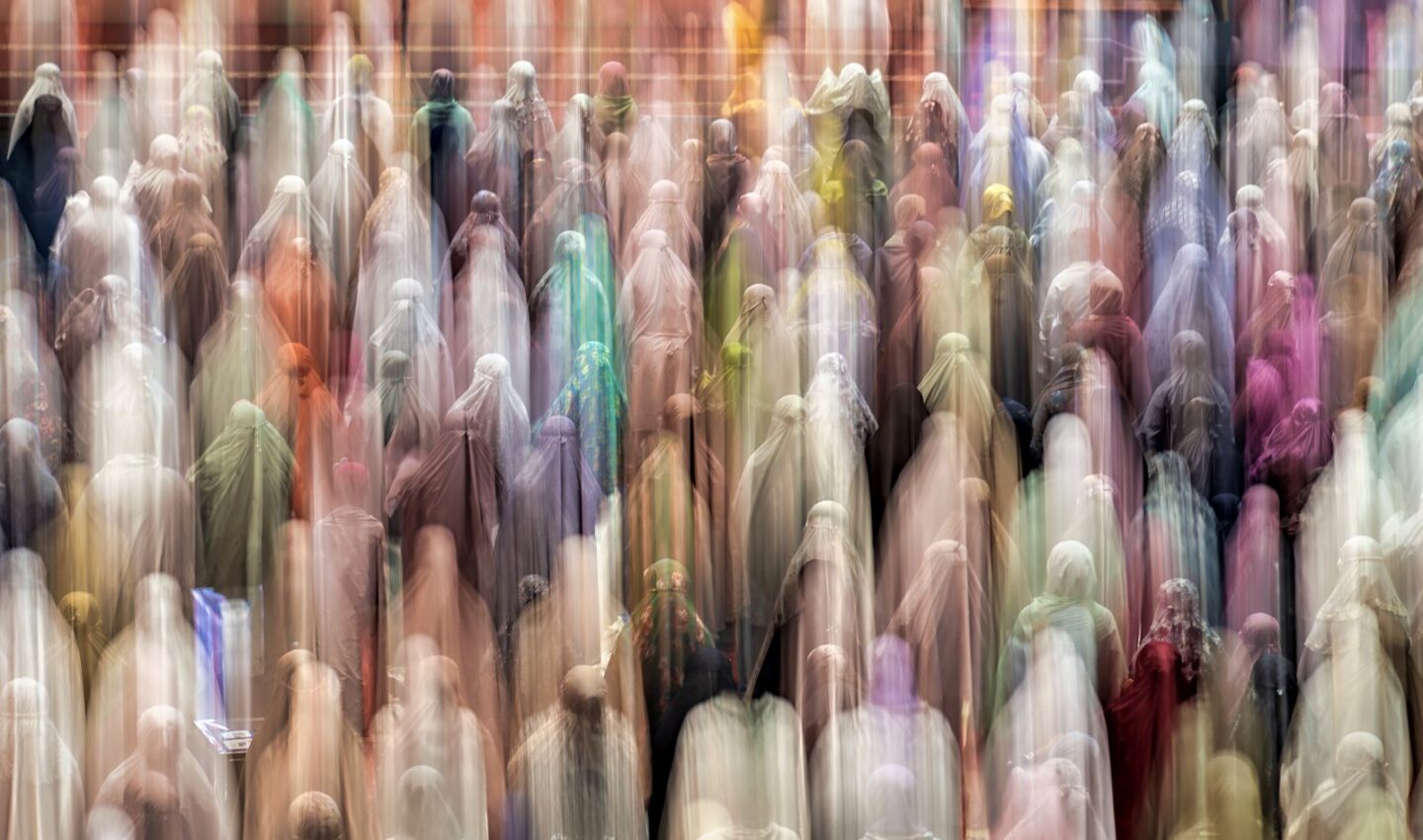
Girls, meanwhile, fill the women’s sections with their mothers and grandmothers, many in small hijabs of their own, delighted to be dressed like the grown-ups for Taraweeh or Eid. Ask Dubai parents and they will tell you the mosque is one of the few places where three generations regularly stand in the same room with the same purpose — and that children feel the significance of that long before they can explain it.
Toddlers on the Carpet
There is a tolerance in Dubai’s mosques towards small children that visitors often comment on. Babies fuss and are soothed. Toddlers wander a short, harmless distance and are gently retrieved by whichever pair of hands is nearest — because in the mosque, every adult is mildly on duty for every child. The community treats the sounds of childhood not as a disturbance to be managed but as the soundtrack of a living faith. A mosque with no children’s voices, the elders say, would be a mosque with no future.
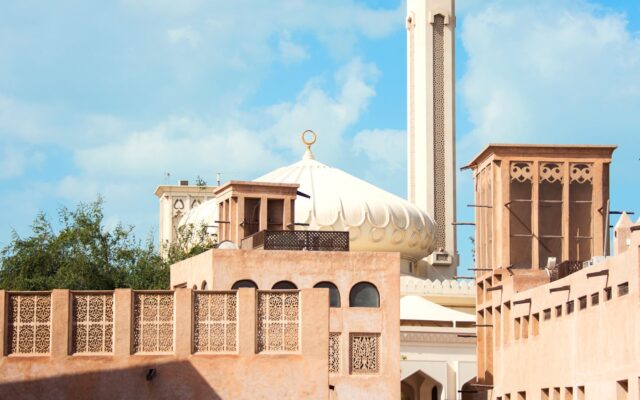
That philosophy shapes the architecture of family prayer. Children play quietly in courtyards before and after prayer, race their friends to the shoe racks, and learn the geography of their neighbourhood mosque the way they learn their own street — by heart, and with pride.
- First visits: short, happy trips with a parent, ending in the courtyard — the mosque as a treat, never a chore.
- Beside father or mother: a place in the row, however small, and movements copied with fierce concentration.
- Quran classes: many mosques and centres host children’s lessons, where first verses are learned with friends.
- Ramadan nights: the thrill of being out late for Taraweeh, dressed up, part of the grown-up world.
📸 Follow @dxbtalk1 on Instagram for daily Dubai in photos →
Ramadan and Eid Through Small Eyes
Children experience the great seasons of the mosque with an intensity adults envy. Ramadan means staying up for Taraweeh, helping lay the iftar row, and the exquisite importance of handing someone a date. Eid morning means new clothes, the threefold embrace practised on every adult in reach, and eidi collected like a small festival harvest. These are the memories Dubai’s children carry into adulthood — and the reason so many grown residents, asked about their earliest mosque memories, smile before they answer.
Parents, for their part, use the mosque gently as a teacher. Here manners are modelled rather than lectured: greet the elders, make room in the row, lower your voice, share your sweets. The lessons arrive folded inside occasions children already love.
The Mosque as a Childhood Place
In a city of malls and screens, the neighbourhood mosque offers children something different: a place where they are known by name by people outside their family, where the imam recognises them, where the elderly gentleman on the same mat each Friday watches them grow taller year by year. It roots them. Families who moved to Dubai from a dozen countries say the mosque is where their children stop being visitors in the city and start being from it.
So the next time you pray in Dubai and a small boy in the row beside you prostrates a moment late, or a toddler studies the congregation from her father’s shoulder with huge, solemn eyes, take a second to appreciate the scene. This is how the whole thing continues — not through instruction alone, but through small children on big carpets, copying the people they love, in a place that has made room for them from the very beginning.