Every week, somewhere in Dubai, a person stands in a mosque or a learning centre, surrounded by smiling strangers who are about to become friends, and says the shahada — the declaration of faith — for the first time as a Muslim. It is rarely a loud moment. There are no fireworks. There is usually a quiet room, a patient imam, a few witnesses, and then an outpouring of embraces so warm that the new Muslim often laughs and cries at the same time. This is how Dubai welcomes its newest members of the faith: personally, gently and with open arms.
A City Where the Question Is Welcome
Dubai is home to people of many faiths and backgrounds, and curiosity about Islam is part of everyday life here. Colleagues ask colleagues about Ramadan. Neighbours hear the adhan five times a day and wonder about the words. Visitors on guided mosque tours ask the questions they have carried for years. For some, that curiosity deepens over months or years until it becomes a decision. When it does, they find a city well used to receiving them.
Islamic information and learning centres across Dubai, along with many mosques, are experienced in guiding people through those first steps. Staff and volunteers answer questions in many languages, offer books and translations, and explain things at whatever pace the person in front of them needs. Nobody is hurried. The welcome begins long before any formal moment, in unhurried conversation and honest answers.
The Shahada Moment
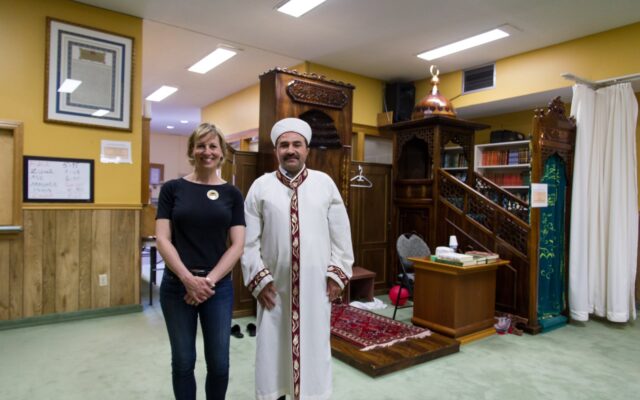
Those who have witnessed a shahada in Dubai describe the same details. The room fills more than expected, because word travels and people want to be there. The imam explains everything clearly, often in more than one language, so the person understands fully what they are saying and why. The declaration is made, and then the room simply erupts in affection — handshakes, hugs, congratulations in Arabic, English, Urdu, Tagalog and more.
What strikes newcomers most is who is doing the hugging. It is rarely officials or dignitaries. It is the regulars: the shopkeeper from the next street, the taxi driver who happened to be praying, the elderly lady who insists the new Muslim come to her home for a meal. From the very first minute, the message is unmistakable — you are not joining an institution, you are joining a family.
📸 Follow @dxbtalk1 on Instagram for daily Dubai in photos →
Classes, Mentors and First Steps
The days after matter as much as the day itself, and Dubai’s mosques and centres generally understand this well. New Muslims are commonly pointed towards beginner classes where the basics of prayer, wudu and daily practice are taught slowly and without judgement, alongside others at exactly the same stage. Learning alongside fellow beginners is a comfort in itself: everyone is asking the same questions, everyone is unsure about the same things, and nobody pretends otherwise.
- Friendly imams and teachers who expect questions and answer them patiently, in plain language.
- New-Muslim classes at centres and mosques, where the essentials are learned step by step with peers.
- Community support — invitations to meals, iftar gatherings and family homes, especially in the first Ramadan.
- Books and translations in many languages, so learning continues at home at an easy pace.
Many new Muslims are paired informally with a mentor or simply adopted by a circle of friends from the mosque — people who check in, invite them to Friday prayer, and make sure the seat beside them is saved. In a city where so many residents arrived as strangers, this kind of adoption comes naturally.
The First Ramadan, the First Eid
Milestones follow. The first fast, often shared with colleagues and mosque friends who make sure the new faster is never eating iftar alone. The first Eid morning, when the embraces after prayer feel different because now they are partly for you. The first time standing in the row and realising the man on your left is from one continent and the man on your right from another, and that in this row, none of that matters at all.
Long-settled residents say they watch for new faces deliberately. Someone praying slightly hesitantly, looking around for where the shoes go, holding a translation — these are signs Dubai’s mosque regulars recognise, because many of them were once new to the city, if not to the faith. The welcome they received is the welcome they now give. It is a chain of kindness, passed hand to hand.
A Welcome That Lasts
Perhaps the loveliest thing about how Dubai’s mosques receive new Muslims is that the welcome does not expire. The person who arrived nervous and unsure becomes, within a year or two, the one saving a seat, answering a question, hugging the next newcomer a little too enthusiastically. The circle widens, and everyone in it remembers exactly how it felt to stand where the newest person is standing.
If you are simply curious, that same door is open to you too. Visit on a guided tour, ask your questions at a learning centre, accept the coffee and dates. In Dubai, the journey towards understanding Islam rarely begins with a lecture. It begins with a welcome — and this city, and its mosques, have made an art of it.