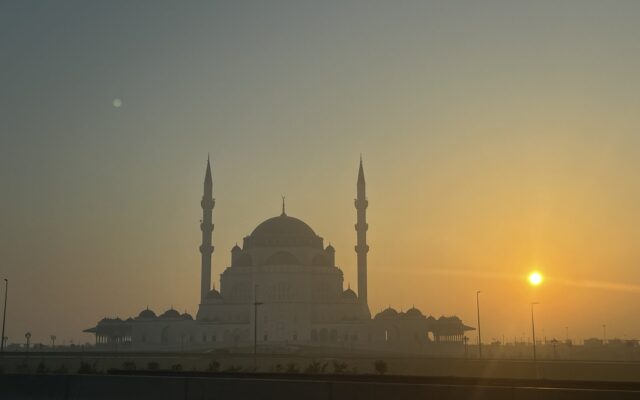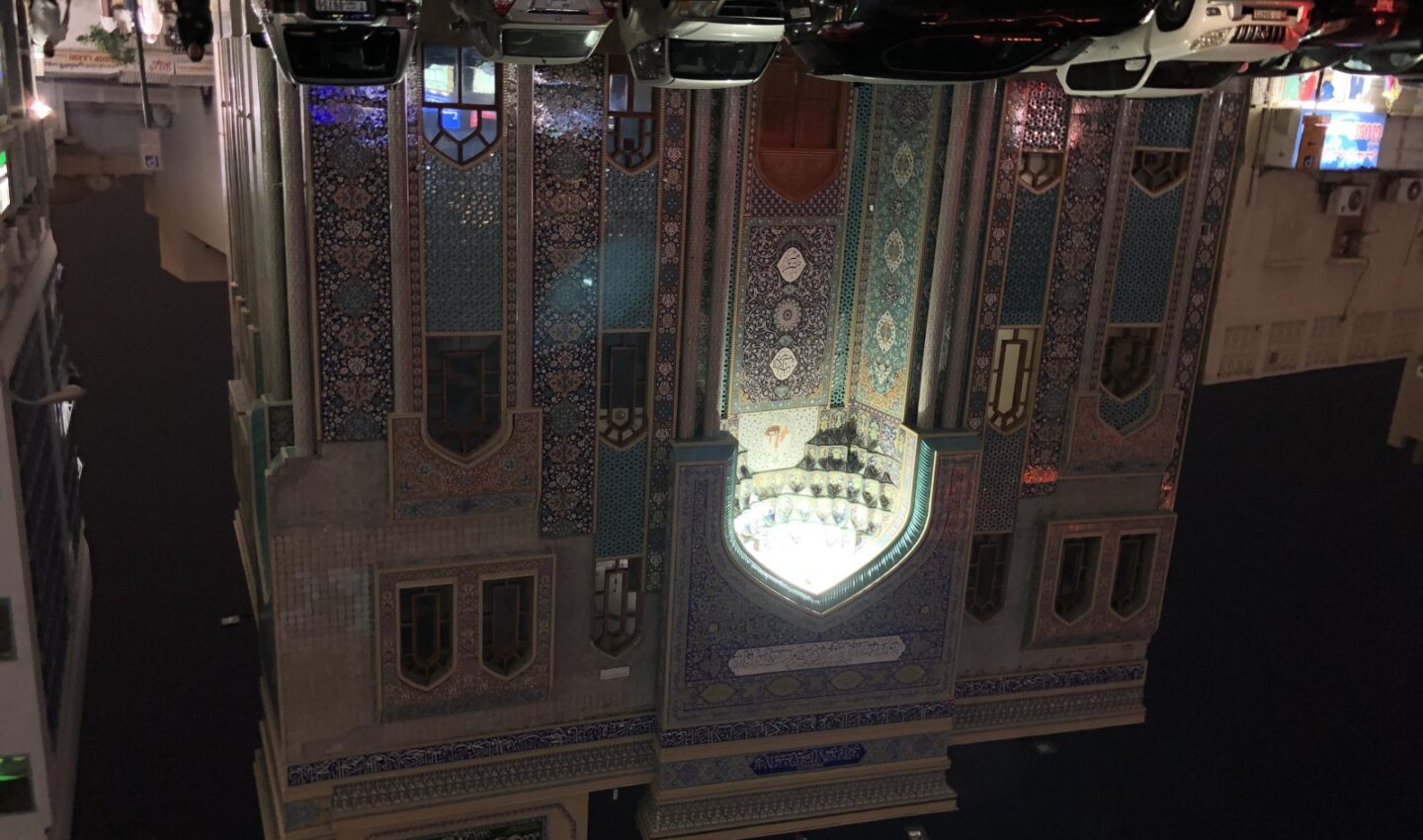
Satwa does not do bland. Between the tailors with their rainbow fabric rolls, the cafeterias serving karak to a loyal parliament of regulars, and the bicycle bells threading the traffic, this is one of Dubai’s most characterful districts — and its mosques are right in the middle of the colour. On busy streets where the city has lived for decades, Satwa’s prayer houses serve tailors, traders and long-time residents with a warmth that matches the neighbourhood itself.
If old Dubai has a living room, it might be Satwa. Its mosques are the living room’s quiet corner — except on Fridays, when they are its centre.
Prayer on Busy Streets
Satwa’s mosques sit where life is densest: along the main roads, near the bus station’s bustle, down side streets of workshops and small apartment blocks. Their congregations arrive on foot and by bicycle, from workbenches and shop counters, in the steady flow that marks every prayer. A tailor closes his shop door, a cafeteria worker hands over the tea station, a driver parks up — and for a few minutes the district’s famous noise dips, respectfully, to a murmur.
Then prayer ends and Satwa roars back, happily. That rhythm — hustle, hush, hustle — is the district’s signature, and the mosques are its metronome. Prayer times change daily, so the whole neighbourhood checks the official UAE calendar or a prayer times app for the day; in practice, Satwa simply listens for the adhan and moves as one.
A District of Long-Time Residents
Many of Satwa’s worshippers have lived here for decades — South Asian tailors who dressed generations of Dubai families, Arab shopkeepers, Filipino workers, Iranian traders, African craftsmen and Emirati elders whose memories of the district go back to its earliest streets. The mosques hold those histories. Regulars have their spots, their friends, their post-prayer tea rituals at the cafeteria over the road.
In the rows, Satwa’s famous democracy holds: the master tailor beside his newest apprentice, the shop owner beside the delivery rider, everyone shoulder to shoulder. Newcomers — and Satwa always has newcomers, renting its modest rooms and starting their Dubai story here — find the mosque the fastest route into the district’s embrace. Arrive a stranger on Monday; by Friday someone is saving you a place and asking where you have been.
📸 Follow @dxbtalk1 on Instagram for daily Dubai in photos →
Friday and Ramadan in Satwa
Friday Jummah overflows in the best way: mosques full to the courtyards, latecomers on mats in the shade, the whole district in its cleanest clothes. Afterwards: the great Satwa lunch shuffle, families and friends packing the cafeterias and small restaurants, the tailors doing a brisk trade in Friday alterations collected and admired.
Ramadan is Satwa at its most generous. Evenings bring the community out in force for prayer, mosque courtyards and nearby tables host shared iftars in the district’s open-handed style, and nobody — nobody — eats alone unless they insist on it. Ramadan and Eid dates depend on moon sighting and official announcement, but Satwa’s hospitality needs no announcement at all.
For Visitors Passing Through
Satwa rewards wanderers: come for the fabric shops, the famous cafeterias and the street life, and notice the mosques as the district’s anchors. They are working places of worship, so non-Muslim entry should not be assumed, as with most mosques in Dubai. Admire from the street, keep doorways clear at prayer times, dress modestly and point cameras at the street colour rather than at worshippers.
- Congregation: tailors, cafeteria staff, traders and long-time residents
- District rhythm: hustle, hush, hustle — five times a day
- Fullest moments: Friday Jummah and Ramadan evenings
- Pair with: fabric shopping, karak tea and a Satwa street wander
Old Dubai Faith, Still Young at Heart
Districts like Satwa are Dubai’s memory and its conscience — proof that the city was built by ordinary, faithful, hard-working people long before it was photographed from helicopters. Its mosques embody that truth most purely: no spectacle, no superlatives, just a community gathering, greeting and looking after its own.
Stand on a Satwa corner at Maghrib as the cafeterias light up, the tailors down their scissors and the call to prayer rolls over the rooftops. The district pauses, breathes and gathers. In that pause you will hear old Dubai’s heart — and it beats as strongly as ever.