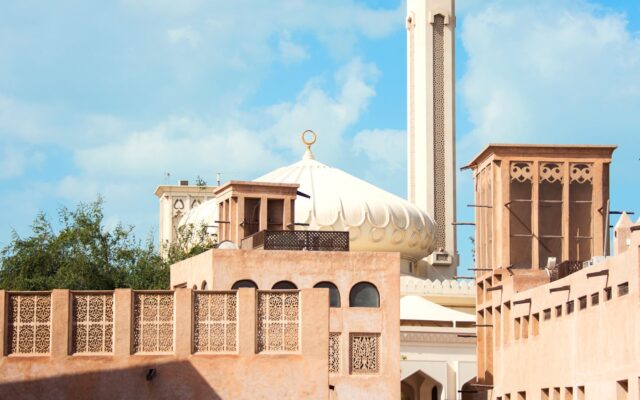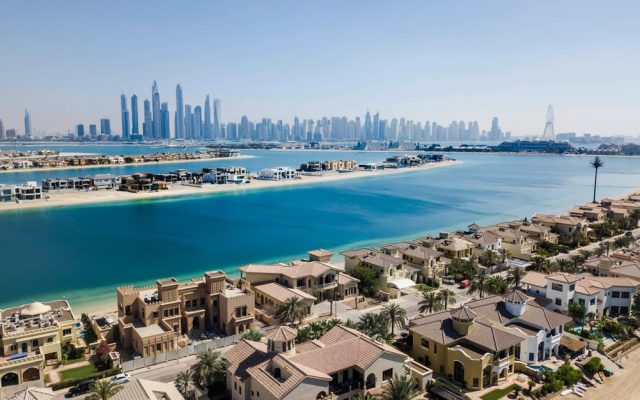
Every mosque has two rooms, if you know how to look. One is the prayer hall — carpeted, cool and quiet. The other has no roof at all: the courtyard, with its palms, fountains and shaded edges, where Dubai slows down before and after prayer. Add the small gardens that soften so many mosque plots across the city, and you find one of urban life’s loveliest inventions: green calm in the middle of the noise.
Dubai residents understand this instinctively. They arrive a few minutes early on purpose. They stay a few minutes late on purpose too. The courtyard is where the mosque breathes.
The Pause Before Prayer
Step into a mosque courtyard in the late afternoon and feel the temperature of the day change. Shade from palms and arcades takes the edge off the heat. Somewhere, water moves — an ablution fountain, a small decorative pool — and its sound alone lowers voices. Men rinse away the dust of the working day at the wudu taps, greet neighbours, and cross the courtyard unhurriedly towards the hall.
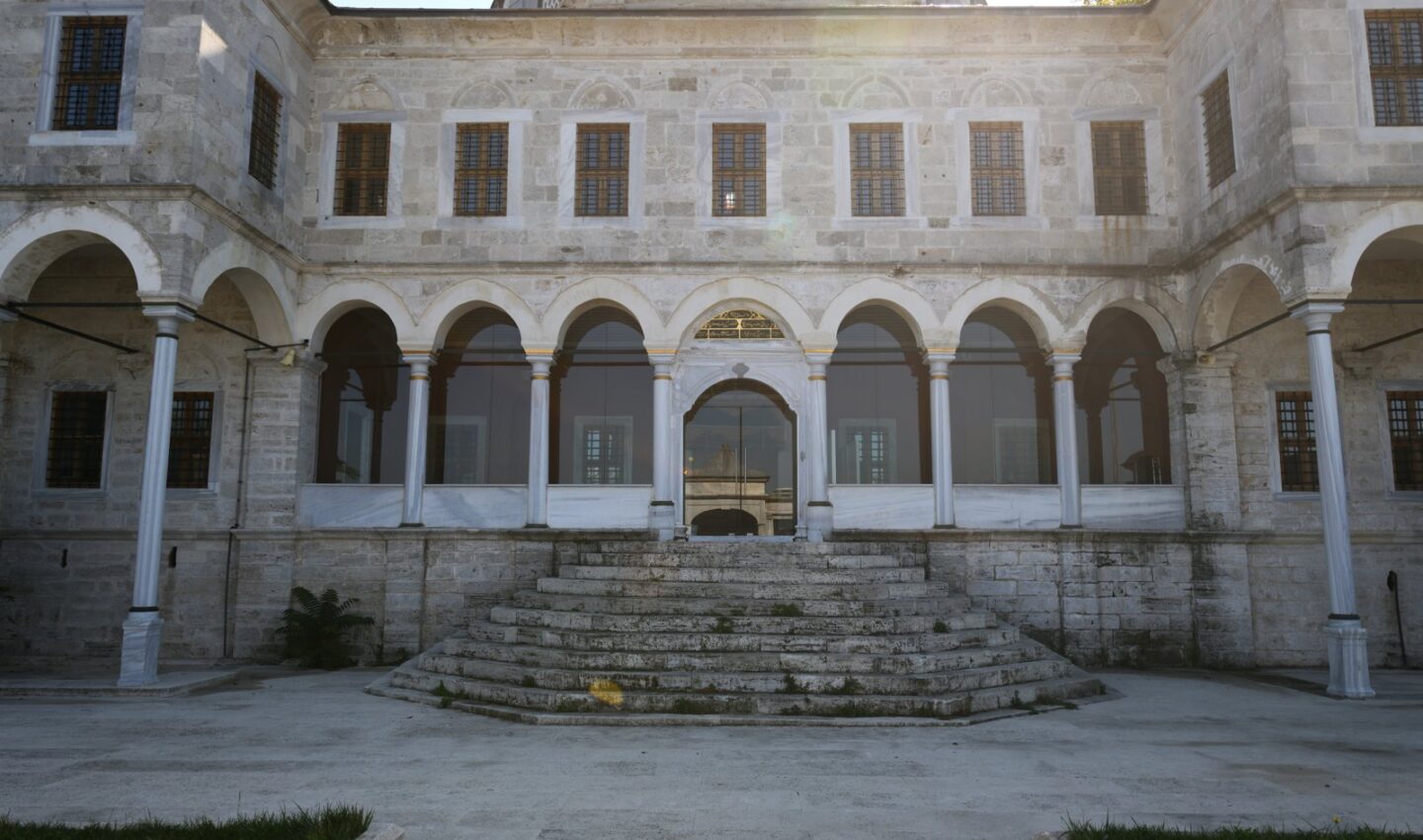
Architects through the Islamic world have always understood this threshold. The courtyard — the sahn — cools the building, gathers the community and gives the mind a few steps in which to change gear from street to prayer. In Dubai’s busy districts, where the street can mean Sheikh Zayed Road at rush hour, that gear change is worth more than ever.
Gardens That Serve the Neighbourhood
Many of Dubai’s mosques sit in small landscapes of their own: lawns where children play after Maghrib, date palms that mark the seasons, flowering shrubs along the walls, benches in the shade. In villa districts such as Al Safa, Al Barsha and Umm Suqeim, mosque gardens are among the greenest corners of the street, tended with the same care as the buildings they surround.
They serve everyone, in their quiet way. Elders claim the benches after Fajr and watch the neighbourhood wake. Mothers wait in the shade while children finish classes. Workers rest between prayers on Fridays. Even passers-by borrow the calm, slowing as they pass a green, quiet plot in a hard-surfaced city. A mosque garden asks nothing and gives shade — a small, daily act of civic generosity.
📸 Follow @dxbtalk1 on Instagram for daily Dubai in photos →
Courtyards on Friday and in Ramadan
On Fridays, courtyards reveal their second purpose: overflow and reunion. When the hall fills for Jummah, the courtyard fills too, row upon row under the sky, and afterwards it becomes the neighbourhood’s reception room — handshakes, embraces, news exchanged, invitations given. In big mosques the courtyard after Friday prayer can hold more conversation than a market.
In Ramadan the transformation deepens. Courtyards host the long, sociable evenings of the holy month: worshippers gathering before Taraweeh, families sharing the cool night air, iftar tables laid in some mosque grounds where anyone may sit and eat. Ramadan and Eid dates depend on moon sighting and official announcement, but the courtyard’s role never changes — it is where the community, having prayed together, simply enjoys being together. Prayer times themselves change daily, so regulars check the official UAE calendar or a prayer times app for the day.
Water, Shade and the Desert City
There is an older wisdom in these spaces. In a desert city, shade is wealth and water is music. Mosque courtyards have always spent both generously: arcades that shadow the walls, fountains that cool the air, trees that belong to everyone who passes. Modern eco-minded mosques build on the same principles — the Khalifa Al Tajer Mosque in Deira, widely described as the region’s first eco-friendly mosque, treats water saving as part of its design — but the instinct is ancient. The courtyard is sustainability with a soul.
- Look for: palms, ablution fountains, shaded arcades and garden benches
- Best hours: after Fajr and around Maghrib, when courtyards are coolest and fullest
- Friday: courtyards become reunion spaces after Jummah
- Courtesy: keep courtyards peaceful, keep paths clear, and let worshippers pass first
The Room With No Roof
Visitors remember Dubai’s mosques for their domes and minarets. Residents remember them, just as much, for ten unhurried minutes in a shaded courtyard: the fountain running, a friend arriving, a child asleep on a grandfather’s shoulder, the next prayer not yet called.
Next time you pass a mosque in a busy district, pause at the gate and look in at the green calm. That open-air room, working quietly between the street and the prayer hall, is one of the best ideas this city inherited — and one of the kindest it keeps.