

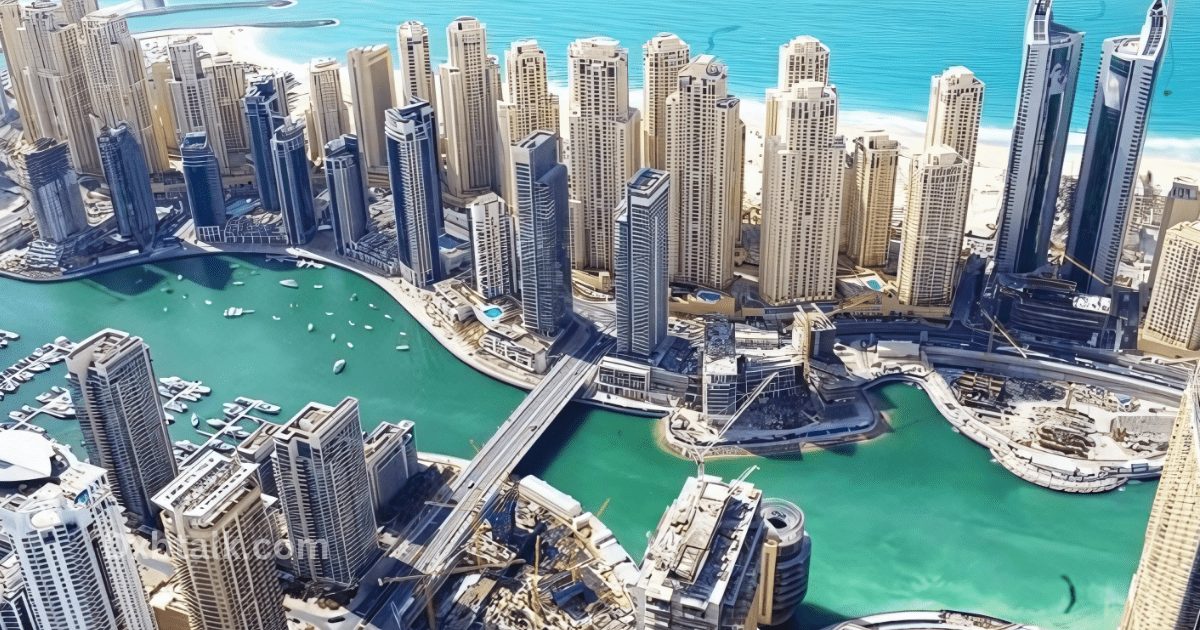
Jumeirah Lake Towers — JLT — is not only a popular residential district of towers around lakes and parkland; it is also one of Dubai’s busiest business addresses, and the reason is its free-zone status. The towers stand inside the Dubai Multi Commodities Centre free zone — DMCC — which licenses and regulates the companies within them. For entrepreneurs and companies weighing where to set up, that status carries a specific bundle of benefits worth understanding precisely, because free-zone advantages are real but conditional.
What the Free-Zone Status Actually Gives
Start with ownership: businesses licensed by DMCC in JLT can be one hundred percent foreign-owned, with no local partner required — full control stays with the founders and shareholders, which remains a major draw for entrepreneurs from outside the UAE. Next, capital movement: companies can repatriate their profits and capital in full, offering financial flexibility and security for international businesses that need money to flow home. The tax picture needs stating carefully, because it has modernised: the UAE now operates a federal corporate tax, and qualifying free zone companies can qualify for a zero percent rate on their qualifying income when they meet the substance and compliance conditions — while personal income tax remains absent entirely. The honest summary is not “no tax, ever, on anything” but “a structured route to a zero rate for genuine free-zone activity, with paperwork to match”. Around those pillars sit the practical benefits: a single regulator that handles registration, licensing and much of the support, a mature ecosystem of banks, auditors and company-service providers who know the system, and visa quotas tied to office size that let a small company sponsor its team in proportion to its space.
Who Sets Up in JLT
The free zone’s commodity roots show in its population. Trading companies are everywhere — DMCC built its name on commodities, and the gold, diamond, tea and general-trading firms cluster here accordingly — alongside consultancy firms in law, finance, technology and management drawn by the business environment and the client density. Retail and e-commerce businesses run from the district’s shopfronts and offices, serving the large residential population on their doorstep. The mix matters to a new entrant: your suppliers, clients, accountant and lunch are plausibly all within the same few clusters, and the district’s cafés function as its informal meeting rooms. JLT is also, not incidentally, a pleasant place to work — lakes, a park, metro stations at both ends — and companies recruiting staff find the address an easier sell than an industrial-zone equivalent.
📸 Follow @dxbtalk1 on Instagram for daily Dubai in photos →
The District Around the Desk
It is easy to underrate how much the setting sells the structure. JLT’s towers ring a set of lakes and a central park, the metro stops at both ends of the district, and the ground floors run to cafés, gyms, clinics and supermarkets — a working ecology that lets a ten-person firm offer its staff a neighbourhood, not just a floor. The clusters each have their own micro-character and price point, and the second-hand knowledge of which towers manage their buildings well is part of the local business folklore your broker and your PRO will happily recite. Companies stay in JLT for years partly because leaving the ecosystem costs more than the rent difference elsewhere.
Setting Up, and the Honest Caveats
The process runs through DMCC: reserve the name, choose the activity, apply for the licence — trade, service and industrial licences cover most operations — pass the compliance checks, sign for office space, and open the corporate bank account. Office options scale from flexi-desks and shared coworking for the smallest setups to full floors in the towers, and the licence’s visa allocation scales with it. The caveats belong in any honest account. A free-zone company trades freely internationally and within free zones; selling directly into the UAE mainland market runs through mainland channels, distributors or a mainland licence — plan your market before your structure. Costs are real: licence, office, visas and renewals form an annual commitment to budget, not a one-off fee. And the zero-rate tax position is a qualification to maintain, not a birthright. Verify the current rules and fees with DMCC and a qualified adviser before committing — the structure rewards those who fit it genuinely, which is most of the point.




