Before the towers, before the malls, before oil, Dubai ran on pearls. For centuries the little trading port on the Creek sent its young men out into the Gulf each summer to bring back the one cargo the world wanted from these waters, and the money, skills and sorrows of that trade shaped the town’s character long before it became a city. To understand why the sea still sits at the centre of Dubai’s identity — in its museums, its festivals, even its skyline imagery — you have to start with the diving fleets.
The Season at Sea
The diving season, known as al-ghaus al-kabir, the great dive, ran through the hottest months of the year, roughly from late spring into early autumn, when the Gulf’s waters were warm enough for men working without any protection but their own lungs. Whole fleets of wooden dhows left the Creek at the season’s start and might stay out for three or four months at a time, working the pearl banks scattered across the shallow Gulf. A boat carried a small society with strict roles. The nakhuda, the captain, owned the knowledge that mattered most: where the banks lay, how the currents ran, when to move on. Beneath him worked the ghawwasin, the divers, and the saibs, the pullers who hauled them back up, along with cooks, extra hands and often a singer whose rhythms timed the rowing and the hauling. Families on shore lived the season in reverse — waiting, mending, and watching the horizon for the fleet’s return at the season’s end, an arrival marked by celebration in ports all along the coast.
The Diver’s Craft
The dive itself was stark in its simplicity. A diver wore a nose clip of tortoiseshell or bone, leather finger guards against the sharp oyster beds, and little else. A weighted stone carried him down; a rope around his waist tied him to the puller above; a woven basket hung at his neck for the oysters he tore from the seabed. He worked on a single breath, dive after dive through the day, in water where sharks, jellyfish and the bends’ slower cruelties were standing risks. The oysters came up unopened and were piled on deck, to be shucked in the evening or the following morning — because custom held that the day’s catch was opened later, under the captain’s eye, so the pearls could be counted fairly. Most shells held nothing. A fine natural pearl, perfectly round and lustrous, might appear once in thousands of oysters, and it was that scarcity that made the Gulf’s pearls prized in the markets of India and beyond.
📸 Follow @dxbtalk1 on Instagram for daily Dubai in photos →
The Trade on Land
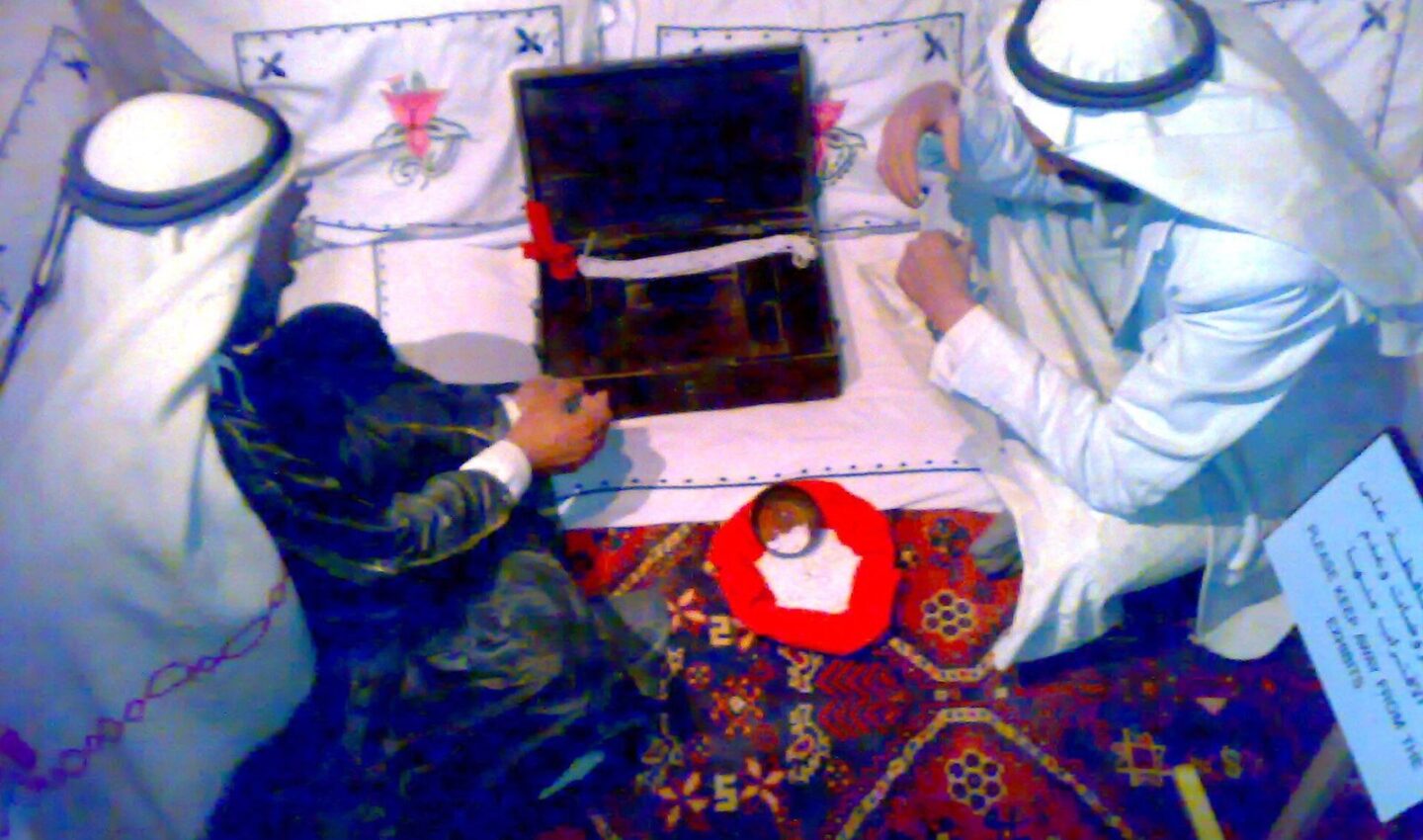
Ashore, the pearls entered a second economy. Merchants known as tawwashin graded, weighed and bargained over the season’s yield, sorting pearls by size through nested sieves and judging lustre against standards learned over lifetimes. The finest went onward to buyers in Bombay and further afield; the money flowed back through the port to boat owners, captains and crews under a share system that divided each season’s proceeds by role. The trade’s web held the whole town: dhow builders and sailmakers, provisioners, moneylenders who financed the season’s outfit, and the divers themselves, many of whom began each season in debt for their family’s upkeep during the months at sea. That debt bound generations to the boats, and it is part of why the heritage is remembered with as much gravity as pride.
The Collapse, and What Replaced It
The end came quickly and from two directions at once. In the 1930s, Japanese cultured pearls flooded the world market at prices natural pearls could not match, and the global depression cut demand for luxuries at the same moment. The Gulf’s pearl trade withered within a few seasons, bringing real hardship to ports built entirely around it. Dubai survived the blow better than most because its merchants pivoted to the other trade they knew — the re-export business in gold, textiles and goods of every kind that had always run beside the pearling. Then, within a generation, came oil. The diving fleets never returned, but the seafaring skills, the trading instincts and the tolerance for risk that the pearl years had drilled into the town carried straight into everything Dubai built next.
Where the Heritage Lives Now
You can still meet this history face to face. The Dubai Museum in Al Fahidi Fort displays the diving tools, sieves and pearl chests of the trade, a few streets from the Creek the fleets sailed from. Heritage houses and the Al Fahidi Historical Neighbourhood keep the merchant-era world the pearls paid for, and cultural festivals and heritage events still stage the songs, rowing rhythms and crafts of the season. Divers’ families keep their own archives — stories, photographs, the occasional pearl — and Emirati pride in the diving years runs deep and personal. Read a little of it before you walk the old town. The wind towers and abras stop being scenery and become what they are: the shore side of a story the city told itself, at considerable cost, for a very long time.