Before Dubai had malls, it had souks — and the souks were not a quaint prelude to the real economy. They were the economy. The traditional markets around the Creek were where the pearling and trading city cashed its cheques: goods arrived by dhow from India, Persia and East Africa, changed hands in lanes organised by trade, and left as the fortunes that built the old town. To explore them with their history in mind is to read the city’s founding documents at street level.
Why the Markets Grew Where They Grew
Geography explains the map. The Creek was the harbour, the highway and the warehouse district in one, so trade settled on both its banks — Deira on the northern side, Bur Dubai on the southern — with the little abra boats stitching the two halves together all day. Markets organised themselves by commodity, as markets did everywhere before the department store: gold in one quarter, spices in another, textiles, perfumes and everyday goods each in their lanes. Specialisation was practical. Buyers knew where to go, sellers shared suppliers and knowledge, and a merchant’s address in the right lane was itself a credential.
The goods tell the trade routes. Spices and dried limes from the east, frankincense from the south of Arabia, textiles from India, gold worked and re-exported in every direction. Dubai’s modern identity as a re-export hub — goods arriving, changing hands, leaving — is not a twentieth-century invention. It is the souk model with container ships.
What a Market Visit Shows You Now
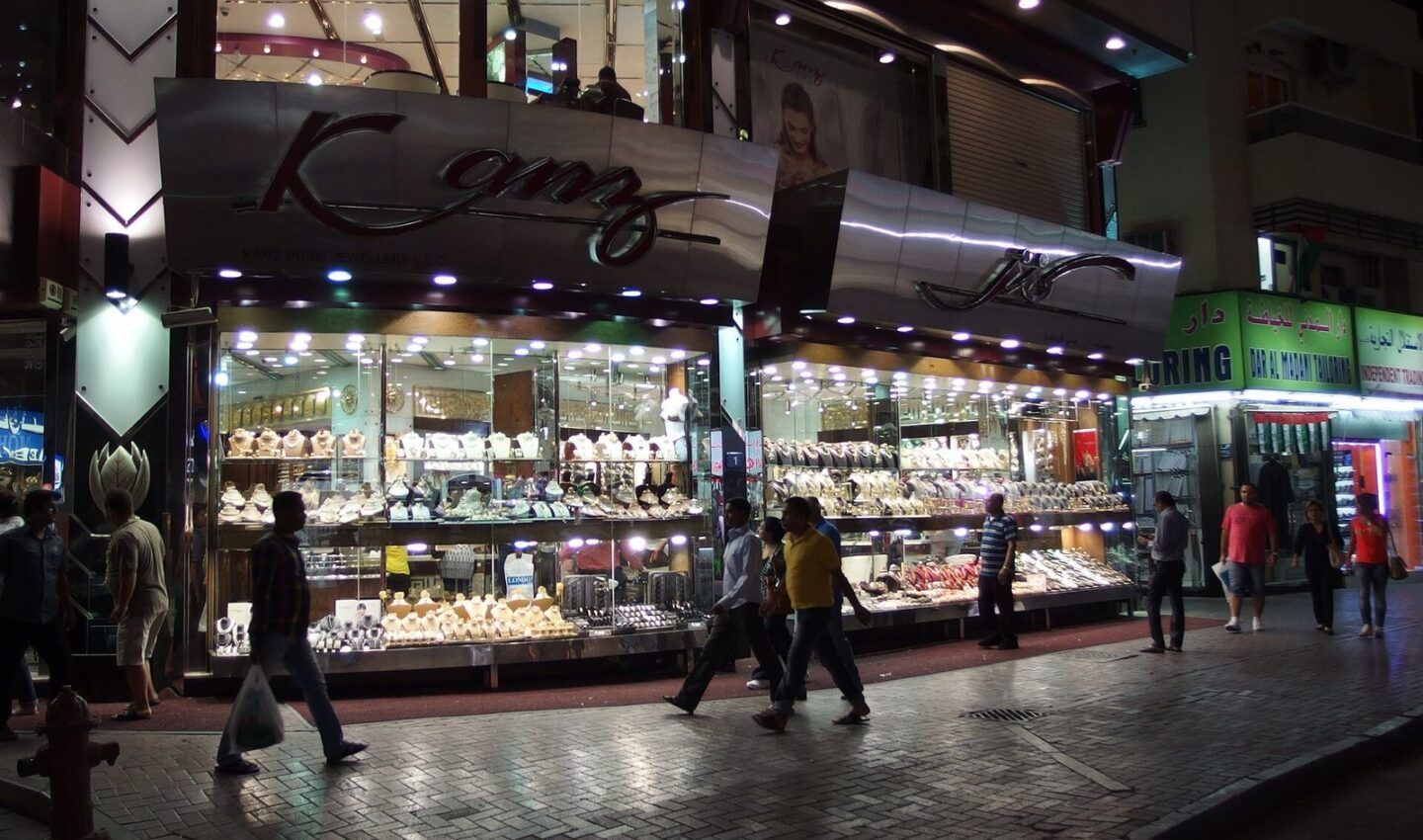
The striking thing about the old markets is that they never became museums. The Gold Souk in Deira still trades under a forest of window displays, its prices tied to the day’s international gold rate plus the making charge. The Spice Souk still sells from open sacks — saffron, dried limes, frankincense, blends whose recipes are family property — with the aroma reaching you before the stalls do. The textile shops across the Creek in Bur Dubai still unroll bolts of cloth for customers who will carry them straight to a tailor. Even the abra crossing, one of the cheapest rides in the city, is not a heritage performance: it is working public transport that happens to be centuries old in design.
Look at the buildings while you are there. The covered lanes, the wind towers over the merchant houses nearby, the coral-stone construction of the old quarter — the architecture is climate technology and commercial architecture at once, built for shade, airflow and the storage of valuable goods.
📸 Follow @dxbtalk1 on Instagram for daily Dubai in photos →
Bargaining: A Social Practice, Not a Battle
Newcomers often approach haggling as combat. In the souks it is better understood as the social wrapper of a transaction — a short negotiation that establishes the price and a little human contact along with it. The working rules are simple. Ask the price, offer lower with a smile, meet somewhere in the middle, and do not open a negotiation you have no intention of completing; agreeing a price and walking away is the one genuinely poor form. Prices in the Gold Souk are anchored by the published gold rate, so the negotiation there is mostly over the making charge. Elsewhere, comparing two or three stalls before buying tells you the honest range faster than any single hard bargain.
How to Visit Well
Go early in the morning or in the evening, when the lanes are at their liveliest and the light across the Creek is at its best, and give the visit unhurried time — a market rewards wandering in a way a mall does not. Cross between the two banks by abra at least once; the markets were designed around that crossing. Carry small notes for small purchases, keep an easy eye on your belongings in the busiest lanes, and remember that you are a guest in working businesses: courtesy and patience open more doors than urgency, and a shopkeeper’s tea, if offered, is part of the institution.
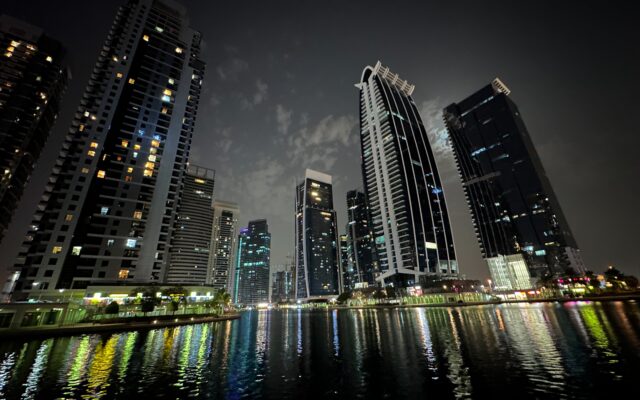
End where the markets began, at the water. Sit by the Creek in the evening and watch the dhows still loading cargo downstream of the abras, much as they have for generations. The skyscrapers behind them get the postcards. The lanes you have just walked are the reason the city exists at all — trade first, then everything else, in that order, for over a century.