

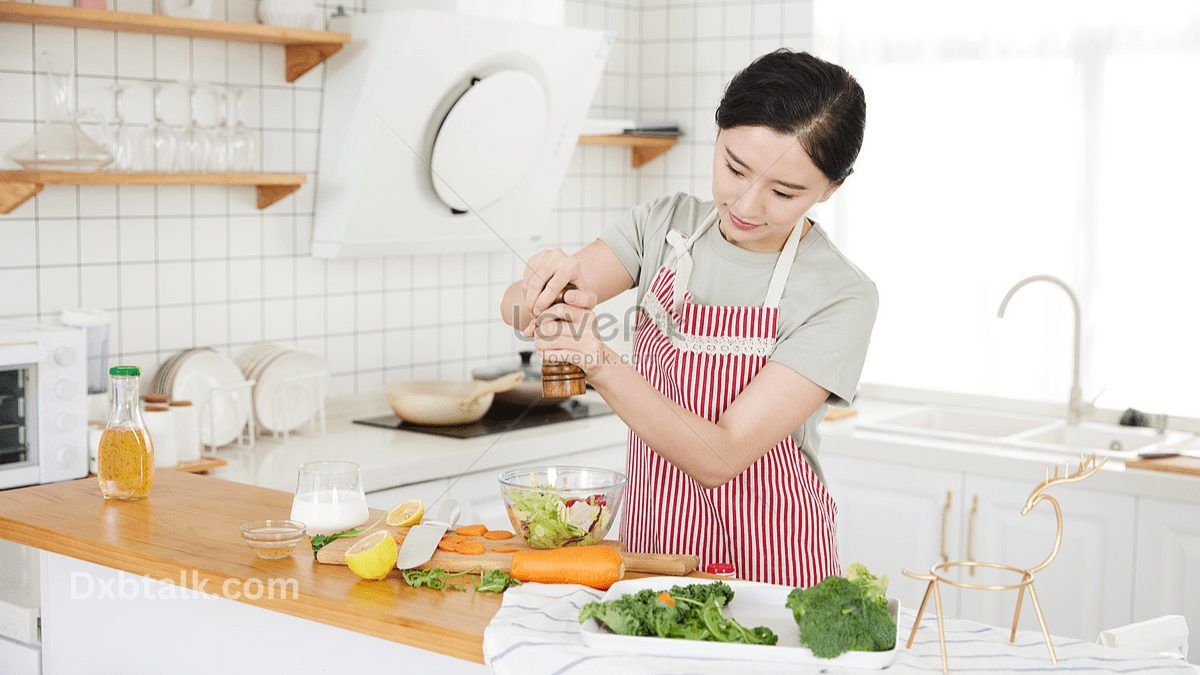
Chefs judge kitchens by their drawers. Not the oven, not the knife block — the drawer of hand tools that gets opened forty times a service and either helps or hinders every single time. Utensils are the least glamorous equipment a cook owns and the most used, which is why the professional rule applies double at home: few, good, and chosen for the hand rather than the catalogue. These are the ten that earn their space — what each actually does, what to look for when buying, and the small techniques that turn a drawer of metal and silicone into a cooking system.
The Cutting Companions
The chef’s knife heads every honest list, but the utensils around it decide how well it works. A cutting board with genuine acreage — large enough that ingredients stay on it, heavy enough not to travel — in wood or quality plastic, with a second board kept exclusively for raw proteins, is a safety system as much as a surface. The peeler belongs to this station too: a sharp swivel or Y-peeler that takes skin and not flesh, fast enough to change how often you bother with vegetables at all. Buy the peeler by sharpness, replace it when it dulls — it is one of the few tools cheaper to renew than to endure — and keep the board oiled or washed and dried properly, and this station will serve you for years without a complaint.
The Heat Workers
At the hob, three utensils run the service. Tongs are the cook’s second hand — for turning, lifting, arranging, serving — and the right pair is spring-loaded, locking, twelve inches of stainless steel with silicone tips if your pans are non-stick, long enough to keep your wrist out of the heat’s argument. The silicone spatula is the diplomat: it scrapes bowls to a shine, folds without deflating, stirs sauces in any pan material, and survives temperatures that retire lesser plastics; own two sizes. The whisk — a proper balloon whisk, springy and balanced — handles eggs, batters, dressings and pan sauces, and its quality is in the wires: many, flexible, firmly set. Add a ladle with a hooked or balanced handle and a bowl sized to a real portion, and soups and stews stop being a juggling act. These four share one buying rule: they should feel inevitable in the hand, because you will hold them daily.
📸 Follow @dxbtalk1 on Instagram for daily Dubai in photos →
Measurement and Prep
Accuracy has utensils too. Measuring cups and spoons in stamped stainless steel — dry measures levelled with a knife’s back, a clear jug for liquids read at eye level — keep recipes honest, and the cook who measures bakes without anxiety. The mixing bowls are the station’s furniture: a nesting set in steel or glass, large enough to toss a salad without landscaping the counter, light enough to carry one-handed. And the box grater, stainless and sturdy-footed, quietly covers a dozen jobs — cheese, citrus zest, vegetables, chocolate, nutmeg on its fine face — provided you respect its knuckle tax and stop an inch early. Together these are the mise en place made physical: the difference between a recipe that flows and one that avalanches.
Care: The Half of Ownership Nobody Lists
Utensils fail by neglect more than by use. Knives are honed little and often and washed by hand; boards are dried upright and retired when their scars harbour more than seasoning; silicone is retired when it stains through and softens, steel when its joints loosen. Cross-contamination is the care issue with teeth: the tongs that turned raw chicken do not serve the finished dish, the board for the salad does not host the raw marinade, and colour-coding or simple sequencing keeps the rule automatic. Store the daily ten within one step of the hob, handles findable in the dark of a busy service — a utensil you must hunt for is a utensil you will work around, badly.
The Drawer, Assembled
Ten tools, then: knife, boards, peeler, tongs, spatula, whisk, ladle, measures, bowls, grater — a kit that fits one drawer, costs less than a single fashionable appliance, and handles essentially everything a home kitchen cooks. Buy them one at a time at the best quality you can justify, in materials that suit your pans and your washing habits, and be suspicious of the boxed sets that pad the count with units you will never lift. Cooking success is rarely about talent. It is about a sharp edge, a steady surface, the right tool already in your hand — repeated ten thousand times, which is precisely what a good drawer is for.



Join the conversation