

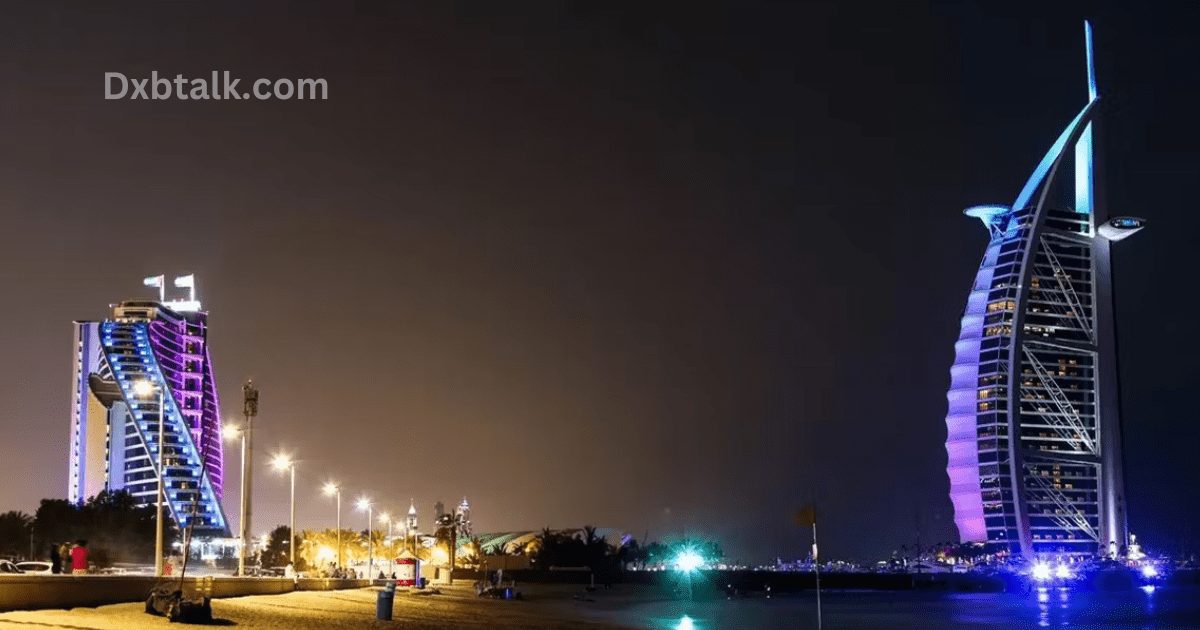
Jumeirah in daylight is all beach clubs and coffee. After sunset, the district exhales and changes register: restaurant terraces fill, the Burj Al Arab lights up like a sail caught in a spotlight, and the Corniche becomes the city’s prettiest evening walk. If you have only seen Jumeirah by day, you have met half of it.
Dining Under the Stars
The evening properly starts at a table. Jumeirah’s high-end restaurants lean into their setting, with outdoor seating and Gulf views that let you eat under an actual sky rather than a themed ceiling. For the full theatrical version, the Burj Al Arab offers two famous options: Al Mahara, its celebrated underwater-style dining room where the aquarium wall does the decorating, and the Skyview Bar on the 27th floor, where the view down the coastline is the entertainment and the drinks are built to match. Both need booking ahead — these are occasion restaurants, and the city treats them that way.
Beachside Lounges and the Slow Hours
After dinner, drift seaward. Jumeirah’s beachside lounges run a looser programme than the hotel rooms: live music and entertainment, cocktails delivered to loungers, feet in the sand if you want them there. The tempo is the point — nobody is watching the clock, the sea is doing the background work, and groups that arrived for one drink find themselves still there when the music changes from background to dancing. It is nightlife at holiday pace, which in a working city is a rarer luxury than any bottle.
📸 Follow @dxbtalk1 on Instagram for daily Dubai in photos →
Night Markets and Festivals
Keep an eye on the seasonal calendar, because Jumeirah’s evenings periodically gain a market. Night markets and festivals set up with local artisans, food vendors and entertainment — the Dubai Night Market being the name to watch — where the browsing runs from handmade crafts to street food eaten standing up. These nights show a different Jumeirah: community-flavoured, family-heavy, and mercifully unpolished compared to the hotel circuit.
The Corniche Walk to Finish
End the night the way residents do: on foot, along the Jumeirah Corniche. The illuminated Burj Al Arab stands offshore against the dark water, the breeze finally carries some cool with it, and the whole coastline feels calmer and more spacious than the same streets at noon. It costs nothing and it is, honestly, the experience visitors describe most when they get home.
What to Know Before You Go
A few mechanics protect the evening. The Burj Al Arab is a reservation-only world — its restaurants and bars admit booked guests, so the Skyview or Al Mahara plan begins days ahead, not at the door. Hotel venues along the strip run dress codes in the evening; the beach-day outfit will not carry you into the fine-dining rooms, and the walk back to change it is longer than it looks on the map. Taxis cluster at hotel entrances, which makes ending the night easy, but at peak weekend hours the queue is real — build the wait into your timing or let a lounge host call ahead. And in the cooler months, the terraces everyone wants are finite: the earlier you book, the closer to the water you sit.
Season changes the recipe. In the winter months, the whole evening can live outdoors — terrace dinner, beach lounge, Corniche walk — and should; this is the weather the district’s design has been waiting for since May. In summer, invert it: the air-conditioned dining rooms and the Skyview’s altitude do the heavy lifting, and the Corniche becomes a short, warm epilogue rather than a chapter. Either way, the constant is the view of that lit sail over dark water, which has ended more Dubai evenings than any other sight in the city — and shows no sign of losing the job.
Sequencing the Evening
Book the restaurant, leave the rest loose. Dinner as the sun goes, a lounge while the night is young, the market if the dates align, and the Corniche whenever you are ready to walk it off. Jumeirah after dark is not a scene you chase — it is one you stroll through, and that is exactly its charm.






Join the conversation