

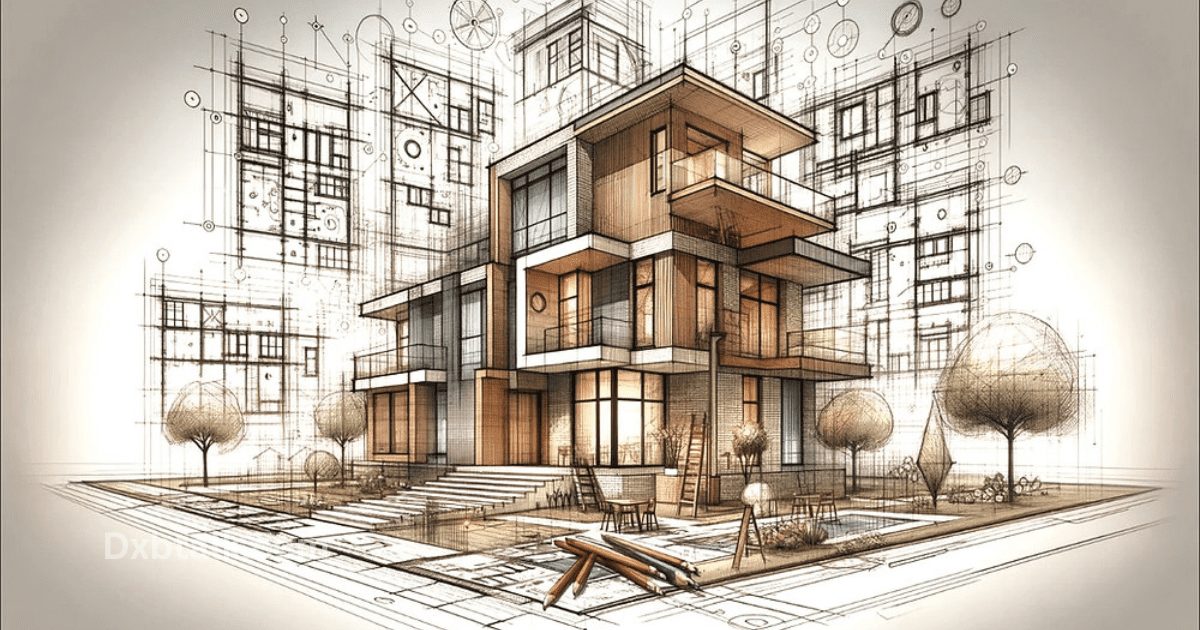
Business Bay’s skyline is a testament to Dubai’s architectural innovation and modern design. The district is home to some of the city’s most iconic skyscrapers and uniquely designed buildings, reflecting the city’s ambition and forward-thinking approach. Let’s explore some of the architectural marvels that make Business Bay stand out.
The Opus by Zaha Hadid
One of the most unique structures in Business Bay is The Opus, designed by the late Zaha Hadid. Its futuristic cube design with a void in the center is an architectural masterpiece and has become a landmark in the district.
The JW Marriott Marquis
Standing at 355 meters, the JW Marriott Marquis is the world’s tallest hotel and a striking feature of the Business Bay skyline. Its twin towers represent the modern vertical city that Dubai has become.
Vision Tower
The Vision Tower’s sharp angles and glass façade are symbolic of Business Bay’s sleek and sophisticated business environment. This skyscraper is an example of the district’s cutting-edge design principles.
The Executive Towers
These residential and commercial towers are a key part of the Business Bay development. Their functional design and integration into the Business Bay community reflect Dubai’s approach to creating multi-use developments.
Bay Square
Bay Square is a low-rise commercial development in the heart of Business Bay. Its modern, minimalistic design contrasts with the towering skyscrapers around it, offering a unique business and retail environment.
Hashtags:
#BusinessBayArchitecture #DubaiModernDesign #TheOpusDubai #ZahaHadidArchitecture #JWMarriottMarquisDubai #VisionTowerDubai #BusinessBaySkyline #DubaiSkyscrapers #DubaiArchitecturalInnovation #BusinessBayBuildings #DubaiFuturisticArchitecture #BusinessBayDesign #IconicBuildingsDubai #BusinessBayDevelopment #BusinessBayDesignInnovation #BusinessBaySkyscrapers #DubaiArchitectureGuide #BusinessBayLandmarks #ModernArchitectureDubai #BusinessBayTowers #DubaiUrbanDesign #BusinessBayBuildingDesign #DubaiConstruction #DubaiBuildingInnovation #BusinessBayRealEstate #BusinessBayTowerDesign #BusinessBayArchitects #ArchitectureInDubai #BusinessBayMasterpieces #DubaiInnovativeBuildings
Walking Business Bay Like an Architecture Lover
Business Bay rewards being explored on foot, at least in the cooler months, because so much of its design only makes sense at street level. Start along the Dubai Water Canal promenade, where you can look back at the towers as a group and pick out the contrasts the district is known for: the carved-out void of The Opus against plain glass neighbours, low-rise Bay Square sitting calmly beneath far taller buildings, and the twin forms of the JW Marriott Marquis anchoring the view. Early morning and late afternoon give the most flattering light for photographs, when the glass façades pick up colour rather than glare.
As you walk, notice the podiums. Many towers sit on multi-storey bases of parking, retail and lobbies — a practical response to the climate and car-based access, but also why the district can feel quiet at pavement level between entrances. The canal walkways, bridges and landscaped edges soften exactly that, and are now the most pleasant way to experience the architecture.
Design Pressures Behind the Shapes
The variety in Business Bay is not accidental. The district was planned as a dense commercial extension of Downtown Dubai, built largely by competing private developers on individual plots. Each tower therefore had to advertise itself — through a twist, a void, a distinctive crown or an unusual façade — while still delivering efficient office or residential floor space that would let and sell in a competitive market.
Climate shapes the buildings just as strongly. Extensive glazing must be balanced against solar gain, so you will see shading devices, recessed windows and pale, reflective materials across the district. Servicing matters too: loading bays, cooling systems and vertical transport are major design problems, even if visitors only notice the silhouettes.
📸 Follow @dxbtalk1 on Instagram for daily Dubai in photos →
How the District’s Architecture Works Day to Day
- Mixed use is the pattern: offices, hotels, apartments and small retail often share a single development, keeping the area active beyond office hours.
- Low-rise relief matters: Bay Square’s human scale shows why residents value somewhere to sit, eat and meet that is not at the base of a fifty-storey tower.
- Views are part of the design: towers are oriented to capture the canal, the Burj Khalifa or the Gulf, and those outlooks strongly influence apartment layouts and values.
- Landmarks help navigation: in a grid of similar glass towers, one unmistakable building like The Opus becomes a wayfinding point for the whole neighbourhood.
What to Look for on Your Next Visit
On a return visit, compare Business Bay with Downtown Dubai next door. Downtown was shaped around a single centrepiece and feels deliberately composed; Business Bay feels like individual statements that have grown into a skyline together. Noticing the difference is the quickest way to understand how Dubai builds its districts, and why this one remains a favourite for architects and photographers.




