Thinking about Jumeirah? This guide looks at what living there is really like: the housing mix, how people get around, where they eat and shop, and who tends to be happiest there.
The area in short
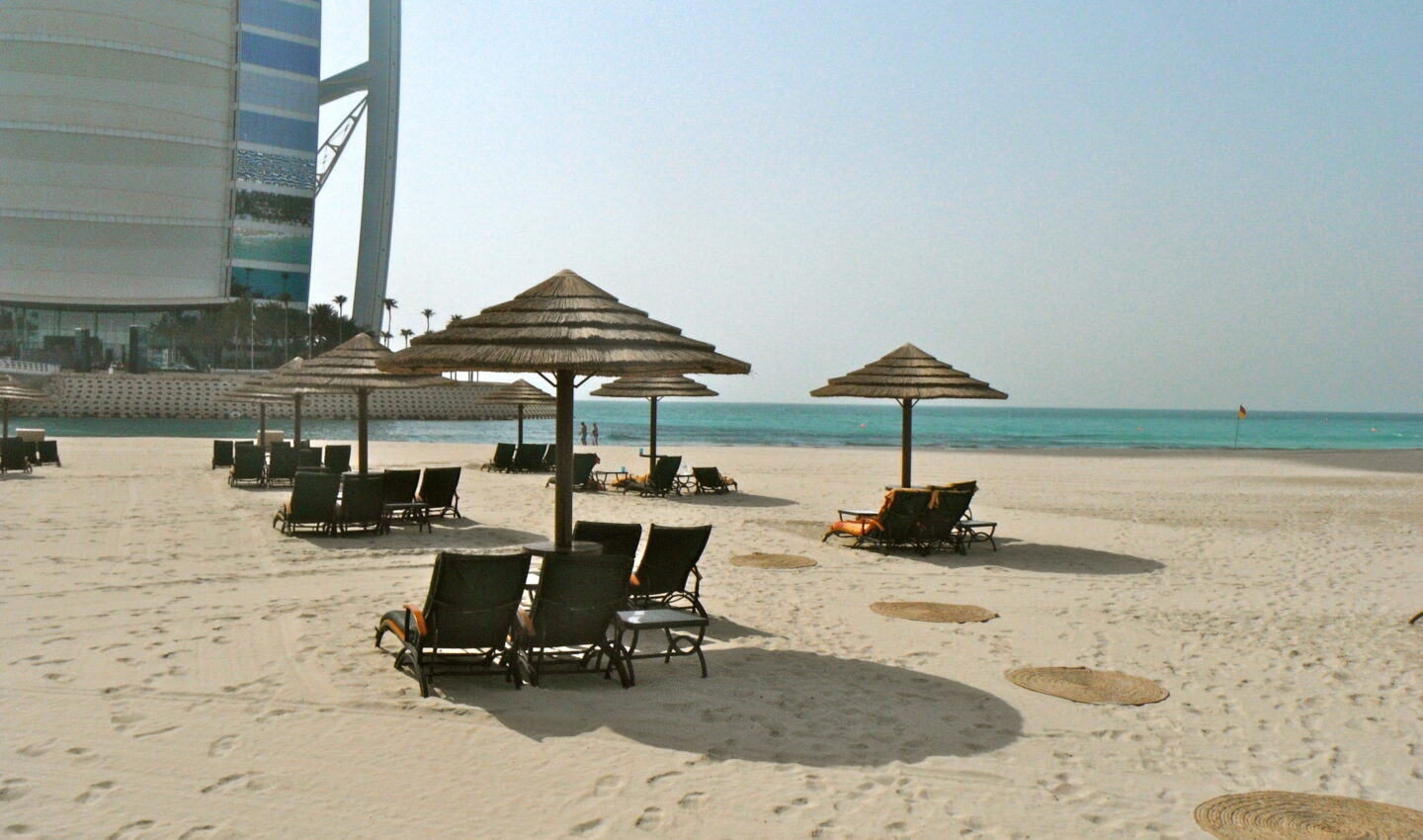
Jumeirah is the original beachside Dubai: a low-rise strip of villas and small apartment buildings running along the Gulf from central Dubai towards the Marina, made up of Jumeirah 1, 2 and 3 and Umm Suqeim 1, 2 and 3. The beach is the front garden here — Jumeirah Beach and Kite Beach — with the Burj Al Arab standing offshore at the Umm Suqeim end. It suits people who want beach life and quiet streets more than tower living: families, long-term residents, and anyone happy to drive.
The pros
The beach is daily life, not a weekend trip. Jumeirah Beach is a broad public beach with room to spread out, and Kite Beach is the sporty end — kite surfers, a running track and food trucks. In the October-to-April season the whole strip lives outdoors.
Low-rise and leafy by Dubai standards. No tower clusters, no crowded lobbies. Streets are villa-lined and comparatively quiet, and the district has kept its residential feel while the rest of the city built upwards.
Real landmarks on your doorstep. The Burj Al Arab, Jumeirah Mosque — the only mosque in Dubai that opens its doors to non-Muslim visitors for guided tours — and the long beachfront promenade are all part of the neighbourhood, not places you drive to.
Shopping and eating without a mall trip. Mercato Mall on Jumeirah Beach Road in Jumeirah 1 has been the local mall since 2002 — around 140 shops, a Spinneys supermarket and cinemas in an Italian Renaissance-style building — with Town Centre Jumeirah right beside it for everyday errands.
📸 Follow @dxbtalk1 on Instagram for daily Dubai in photos →
The cons
There is no metro station in Jumeirah. The nearest Red Line stops are Mall of the Emirates, Financial Centre and Al Jafiliya, then a short taxi or bus ride down Jumeirah Beach Road or Al Wasl Road. If you do not drive, plan around that.
Villas cost more than apartments elsewhere. Jumeirah is mostly villas, and beachside living carries a premium. Comparable space in an apartment district usually costs less.
Peak-hour traffic on two roads. Almost everything runs on Jumeirah Beach Road and Al Wasl Road, so school-run and evening traffic can be slow, and winter weekends bring beach crowds and full parking near Kite Beach.
Few schools inside Jumeirah itself. Families usually school a short drive away in neighbouring Al Safa and Al Barsha, so the school run is part of the daily routine.
Getting around
Most residents drive — Jumeirah Beach Road along the coast and Al Wasl Road behind it are the two spines. Buses run along both roads, and taxis are easy to find. Without a car, the practical pattern is bus or taxi to the nearest Red Line station (Mall of the Emirates, Financial Centre or Al Jafiliya) and the metro from there.
Eating out
The food scene follows the beach. Kite Beach has the food trucks, including SALT — the silver Airstream serving sliders on the sand since 2014 — plus cafes along the running track. Jumeirah Beach Road and Al Wasl Road carry the everyday restaurants and cafes, from breakfast spots to family restaurants, and the beach clubs do long lunches in the cooler months. For groceries, the Spinneys at Mercato Mall is the local anchor.
Who it suits
Jumeirah suits people who will use the beach most days, want a quieter, lower-rise home, and are comfortable driving. If you need a metro at your door, a tower with a gym and pool downstairs, or the lowest possible rent, another district will fit better. If the sea is the point, this is where Dubai started — and it still does beach life best.