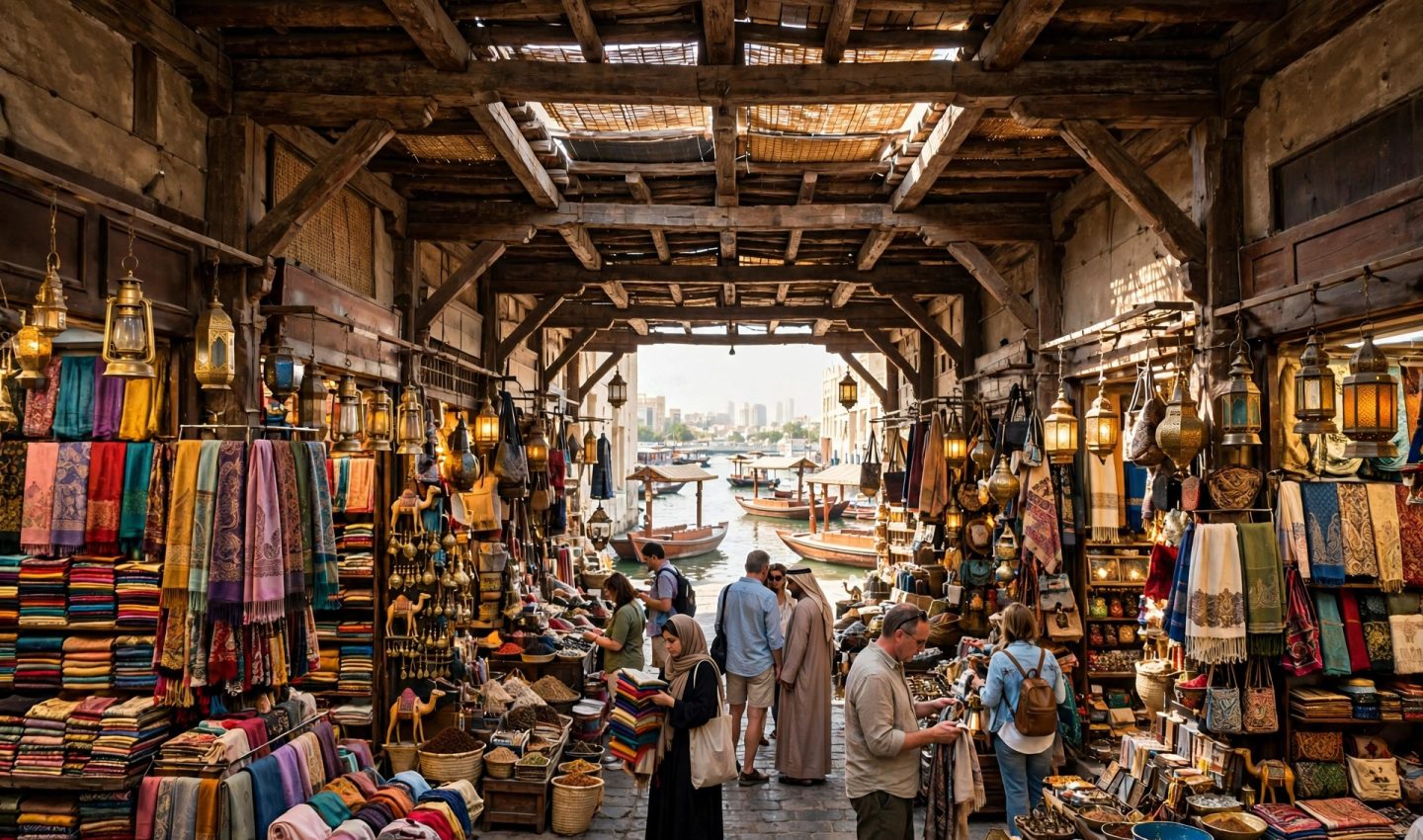
Step off the abra on the Bur Dubai side of the Creek and you step straight into one of the oldest shopping streets in the city. The Old Souk of Bur Dubai runs along the waterfront from the abra station, a covered arcade of small shops beneath a wooden-beamed roof, built in the style of the trading souks that made this creek rich. It is smaller and calmer than the famous souks across the water in Deira — and that is exactly its charm.
What the Old Souk Sells
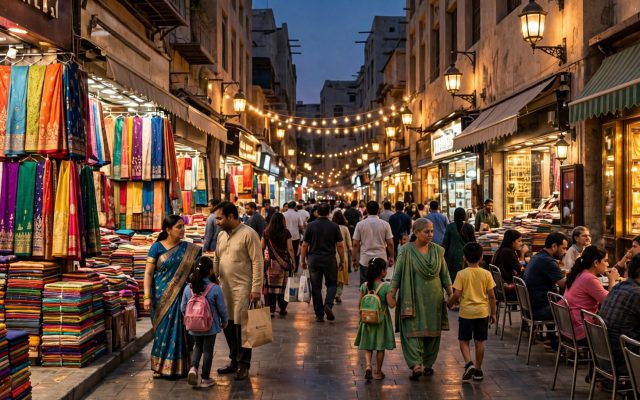
The shops here lean towards the visitor and the gift-buyer. Textiles lead the way: pashminas and scarves in every colour, embroidered fabrics, ready-made garments and cushion covers. Around them you will find souvenir stalls with brass coffee pots and miniature dhows, sandalwood and oud, spices in smaller gift-sized quantities, leather sandals, lanterns and the soft toys in national dress that every visiting grandparent seems to buy. It is a bazaar for browsing rather than bulk buying, and the shopkeepers know it — expect friendly invitations to look, and no real pressure if you drift on.
What makes the Old Souk different from a mall souvenir floor is the setting. The arcade opens at one end towards the Creek, where abras chug past every few minutes, and at the other towards the lanes of the Al Fahidi historic quarter. Shopping here comes with a view of the working river and the Deira skyline across the water.
Pairing It With the Abra
The classic way to arrive is by water. The abra — the traditional wooden boat that ferries passengers across the Creek for AED 1 — drops you at the Bur Dubai station a few steps from the souk entrance. Many visitors do the full loop: abra across, a wander through the Old Souk, then on into the textile souk and the old houses of Al Fahidi, and back across the water to Deira’s gold and spice souks. Our Dubai travel guides cover the Creek crossing and the old town in more detail if you are planning the route.
Because the souk sits on the quieter bank, it also works as a gentle introduction for first-time visitors who find Deira’s busier bazaars a little intense. Prices here can start higher than across the water — this is a visitor-facing market — so the usual souk rules apply: smile, compare two or three shops, and bargain politely.
Free Dubai Tools
Dubai, in Your Hands
📸 Follow @dxbtalk1 on Instagram for daily Dubai in photos →
The Souk and the Old Town
Give the area more than a quick pass. The souk’s lanes connect directly to some of the most atmospheric streets in Dubai: wind-tower houses, small museums, art galleries in restored courtyards and cafés tucked into heritage buildings. A slow morning might run abra, souk, coffee in a courtyard café, then the textile shops — with the Creek glittering at the end of every lane. In the cooler months this is one of the finest walks in the city.
Practical Notes
- Getting there: take the abra from Deira (AED 1) to the Bur Dubai station, or walk from Al Fahidi Metro station (Green Line).
- Bargaining: expected and friendly here — start well below the first price and meet in the middle.
- Best time: mornings for quiet browsing, late afternoons for the light on the Creek and the full old-town walk.
- Compare first: many shops sell similar scarves and souvenirs, so check a few before buying.
- Combine it: the textile souk, Al Fahidi historic quarter and the Creek abras are all within a few minutes’ walk.
- Payments: cards are widely accepted, but small cash notes are handy for the abra and small purchases.
DXB FACT — DID YOU KNOW?
Snow in the middle of the desert
- Ski Dubaithe Middle East's first indoor ski resort
- Real snow22,500 m² of it
- Inside temperature−1°C to −4°C, all year
- Slopes5 — including an indoor black run
Source: The National
A new Dubai fact every dayRead more »
Reader poll
Poll of the Day
A fun reader poll, just for curiosity — not an official survey. A new question arrives every day.