

The University of Dubai has one of the more interesting origin stories in local higher education: it was founded by Dubai’s Chamber of Commerce, the organisation that represents the emirate’s businesses, to supply the graduates those businesses needed. Now based in Dubai International Academic City, it teaches business and information technology at its core, alongside law and other programmes, to students who often value close employer links over campus glamour. This guide explains its heritage, programmes and student experience.
Founded by the Chamber, built for business
The university began in the late 1990s as an initiative of the Dubai Chamber, starting with business-focused study before expanding into a full university. That founding DNA still shows. The institution positions itself around employability, entrepreneurship and serving Dubai’s commercial community, and its governance connection to the business world gives it a network many newer institutions have to build from scratch. For students, the practical expression of this is an emphasis on internships, industry engagement and programmes designed with employers in the room.
Its current home is a purpose-built campus in Academic City, the education district in inland Dubai, which it moved to as it grew. The campus provides the teaching, library, laboratory and student facilities expected of a modern university site, within the wider student neighbourhood of DIAC. As a locally established institution rather than a branch campus, its degrees are awarded by the University of Dubai itself under the UAE’s national licensing and accreditation framework, so confirm the current status of your specific programme through official channels when you apply.
Business and IT at the core
The programme portfolio is organised principally around a college of business and a college focused on engineering and information technology, with law and general studies also represented. Undergraduate business degrees cover the major functions, management, marketing, finance, human resources and related fields, alongside specialist areas influenced by Dubai’s economy such as logistics and trade. The MBA and other master’s programmes serve working professionals and recent graduates across the same territory, including executive formats.
On the technology side, computing and information systems programmes, together with electrical and electronics engineering and newer data and security-related study, form the second pillar. The pairing is deliberate: Dubai’s employers consistently demand graduates who understand both business and systems. The exact catalogue, including newer programmes in areas such as law or specialised master’s degrees, changes over time, so verify your course, its accreditation and its delivery mode against the university’s current listings.
📸 Follow @dxbtalk1 on Instagram for daily Dubai in photos →
International accreditations and what they signal
The university draws attention to international quality marks held by parts of its provision, particularly in business education, where global accreditation systems exist to benchmark schools across countries. Such accreditations, where they currently apply, require periodic re-review and cover specific colleges or programmes rather than everything an institution does.
The student takeaway is to ask precise questions. Which accreditations does the university currently hold, which programmes do they cover, and when were they last renewed? How does your programme connect to professional bodies relevant to your career? Treat accreditation as one signal among several, and verify its current status directly.
Student life in Academic City
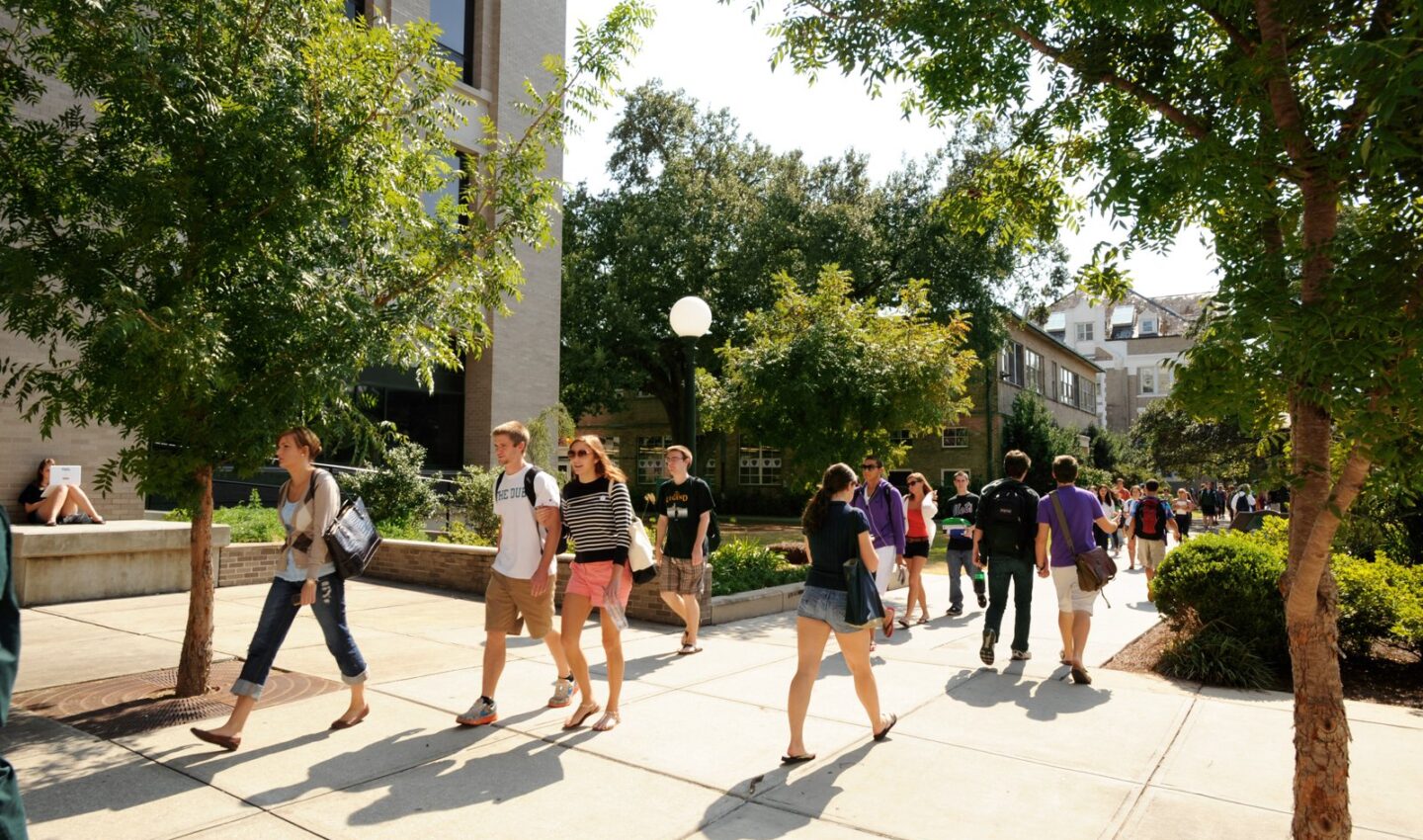
The University of Dubai’s student community mixes UAE residents, Emirati students and international students drawn by a business-centred institution in a trading city. Campus life includes clubs, societies, sports and entrepreneurship activities, with the Chamber connection feeding guest speakers, company engagement and career events. Class sizes and the scale of the institution tend to make for a more personal environment than the largest universities in the district, which many students cite as a reason for choosing it: lecturers know their cohorts.
Practical life follows the Academic City pattern. Many students live with family across Dubai; others use accommodation near the district, and university transport serves commuters. Ask about current routes and test your commute before enrolling. Internships deserve a specific conversation: ask which employers took interns from your programme recently.
Admissions, fees and making your decision
Undergraduate admission is based on recognised school qualifications meeting the university’s and national requirements for each programme, with English language proficiency expectations. Postgraduate entry requires a relevant bachelor’s degree, and MBA admission may also weigh professional experience. The university typically operates intakes aligned to the standard academic year with additional starts on some programmes; deadlines and requirements change, so confirm the current cycle with admissions.
Fees are set per programme and level, vary between business, technology and law provision, and change every year. Scholarships and discounts have typically been offered on criteria such as academic merit and for particular student categories, generally as tuition reductions with conditions. Obtain a written total for your full degree including any additional charges, and compare like with like across your shortlist.
- How does the Chamber heritage translate into internships for your programme?
- Which accreditations currently cover your specific degree?
- What are the current entry requirements for your curriculum?
- What is the full degree cost after any scholarship conditions?
- How large are classes, and who teaches your core modules?
The University of Dubai suits students who like the idea of studying inside Dubai’s business story rather than observing it from outside. Its scale is moderate, its focus is clear and its employer roots are genuine. Verify programme accreditation, fees and deadlines directly with the university, and visit the Academic City campus to decide whether its community feels right for you.





