Your visa is approved, your bags are packed — and for many Pakistani travellers the toughest moment of the whole journey is still ahead: the immigration counter at a Dubai airport. With stricter checks in force, preparation at the airport now matters almost as much as preparation for the visa itself. The good news is that a smooth arrival is mostly a paperwork-and-composure exercise, and both are within your control.
Before You Leave Pakistan
Start with the passport: at least six months’ validity from your date of entry, because airlines can deny boarding for less. Print your visa and keep a copy on your phone as well — paper speeds things up at every counter, and phones die at the worst moments. Confirm the return ticket is booked and reachable; a one-way ticket raises immediate questions you do not want to improvise answers to. Fix your accommodation story in documents: a hotel booking confirmation, or your host’s name, address, Emirates ID copy and phone number. Prepare your funds — the sustenance check expects at least AED 3,000 or the equivalent in cash or available credit limit, so keep cash or a card statement ready to show. Travel insurance documents, if you have them, quietly strengthen the picture of a genuine visitor.
At the Counter: What to Expect
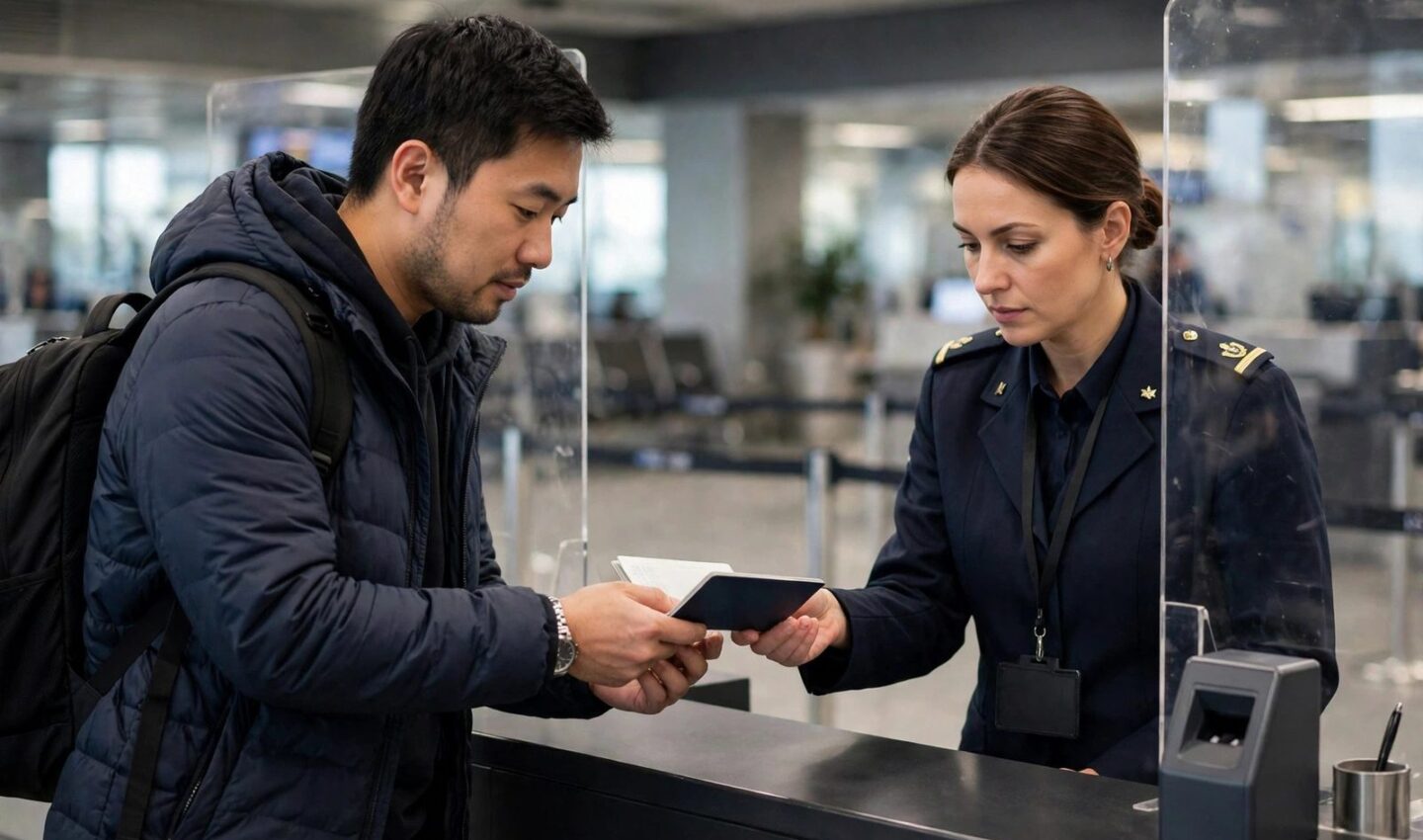
Officers ask simple questions: Why are you visiting? Where are you staying? How long will you stay? When are you returning? Who are you visiting? Answer honestly, briefly, and consistently with your visa application — inconsistent answers are what trigger secondary inspection, not the questions themselves. Have the return ticket, hotel booking and funds proof physically ready; fumbling through bags reads as unpreparedness in a sixty-second interaction. If you are sent to secondary inspection, treat it as what it is: a normal procedure, not a punishment. Stay calm, polite and cooperative. Arguing or visible frustration makes everything slower and nothing faster.
📸 Follow @dxbtalk1 on Instagram for daily Dubai in photos →
The AED 3,000 Rule
Officers at Dubai (DXB) and Sharjah (SHJ) actively enforce the sustenance check: at least AED 3,000 in cash or credit limit for a standard 30-day stay. Travellers who fail it can be denied entry and sent back on the next flight — even with a perfectly valid visa, because the visa and the entry decision are two separate gates. Carry the funds properly. Do not borrow cash purely to display it; officers are experienced at spotting exactly that, and the discovery converts a routine check into a credibility problem.
The Mistakes That Cause Trouble
The pattern is consistent: arriving with no accommodation proof and an “I’ll figure it out”; visiting family without knowing the host’s address or details; carrying no funds proof on the assumption the visa alone suffices; holding a one-way ticket with no explanation. None of these is a crime — all of them are avoidable friction at the exact moment you can least use it. First impressions in a short interaction carry disproportionate weight, so dress and behave like the genuine traveller you are.
After You Clear Immigration
The arrival discipline continues past the counter. Keep your visa and entry details safe — you will need them for any extension, status change or future application. Note your visa’s exact expiry date immediately and set a phone reminder a week before it: overstay fines run at AED 50 per day plus an AED 200 exit charge, and the countdown starts at the stamp, not when you remember it. If you are job hunting, your search plan starts on day one, because your visa clock is already running. Families and first-timers should expect more questions than seasoned travellers — that is normal, and confident, truthful answers close them quickly; every adult should carry their own documents, and children travel with their passports, family documents and consent letters where applicable. A smooth arrival is ninety percent preparation: documents ready, funds ready, answers honest — and Dubai welcomes you in.
Disclaimer: Airport procedures and entry checks are at the officers’ discretion and change over time. Confirm current requirements with your airline and on official UAE portals before travelling. This post is general information, not legal advice.
Related Guides
- Dubai International vs. Al Maktoum International: Which Airport Is Best for Your Travel Needs?
- The Rise of Al Maktoum International Airport (DWC): Dubai’s Vision for the Future of Air Travel
- Why Dubai International Airport (DXB) Is the Ultimate Travel Hub
- Weak Travel History: How a Blank Passport Affects a Pakistani’s First UAE Visa Application
- Flights Between Dubai and Malta: Airlines, Routes
- Flights Between Dubai and Slovenia: Airlines, Routes