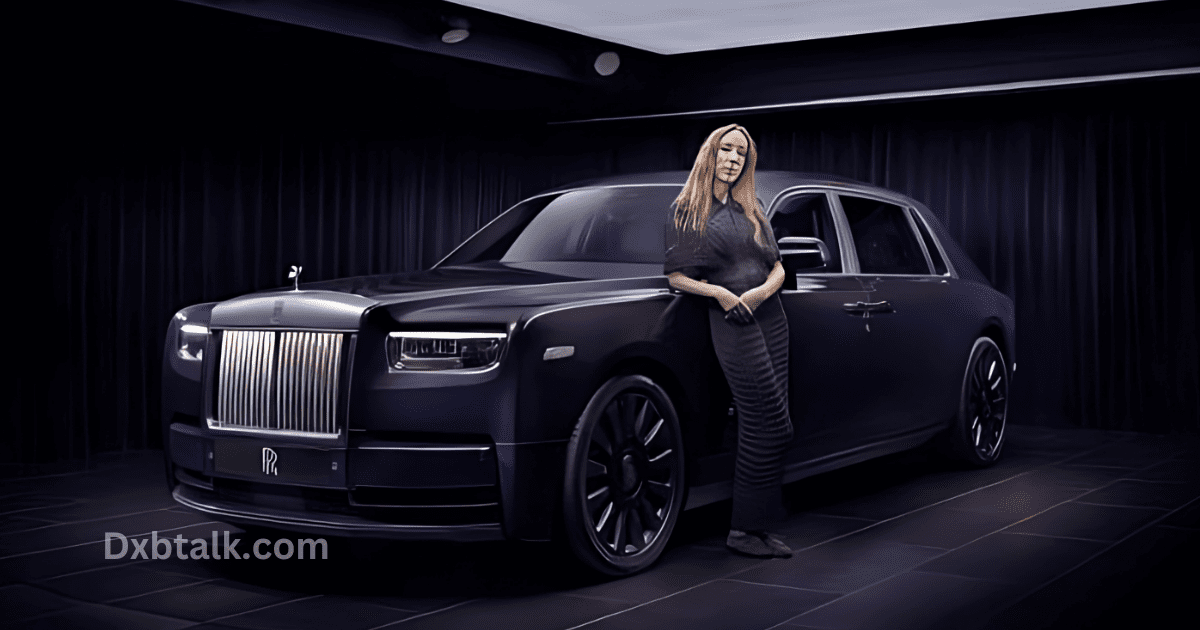
Every car city has a hierarchy, and Dubai’s has a ceiling with a name: the Rolls-Royce Phantom. Supercars shout for attention here and are granted a glance; the Phantom does not shout, and traffic makes way. It is the definitive luxury automobile — hand-built, V12-powered, priced in the millions — and on Dubai’s streets it functions less as transport than as a piece of moving architecture that announces its owner’s arrival before the door opens.
The Craft Is the Argument
The Phantom’s claim starts in the making. Each car is handcrafted — interiors assembled by artisans from leather, wood veneers and metalwork selected and finished to a standard the industry treats as its reference. The famous details earn their fame: the coach doors, the starlight headliner, the gallery fascia where owners commission artworks behind glass. Nothing in the cabin is merely adequate, and nothing is hurried. In a city fluent in luxury, the Phantom’s argument is that true luxury is not features but finish — the difference between expensive and impeccable, visible to anyone who has sat in both.
Effortless, Silent, V12
Under the bonnet sits a V12 engine tuned to the marque’s philosophy: performance delivered as silence. The Phantom does not accelerate so much as gather momentum, the adaptive suspension reading the road so precisely that the ride has been described, by everyone who tries, as a glide. On Dubai’s long, smooth arteries — the run down Sheikh Zayed Road at night, the sweep to Abu Dhabi — the car is in its element: immense, unbothered, and engineered so completely around its passengers that being driven in it outranks driving it, which is rather the point of a chauffeur-era flagship that never conceded the era had ended.
📸 Follow @dxbtalk1 on Instagram for daily Dubai in photos →
Bespoke: The Dubai Specification
What makes each Phantom seen in Dubai unique is the bespoke programme — the commissioning process through which owners specify paint colours mixed to a sample, embroidery, inlays, personal detailing, entire interiors themed to a life. In a market where the standard car is already a supercar, bespoke is how the Phantom stays singular: two identical examples essentially do not exist. The city’s wealthiest residents, celebrities and business magnates are drawn to exactly that — a car that cannot be duplicated by writing the same cheque, because the cheque is only where the conversation starts.
The Icon’s Role
Where the Phantom Reigns
To see the species in its habitat, watch the city’s ceremonial kerbs: the forecourts of the great hotels at the evening hour, the DIFC’s restaurant row, the Palm’s Crescent arrivals, the wedding convoys where a Phantom leads as naturally as a flag. Dubai’s chauffeur culture suits the car perfectly — this is a city that never treated being driven as a compromise — and the Phantom’s rear compartment, with its deep seats and silence engineered like a material, is designed for exactly these processions. Owners speak of the car the way collectors speak of watches: as the piece that ends the argument. In a fleet culture addicted to the newest plate and the loudest exhaust, the Phantom’s authority is that it does not compete. It presides.
Parked outside a five-star hotel in Downtown or sweeping past the towers, the Phantom does cultural work for Dubai: it is the visual shorthand for the city’s luxury story, the car the valet parks in front. Its price, reaching into the millions, places it at the pinnacle of a market full of pinnacles — and yet the market keeps absorbing them, because the Phantom sells the one thing this city values above novelty, which is permanence. Models trend and are replaced; the Phantom, now in its eighth generation across a century of the name, simply continues. In Dubai, where the pursuit of luxury is an art form, it remains the masterpiece against which the art is judged.