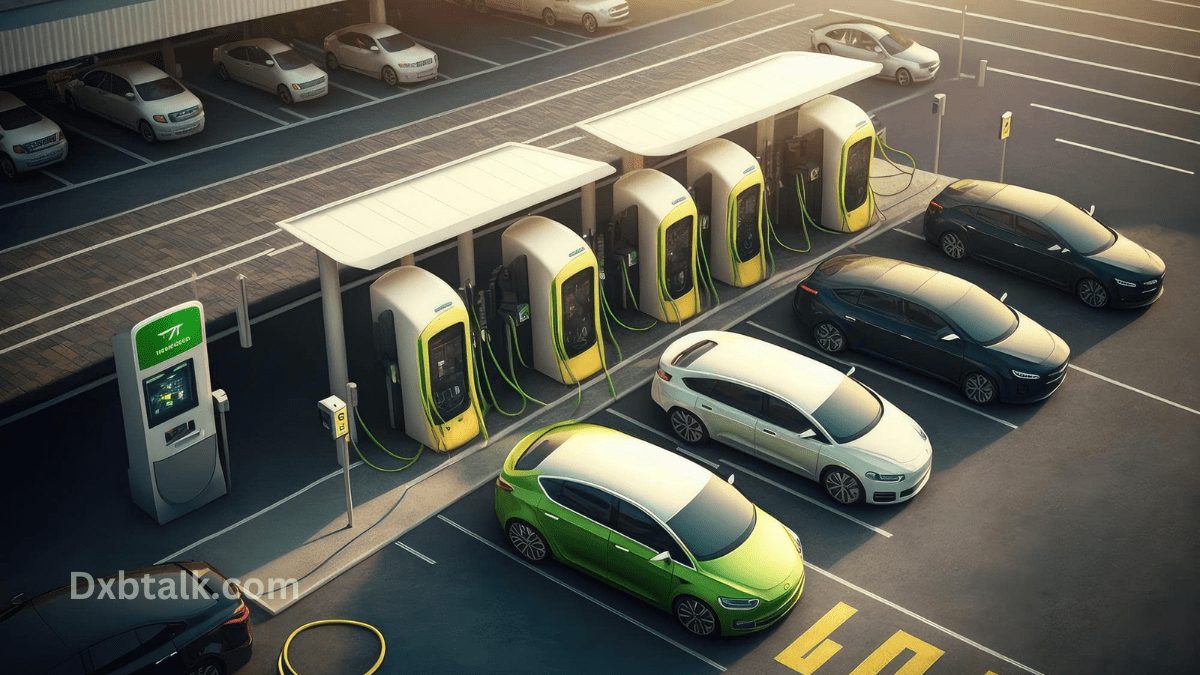
Dubai rarely adopts a technology halfway, and electric vehicles are no exception. Backed by government sustainability programmes and a fast-growing charging network, the city is embracing a future where electric cars play a central role in reducing carbon emissions. The shift is visible everywhere once you look for it: charging points in mall car parks, EVs in taxi fleets, and a showroom line-up that grows more electric every year. Here is where the revolution stands, and where it is heading.
Why Dubai Is Embracing Electric Vehicles
Start with government support. Dubai’s authorities have promoted EV ownership through green initiatives and incentives — among them free parking provisions for electric cars and publicly available charging — deliberately lowering the friction of switching. The environmental case runs alongside: electric cars cut local emissions directly, making them a cleaner alternative to traditional petrol-powered vehicles in a city where the car is king. And crucially, the infrastructure is being built ahead of demand rather than behind it. Dubai has invested heavily in charging stations across the city, so owners can charge conveniently at home, at work and out in public — the single factor that most determines whether EV ownership feels easy or anxious.
The Models You See on Dubai’s Roads
Tesla leads the charge in the popular imagination, and models like the Model S and Model X have become a familiar sight — impressive performance wrapped in luxury, well suited to a city that appreciates both. The Nissan Leaf represents the practical end: an affordable, efficient option for drivers making the switch without making a statement. The BMW i3 covers the third niche — compact and innovative, aimed at urban drivers who want sustainable technology in a city-sized package. Between them, these three sketch the shape of the early market: luxury flagship, sensible hatchback, design-led runabout. The range has widened considerably since, but the pattern they set still holds.
📸 Follow @dxbtalk1 on Instagram for daily Dubai in photos →
What Still Has to Happen
Honest revolutions admit their obstacles. Charging needs to keep pace as ownership scales, summer heat tests batteries and range in ways temperate-climate reviews never capture, and the second-hand EV market is still young. None of these are reasons the transition stalls — Dubai has a record of building the infrastructure a policy requires — but they are the difference between a promising direction and a completed one.
A Cleaner, Quieter City
The future of electric vehicles in Dubai looks bright, with expanding infrastructure and sustained government support paving the way. As more residents make the switch, the city moves towards a cleaner, greener version of its car-loving self — same energy, less noise, less exhaust. The revolution here will not arrive with a bang. It will arrive, quietly, at a charging point near you.
Driving Electric in Dubai Heat
The question every sceptic asks is the sensible one: what does 45-degree summer do to a battery? Heat is genuinely harder on batteries than cold, and range on the hottest days is not the range on the brochure. Dubai’s EV owners adapt the same way the city adapts to everything thermal — cars live in shaded and covered parking, charging happens overnight at home for most, and journeys are planned around the network rather than improvised against it. Air conditioning, run hard and constantly, is simply part of the energy budget here, for electric and petrol cars alike. The owners who struggle are the ones who expected a temperate-climate experience; those who bought with Dubai’s climate in the calculation report few surprises.
Taxis, Fleets and the Second Wave
The transition’s second wave is commercial. Taxi and fleet operators — whose cars cover enormous daily distances — gain the most from cheaper running costs per kilometre, and their adoption normalises EVs for everyone else: a passenger who has ridden silently across town in an electric taxi has received the best possible advertisement. Delivery fleets, car-share schemes and corporate pools follow the same arithmetic. Revolutions in transport rarely begin with private enthusiasts alone; in Dubai, they are arriving by fleet order as much as by showroom.