

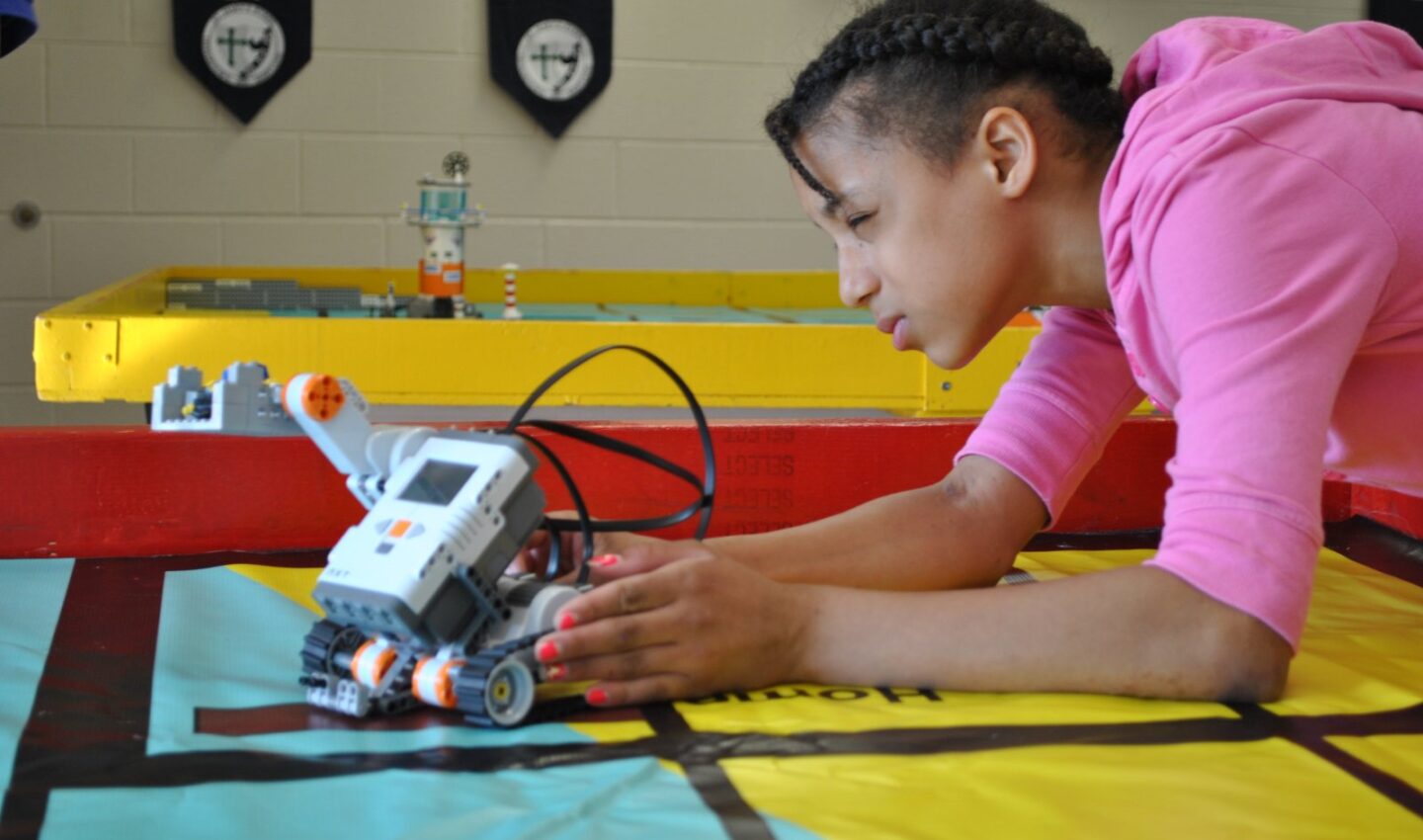
Almost every school prospectus in Dubai now promises strong STEM — science, technology, engineering and mathematics — and photographs of children in robotics kits are everywhere. For parents, the challenge is telling the difference between a genuine, well-sequenced STEM culture and a marketing label attached to a cupboard of ageing tablets. Done well, STEM in Dubai schools builds exactly the capacities the city’s economy prizes: problem-solving, design thinking, data literacy and the confidence to make and test things. Done poorly, it is a weekly gadget session with little learning underneath. This guide explains how schools typically deliver STEM across the phases, the competitions and events that surround it in Dubai, and the concrete things parents can look for and ask about when judging provision — whether at a premium campus in Al Barsha or a smaller school in Al Qusais.
STEM in the Primary Years: Foundations First
In strong primary provision, STEM is mostly invisible as a label. It looks like serious science teaching with hands-on investigation, mathematics that emphasises reasoning and problem-solving over speed, and computing woven into ordinary lessons. Many schools introduce simple coding through unplugged activities and child-friendly platforms in the early years, progressing to block coding, then early text-based languages by the end of primary. Design and technology appears as making: structures, simple circuits, cooking, and projects that require children to plan, test and improve. The warning sign is a school where primary STEM exists mainly as an after-school club run by an external company; clubs are a fine supplement, but the core entitlement should be in the curriculum, taught by the school’s own teachers, with progression planned year by year like any other subject.
Secondary STEM: Labs, Pathways and Specialisms
At secondary level, provision becomes easier to inspect. Look for well-equipped science laboratories and evidence they are used constantly — practical work is the heartbeat of good science — plus dedicated computing and design technology spaces, technicians supporting the departments, and teachers who are subject specialists. Curriculum pathways matter: separate sciences at GCSE or equivalent for pupils who want them, computer science as a real examination option rather than only digital literacy, and at post-16 level, routes through A-levels, IB or Advanced Placement in sciences, mathematics, further mathematics and computing. Some Dubai schools have developed particular strengths — engineering partnerships, aviation or sustainability themes, girls-in-STEM initiatives — and these can be a genuine reason to choose one school over another for a teenager whose interests are already clear.
📸 Follow @dxbtalk1 on Instagram for daily Dubai in photos →
Competitions, Innovation Weeks and the Dubai Scene
Dubai gives school STEM an unusually lively stage. Inter-school robotics competitions, science fairs, mathematics challenges, hackathons and design contests run through the year, and many schools hold their own innovation weeks where normal timetables pause for challenges, visiting speakers and showcases of student work. National initiatives promoting innovation and future skills add further opportunities, and venues such as science festivals and university open days give students an audience beyond school. These events matter most when they grow out of classroom learning: a robotics team that meets weekly all year, coached by a teacher, teaches persistence and teamwork in a way a one-off event cannot. When visiting a school, ask which competitions pupils actually entered in the past year, how teams are selected, and whether participation is open to all interested students or reserved for a chosen few.
What Parents Can Check
STEM quality leaves visible traces. On a tour, look for:
- Student work on walls that shows process — designs, drafts, failed attempts and improvements — not just polished final products
- Laboratories and workshops that look used, staffed and safely organised on an ordinary day
- A clear coding progression from primary to secondary, explained confidently by staff
- Examination options in computer science and separate sciences, with reasonable class uptake
- Links with universities, employers or industry speakers that go beyond a logo on a slide
You can also check the latest KHDA inspection report, which comments on curriculum quality and innovation. At home, remember that STEM confidence grows from everyday things as much as school provision: cooking together with measurements, building kits, repairing rather than replacing, coding games, and talking about how the technology around the home actually works.
Balancing STEM With Everything Else
A final note of perspective. The current enthusiasm for STEM sometimes squeezes the humanities, languages and arts that develop the communication and judgement technical careers also demand. The best Dubai schools resist presenting STEM as a replacement for breadth; they treat it as one strong strand in a whole education, and they watch carefully that girls and boys alike are encouraged into computing, physics and engineering pathways. When you choose a school, you are looking for that balance: rigorous science and mathematics, real making and coding, enthusiastic specialist teachers — and a child who still reads widely, writes well and has time to be unhurried. That combination, more than any single robotics trophy, is what will serve them in the economy they will enter.





