

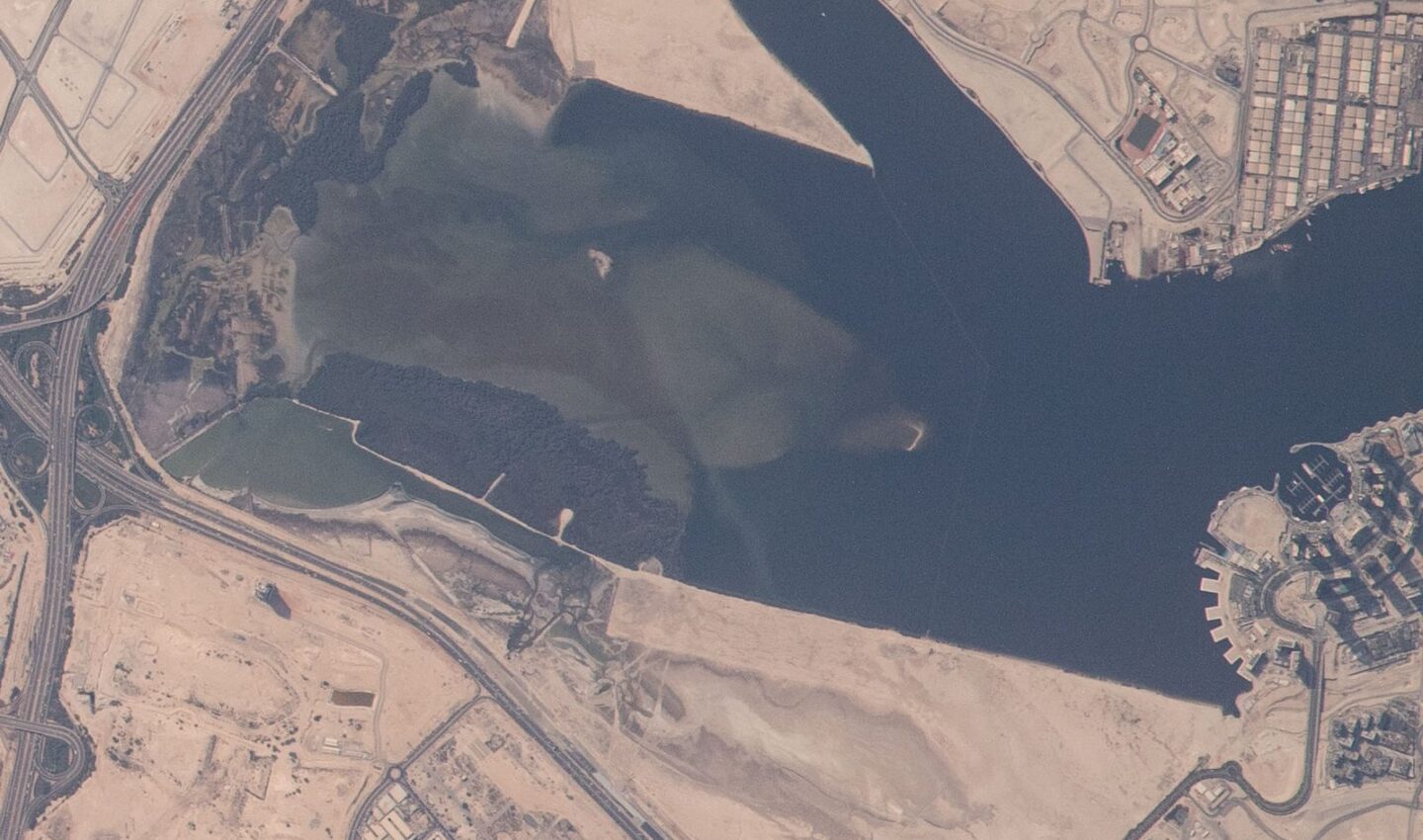
Nowhere else in Dubai does the city’s double nature collide so beautifully: on one side of the water, thousands of pink flamingos feed in protected wetlands; on the other, the towers of a brand-new waterfront city catch the evening light. Ras Al Khor — “head of the creek” — is the district where Dubai Creek ends in a wildlife sanctuary of international importance, ringed by industry, roads and some of the most in-demand new homes in the emirate. This guide covers the sanctuary, the communities around it, and how the district fits together.
The lay of the land
Ras Al Khor sits where the Creek widens into its natural head, south-east of the old city. The Ras Al Khor road corridor runs through it, linking the Al Awir and Hatta direction with Business Bay and the city centre. The district’s pieces are strikingly different from one another: the sanctuary’s lagoons and mangroves at the centre, industrial estates to the south and east, and the master-planned waterfront community of Dubai Creek Harbour on the northern shore.
The wildlife sanctuary
The Ras Al Khor Wildlife Sanctuary is one of the region’s great conservation success stories. Established in the mid-1980s and recognised internationally as a wetland of importance, it protects the Creek-head lagoons where migratory birds rest and feed on their journeys between continents. It is most famous for its greater flamingos, which gather in their thousands in the cooler months and turn whole mudflats blush-pink — a sight made more surreal by the skyline behind them.
Flamingos are only the headline act. The sanctuary hosts dozens of bird species across the year — herons, egrets, osprey, sandpipers and wintering ducks among them — plus the mangrove and salt-flat ecology that supports them. Public bird hides at the edges of the reserve let visitors watch at close range without disturbing the birds. The sanctuary is managed by Dubai Municipality; visiting arrangements and hide opening times are published through its official channels, so check before you go, and bring binoculars if you have them.
📸 Follow @dxbtalk1 on Instagram for daily Dubai in photos →
Communities within the district
- Dubai Creek Harbour — the district’s residential star: a growing city of apartment towers on Creek Island and the mainland shore, with promenades, parks, marinas, hotels and retail arranged around water and sanctuary views. Homes here sell and rent on a simple promise — skyline, creek and flamingos from the same window.
- Ras Al Khor Industrial Areas — the working side: warehouses, workshops, car services, building-materials yards and light industry spread across numbered industrial zones. Not residential, but a daily destination for thousands of workers and business owners, and part of the district’s honest character.
- The sanctuary shoreline and Al Jaddaf edge — across the district’s western side, the neighbouring Al Jaddaf quarter adds hotels, residences and the Green Line’s Creek-side stations within easy reach of Ras Al Khor addresses.
What living here is like
Residential life effectively means Dubai Creek Harbour, and it feels like a city being born in real time: new towers handing over in phases, cafés and supermarkets opening month by month, families colonising each new park and promenade as it completes. The setting is its luxury — sunset walks along the harbour with the Burj Khalifa framed across the water, and a protected nature reserve as your permanent neighbour, which also guarantees the view can never be built out.
The practical considerations of any young district apply: phased construction continues, some amenities arrive after the residents do, and peak-hour traffic on the Ras Al Khor corridor can build up as the population grows. Verify school, clinic and retail provision for your exact tower with the developer, and check current transport arrangements, because services in a growing district change quickly.
Transport links
By road, Ras Al Khor Road is the district’s artery, connecting to Business Bay and Al Khail Road in one direction and to the Al Awir corridor and Festival City bridge in the other; the old city and airport are both short drives in clear traffic. The nearest Metro access today is the Green Line’s terminus side at Al Jaddaf/Creek, reached by a short taxi, bus ride or drive, and a future Metro line serving Creek Harbour has been announced as part of the network’s expansion — check the RTA’s official updates for its status and timeline rather than relying on render boards.
Local buses serve the industrial areas and the harbour community, and the district’s flat waterfront promenades make it one of the pleasantest places in Dubai for an evening walk or cycle once you are home. Water transport on the Creek continues to develop around the harbour’s marinas.
Who Ras Al Khor suits
The district suits buyers and tenants who want new-build waterfront living with a nature reserve as the view; birdwatchers and photographers, who have a world-class subject on their doorstep; and businesses needing serious warehouse and workshop space within minutes of the city centre. It is a district of contrasts by design — industry, wilderness and luxury towers sharing one shoreline — and for many residents, that contrast is exactly the appeal.
Visiting the sanctuary well
If you come for the birds, come in the cooler months and come early, when the flocks are active and the light is kind. The hides are designed for quiet watching — keep voices low, stay on the paths and viewing areas, and let the birds set the distance. Photographers will want the longest lens they own; everyone else will find that even a phone camera through the hide’s slots captures the improbable pink of the flocks against the towers. A sanctuary visit pairs naturally with the rest of the district: coffee and a promenade walk at Creek Harbour afterwards, or a loop back through Festival City and the old town for lunch.




