For one month each year, Dubai changes its rhythm completely. Ramadan, the ninth month of the Islamic calendar, is a time of fasting, prayer and reflection for Muslims — from dawn to sunset, those observing the fast do not eat or drink. The city does not shut down; it rearranges itself around the fast, and in many ways Ramadan nights in Dubai are more alive than at any other time of year.
The Shape of a Ramadan Day
The day begins before dawn with suhoor, the pre-fast meal. Then comes the long, quiet stretch of the fast. Working hours are shorter during Ramadan — by law, private-sector working days are reduced — and the city’s afternoons take on a slower, gentler pace. Many people rest in the late afternoon, saving their energy for the evening. As sunset approaches, the roads fill briefly with people heading home or to a restaurant, and then, at the moment of the maghrib prayer, the fast is broken.
Iftar: The Meal That Breaks the Fast
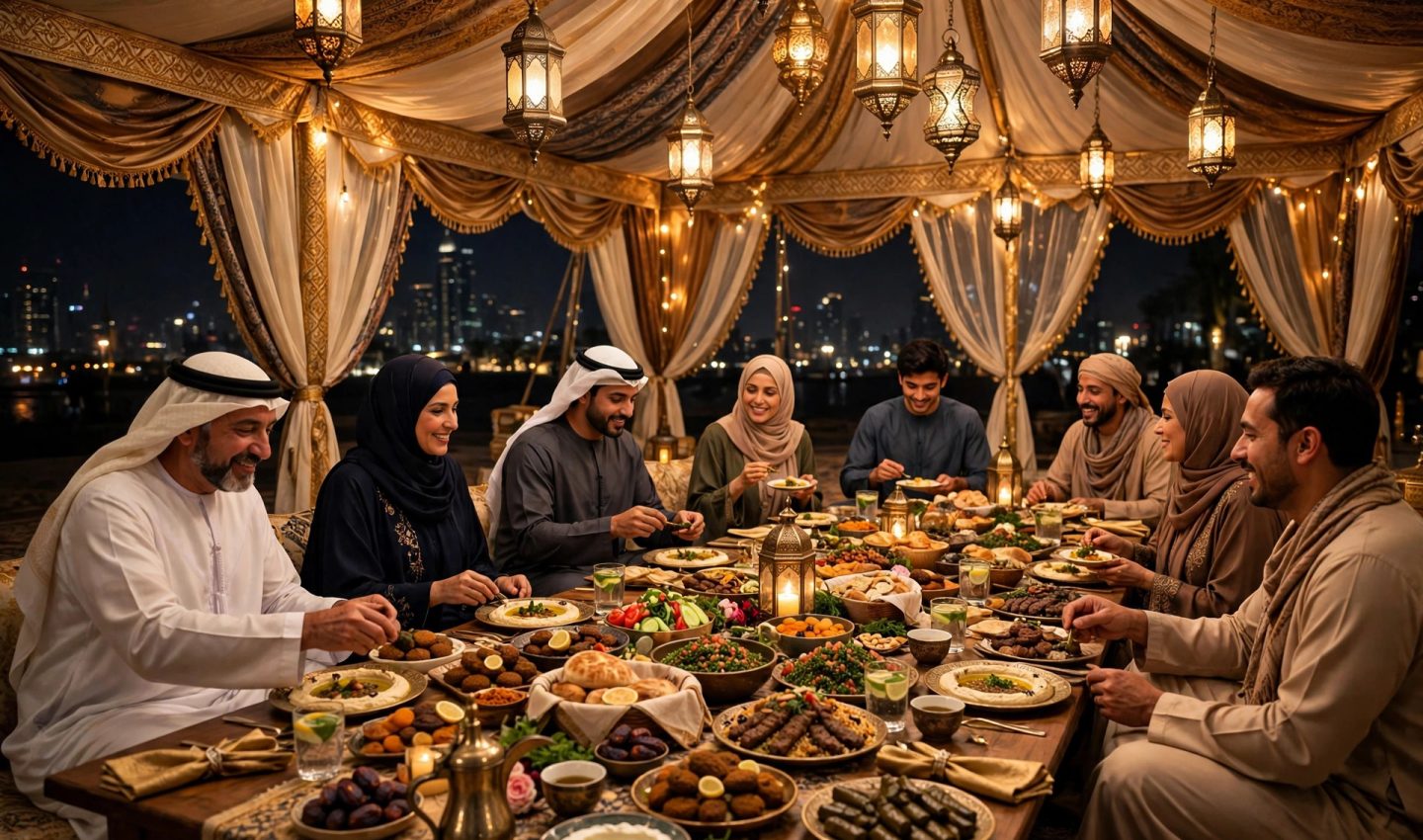
Iftar is the sunset meal, and in Dubai it is an occasion. It traditionally begins with dates and water or laban, followed by soups, salads, grills and sweets. Hotels and restaurants across the city serve iftar buffets, and the great Ramadan tradition here is the iftar tent — vast, beautifully decorated tents, some seating hundreds, where families, friends and business colleagues gather to break the fast together. Some tents are grand and chandeliered; others are simple community affairs. Booking ahead is essential at the popular ones, especially on weekends.
After iftar, the city wakes up for the night. Taraweeh prayers are held at mosques, the malls fill, and suhoor — served late, sometimes until just before dawn — becomes a social meal in its own right, with tents and cafés hosting guests into the small hours. If you want to join an iftar as a visitor, you are welcome to; our Dubai food and dining guide is a good starting point for where to book.
📸 Follow @dxbtalk1 on Instagram for daily Dubai in photos →
Free Dubai Tools
Dubai, in Your Hands
Being a Considerate Guest
Non-Muslims are not expected to fast, and Dubai is welcoming during Ramadan — but a little consideration goes a long way. It is respectful to avoid eating, drinking or smoking in public view during fasting hours, particularly in front of those who are fasting; most restaurants that open during the day do so discreetly, and many residents simply eat at home or in the office. Dress a touch more modestly than usual in public places, keep music down, and accept that service may be slower in the late afternoon, when energy is lowest. In return, you will find people at their most patient and generous — Ramadan is also the city’s great season of charity, with community iftars and donation drives everywhere.
Practical Notes
- Ramadan shifts about 11 days earlier each year; check the dates for your visit, as they move through the seasons.
- Working hours are shorter and some attractions adjust their timings — check before you go.
- Malls and restaurants stay open late, often past midnight; the city peaks after iftar.
- Book iftar tents and buffets in advance, especially Thursday to Saturday evenings.
- Avoid eating, drinking and smoking in public during fasting hours out of respect; hotels serve guests as normal.
- The cannon fired at sunset in some locations signals iftar — a tradition worth seeing once.
Ramadan is Dubai at its most reflective and, after dark, its most convivial. Time your visit to its rhythm and the city will reward you.
DXB FACT — DID YOU KNOW?
Snow in the middle of the desert
- Ski Dubaithe Middle East's first indoor ski resort
- Real snow22,500 m² of it
- Inside temperature−1°C to −4°C, all year
- Slopes5 — including an indoor black run
Source: The National
A new Dubai fact every dayRead more »
Reader poll
Poll of the Day
A fun reader poll, just for curiosity — not an official survey. A new question arrives every day.