If Deira is Dubai’s trading heart, Bur Dubai is its memory — and nowhere is that clearer than at prayer time. On this side of the Creek, the call to prayer rolls over wind-tower houses, museum courtyards, textile lanes and the busy streets of Meena Bazaar, gathering residents, traders and workers into mosques that range from the grandeur of the Grand Mosque area to the smallest neighbourhood prayer house tucked behind a row of shops. This is a practical guide to praying on the Bur Dubai side: where the rhythm comes from, and how real people fit it into real days.
The Grand Mosque and the old town around it
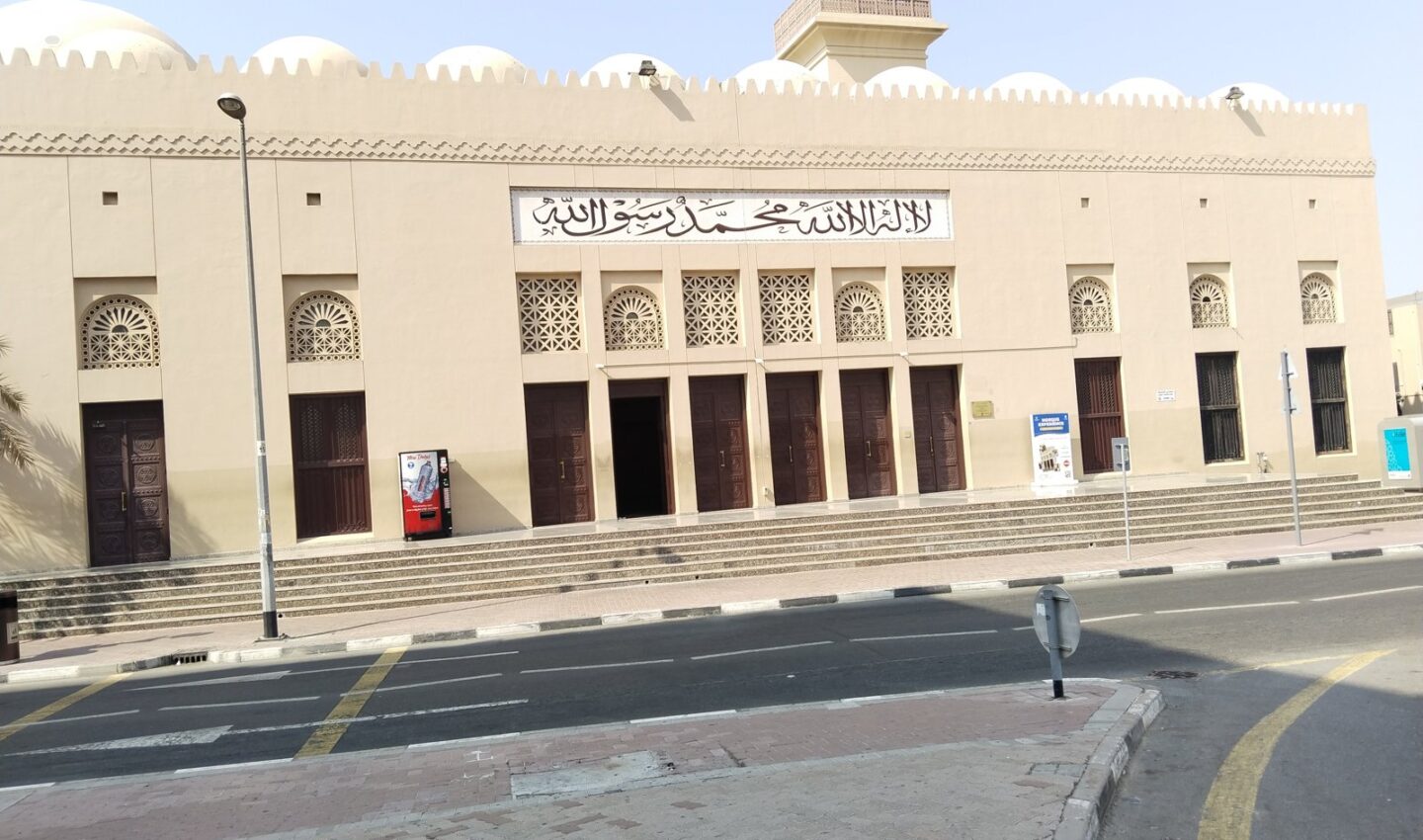
Every Bur Dubai prayer day is anchored, at least in the imagination, by the Grand Mosque beside the Creek, with its soaring minaret watching over the abra stations. You do not need a map of individual mosques to pray well here — the old town is generously served, and from Al Fahidi’s lanes to the souk streets, a place of prayer is rarely more than a short walk away. The historic quarter’s small mosques serve the museum staff, guides, shopkeepers and residents of the wind-tower houses, and their congregations have the settled, neighbourly feel of a village inside a metropolis.
Al Fahidi rewards an unhurried approach. Come for a morning of museums, and let Dhuhr find you rather than the other way round: finish your gallery, follow the sound of the adhan, pray, and then take lunch in one of the courtyard cafés while the fiercest heat passes. It is the oldest way to do Bur Dubai, and still the best.
Meena Bazaar, Mankhool and the working day
East and south of the old town, Bur Dubai becomes gloriously commercial: Meena Bazaar’s sari shops and tailors, the electronics and gold stores, the apartment blocks of Mankhool and Al Jafiliya’s edge. Here prayer runs on the worker’s clock. Colleagues relieve each other at counters, tailors pause mid-fitting, and the neighbourhood mosques absorb a steady, friendly flow at every prayer. Many commercial buildings and hospitals in the wider district also provide prayer rooms, which staff use for a quiet Dhuhr or Asr without leaving the building — in the summer months, nobody underestimates that blessing.
Prayer times change daily, so the universal local habit applies: check the official UAE calendar or a prayer times app for the day. On Fridays, plan properly. The midday congregation draws the whole community — families from the apartment blocks, traders from the bazaars, elders who have prayed here for decades — and the mosques around the Creek and Al Fahidi fill early. Arrive in good time, enjoy the unhurried greetings afterwards, and let the afternoon unfold at Bur Dubai’s gentler Friday pace.
📸 Follow @dxbtalk1 on Instagram for daily Dubai in photos →
Evenings by the Creek
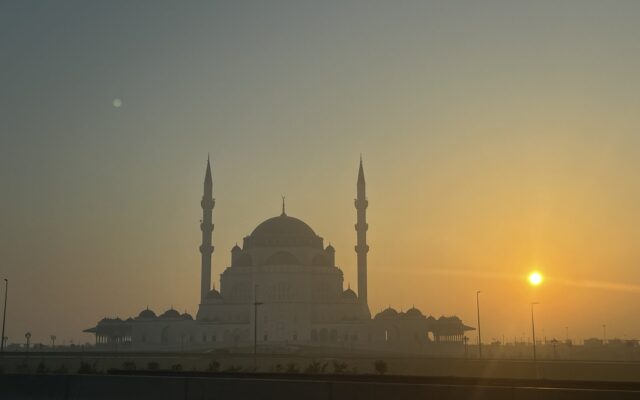
Maghrib is Bur Dubai’s golden moment. The sun drops behind the Deira skyline, the abras crowd with homeward passengers, and the sunset prayer gathers everyone who has been waiting for the day to cool. In Ramadan — the dates announced each year after the moon is sighted — this hour becomes the district’s heartbeat: dates and water at the mosque, iftar shared with whoever is beside you, and then the night prayers under lit minarets while the souks reopen around you. Few places in Dubai do Ramadan evenings more atmospherically than the Creek’s older bank.
- For visitors who worship: build the historic quarter walk around a prayer, not between two — the area’s mosques are close to everything.
- For workers: the closest mosque or your building’s prayer room beats the famous one across town, especially at Asr in summer.
- For families: Friday by the Creek, with prayer first and an abra ride after, is a beloved local routine.
A note on visiting
Most Bur Dubai mosques are for worshippers, and non-Muslim entry varies by mosque; the city’s guided mosque experience is at Jumeirah Mosque, whose tours are designed for visitors. What everyone can enjoy freely is the soundscape and the sight: minarets over the Creek at dawn, the pause that crosses the souks at noon, and rows of shoes at a doorway in Al Fahidi telling you, without a single sign, that inside, the old town is at prayer.
Pray in Bur Dubai a few times and the district reorganises itself in your mind. The museums and souks are still wonderful — but they become the spaces between prayers, in a neighbourhood that has arranged its life around the mosque for longer than Dubai has had a skyline. That is not nostalgia. That is simply Bur Dubai, working exactly as intended.