Everyone drives to Ras Al Khaimah for the mountain. Almost nobody stops for the old town — and that is a shame, because the northernmost emirate keeps some of the UAE’s best-kept history: a hilltop fort that was the last stronghold of the Qawasim rulers, a pearling-era old town of coral-stone houses, and a museum in the fort where the ruling family once lived. Pair Dhayah Fort with a slow wander through old Ras Al Khaimah and you have the thinking person’s northern day trip.
Getting There and Timing
Ras Al Khaimah city is about 1.5 hours from Dubai on the E611 or E11 motorways, and Dhayah Fort lies a further 20 minutes north, near Rams. There is no practical public transport for this trip, so self-drive or hire a car with a driver. The fort involves an exposed climb, which makes winter mornings — October to April — the obvious window; in summer, go at opening or not at all. Give the whole excursion a full day if you are adding the old town and museum, or half a day for the fort alone.
Dhayah Fort: The Last Stand
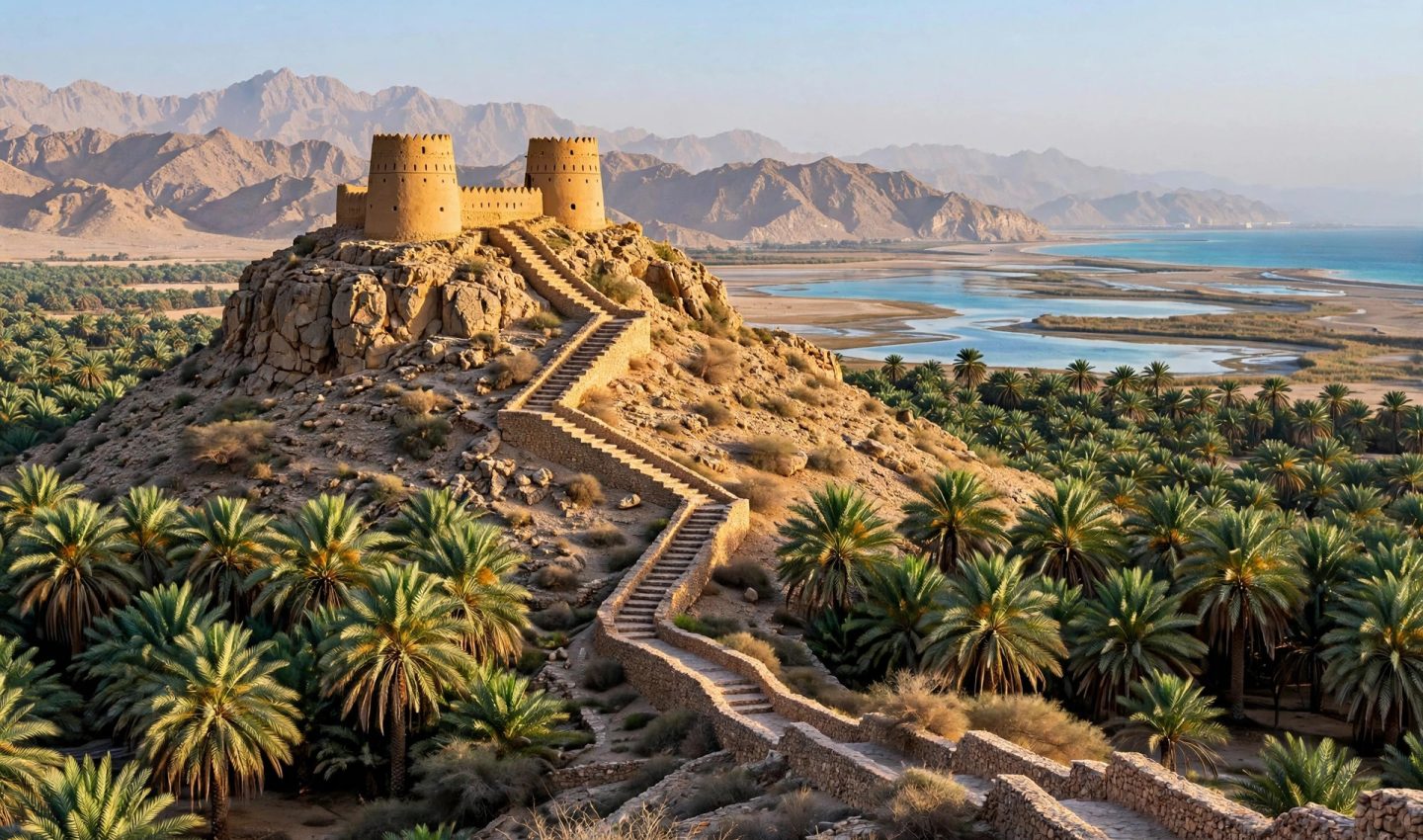
Dhayah Fort crowns a steep, rocky hill above the date palms of Rams, and the climb up its zigzag stairway is short, hot and entirely worth it. This was the scene of the emirate’s most famous resistance: in 1819, the fort was the final stronghold besieged by British forces during the campaign against the Qawasim, and the twin mud-brick towers that stand today were rebuilt on the same hilltop afterwards. From the ramparts the view explains everything — the palm groves, the lagoon, the coast running north towards Musandam, and the Hajar foothills behind. Below the hill, an ancient cemetery of carved tombstones spreads across the plain, a reminder that this coast was wealthy and contested long before the oil era.
📸 Follow @dxbtalk1 on Instagram for daily Dubai in photos →
Old Ras Al Khaimah and the Museum
Back in the city, the National Museum of Ras Al Khaimah occupies the old Al Qasimi fort — for generations the ruler’s residence — and its galleries of pearling tools, weapons, jewellery and archaeology give the fort’s story its context. The surrounding old town, around the museum and the creek, keeps lanes of coral-stone and gypsum houses, old mosques and small souks that feel a world away from the resort strip at Al Hamra. Finish the day on the coast: the fishing village of Rams, the beaches at Al Rams or a sunset drive along the corniche. If the mountain is calling too, our Excursions guides cover the road up Jebel Jais separately — fort in the morning, summit at sunset is a very fine day indeed.
Free Dubai Tools
Dubai, in Your Hands
One more stop rewards the curious: just north of the city, the ghost village of Al Jazirah Al Hamra preserves the coral-stone houses of a pearling village abandoned in the late 1960s — atmospheric, photogenic and quietly being restored. It rounds off the emirate’s story nicely: fort, museum, old town and ghost village, all within a short drive of each other.
Practical Notes
- Driving: about 1.5 hours to Ras Al Khaimah city, plus 20 minutes to Dhayah; roads are good motorway almost the whole way.
- The climb: the fort’s stairway is steep, exposed and has no shade or facilities at the top — carry water and wear proper shoes.
- Hours and fees: museum and site opening times and entry charges change — check before you go, and note Friday hours differ.
- Season: October to April for comfort; summer visits should be early morning only.
- Combine it: the fort pairs naturally with Rams village, the old town and an evening on the RAK corniche.
DXB FACT — DID YOU KNOW?
Snow in the middle of the desert
- Ski Dubaithe Middle East's first indoor ski resort
- Real snow22,500 m² of it
- Inside temperature−1°C to −4°C, all year
- Slopes5 — including an indoor black run
Source: The National
A new Dubai fact every dayRead more »
Reader poll
Poll of the Day
A fun reader poll, just for curiosity — not an official survey. A new question arrives every day.