Manipal Academy of Higher Education Dubai, usually shortened to Manipal Dubai or MAHE Dubai, is the local campus of a major Indian higher education group with roots in one of India’s best-known university towns. Based in Dubai International Academic City, it teaches a broad portfolio spanning engineering, design, media, business, life sciences and more. This guide introduces its schools of study, campus facilities and student life for prospective students weighing it against other Academic City options.
The campus in Academic City
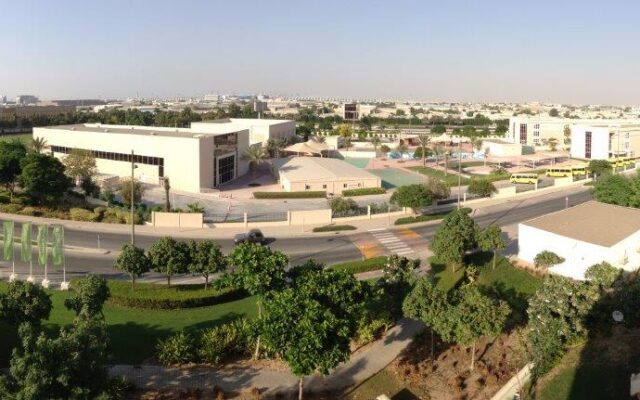
Manipal Dubai occupies a substantial campus in DIAC, with academic buildings, laboratories, studios, sports facilities and social spaces laid out as a recognisable university environment. The district context matters: Academic City concentrates many institutions in an inland district near Silicon Oasis, so Manipal students live within a wider student neighbourhood, with purpose-built accommodation in and around the zone and many others commuting from across Dubai and Sharjah.
The university serves a large and diverse student body, with a strong presence of students from India and the South Asian diaspora alongside UAE residents of many nationalities and international arrivals from the wider region. The campus operates within Dubai’s free-zone higher education framework, so students should confirm current licensing and accreditation details for their programme and check the latest KHDA inspection report context when comparing institutions.
Schools of study and programmes
The Dubai offer is organised through several schools. Engineering and information sciences cover computing and core technology disciplines, with laboratory-based teaching. Design and architecture provision includes interior design, architecture and related creative programmes supported by studio spaces. Media and communication programmes make use of studios and production facilities for journalism, film and communication studies. Business programmes run from undergraduate degrees to postgraduate study for professionals, while life sciences and health-related subjects, humanities and social sciences add further breadth.
That spread is Manipal’s distinguishing feature in Academic City: few neighbouring institutions span quite so many disciplines under one roof, which suits students who want options or who enjoy a campus where an engineering student might share facilities and societies with designers and media students. The exact programme catalogue, specialisations and delivery modes change over time, so always verify your course on the university’s current listings, and ask about the facilities and faculty attached to your specific school rather than the university in general.
📸 Follow @dxbtalk1 on Instagram for daily Dubai in photos →
Campus facilities and student life
Facilities reflect the portfolio: engineering and science laboratories, design and architecture studios, media production spaces, a library and learning commons, sports amenities and food outlets, plus student activity areas. Multi-purpose spaces host the cultural and technical festivals that are a hallmark of Manipal student culture in India and have travelled with the brand to Dubai. Expect a busy calendar of clubs, cultural celebrations, sports competitions and inter-university events within Academic City.
Accommodation typically involves a mix of university-associated residences and private options in the surrounding districts, with transport services linking common residential areas to campus. Ask the university about current accommodation partners, typical occupancy arrangements and transport routes and fees, since these details change. For students moving to Dubai for the first time, the size of the community can be an asset: there are established systems for orientation, student support and helping newcomers settle.
Admissions and pathways
Undergraduate admission is based on school qualifications across Indian and international curricula, with programme-specific subject expectations, particularly for engineering, architecture and health-related fields, where portfolio or aptitude elements may also feature. Postgraduate entry generally requires a relevant bachelor’s degree. Foundation or pathway options may be available for some students depending on their background and target programme.
Manipal Dubai generally operates more than one intake point during the year for many programmes, but dates, deadlines and seat availability vary by school, so confirm the current cycle with admissions directly. If transfer or progression links with the group’s campuses in India interest you, ask precisely what is possible within your programme rather than assuming movement between campuses is automatic; arrangements differ by course and are governed by the regulations in force at the time.
Fees, scholarships and making the comparison
Fees are set per programme and differ across schools, with laboratory and studio-based courses sometimes structured differently from classroom-based ones. They change every year, so request the current fee schedule for your exact programme in writing. Merit scholarships and other concessions have typically formed part of the offer, usually as tuition reductions tied to school results or defined categories and subject to renewal conditions.
- Which school runs your programme, and what facilities support it?
- What are the subject and portfolio requirements for your curriculum?
- Which intakes are open, and what are the current deadlines?
- What is the full degree cost, including accommodation and transport?
- What industry exposure, internships or placements does your school arrange?
- How does the Dubai degree connect with the wider Manipal group?
Manipal Dubai suits students who want a big, lively, multi-disciplinary campus with an Indian institutional heritage in the middle of Academic City. The breadth is real, but quality lives at programme level, so visit your school’s studios or labs, meet its faculty if you can, and confirm fees and entry details directly with the university before you decide.